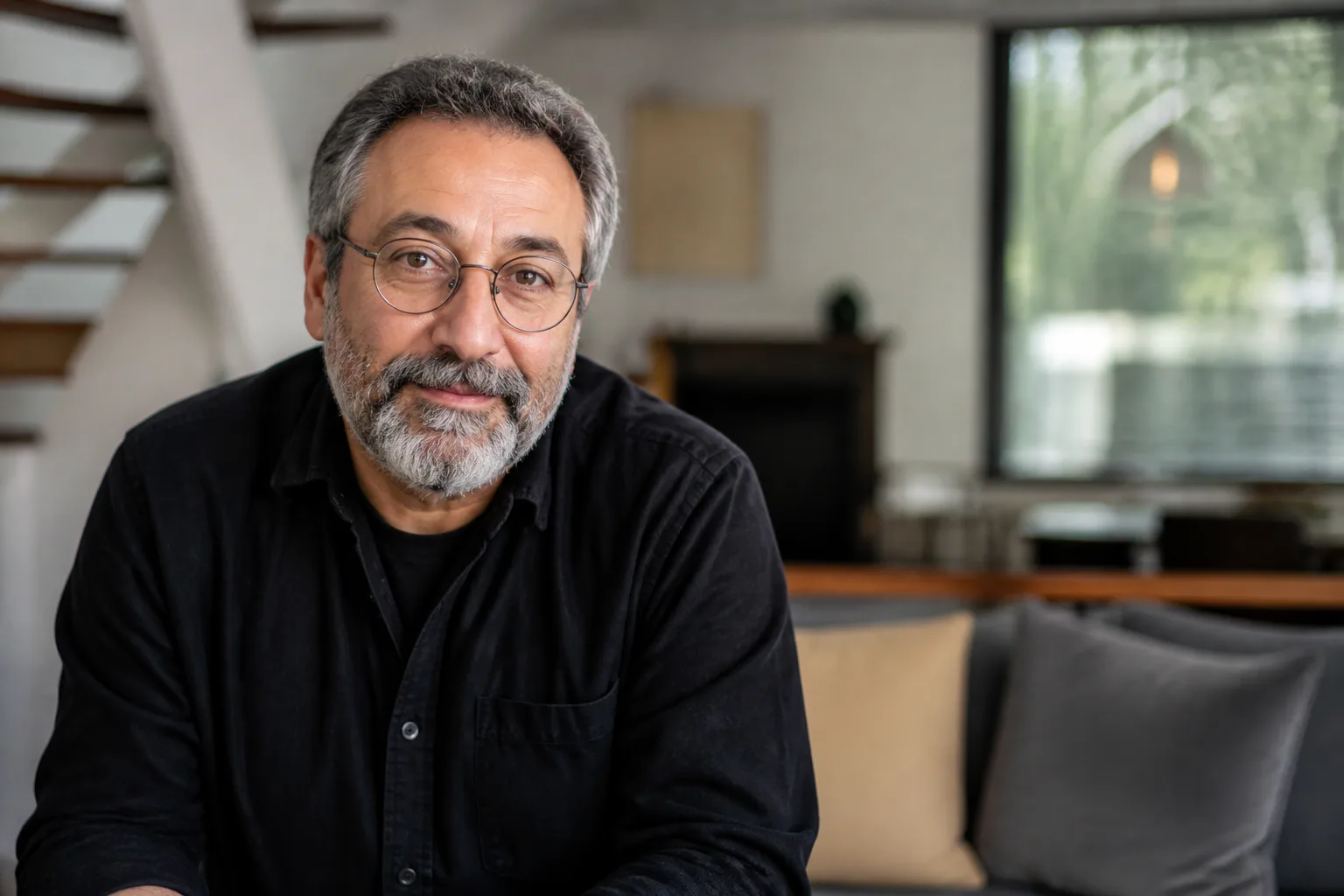
Warren Spector Announces Retirement From Game Development After 44 Years
Warren Spector says he is retiring from game development, ending one of the longest and most influential careers in modern games. The announcement matters well beyond one developer’s next step because Spector helped define immersive sims through work tied to Deus Ex, Thief, the Ultima series, System Shock, and later projects including Epic Mickey.
In his public statement on LinkedIn, Spector said he is “retiring from game development. At least I think so.” He also made clear that this is not framed as a dramatic final farewell: he has stepped back before, changed his mind, and still leaves the door open with “Never say never.”
The announcement
Spector said he is a month away from his 44th year as a developer and is stepping away after a career that spanned tabletop roleplaying games, boardgames, and digital games. He said he worked on 17 full games and roughly 9 add-on packs, with some of those titles still being played 15, 20, or 30 years later.
He also reflected on the scale of his leadership across the industry, saying he has run teams as small as a dozen and as large as 800. That range helps explain why his retirement lands as a broader industry story, not just a personal update.
What he said
The clearest reason he gave was age and health. Spector said both are catching up with him, making this the practical moment to step back from the day-to-day demands of building games.
He also said the game business has changed and is not as much fun for him anymore. That part of the statement will resonate with many developers who have watched pitching, funding, and large-scale production become harder to navigate, especially for projects built around experimentation rather than proven formulas.
Spector did not present retiring from game development as a loss of faith in the medium itself. In fact, he said games are not a solved problem yet and that there is still room for experimentation and innovation, especially for a new generation of developers that deserves its time in the sun.
Career legacy
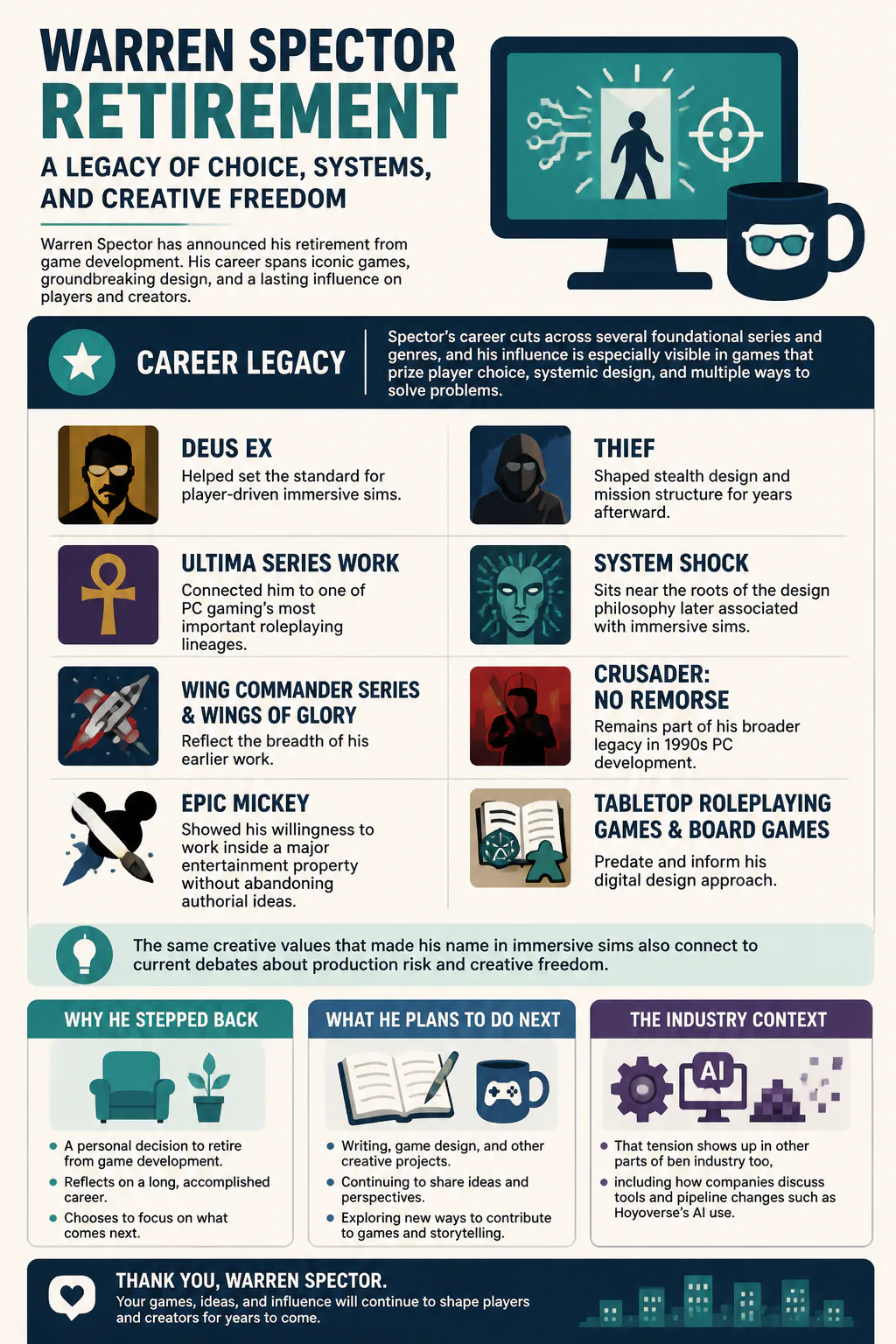
Spector’s career cuts across several foundational series and genres, and his influence is especially visible in games that prize player choice, systemic design, and multiple ways to solve problems.
-
Deus Ex helped set the standard for player-driven immersive sims.
-
Thief shaped stealth design and mission structure for years afterward.
-
Ultima series work connected him to one of PC gaming’s most important roleplaying lineages.
-
System Shock sits near the roots of the design philosophy later associated with immersive sims.
-
Wing Commander series and Wings of Glory reflect the breadth of his earlier work.
-
Crusader: No Remorse remains part of his broader legacy in 1990s PC development.
-
Epic Mickey showed his willingness to work inside a major entertainment property without abandoning authorial ideas.
-
His work in tabletop roleplaying games and board games predates and informs his digital design approach.
The same creative values that made his name in immersive sims also connect to current debates about production risk and creative freedom. That tension shows up in other parts of the industry too, including how companies discuss tools and pipeline changes such as Hoyoverse’s AI use.
Why now
Spector’s reasons are direct rather than mysterious. He pointed to age and health first, then to a changed business environment that no longer gives him the same satisfaction it once did.
He also suggested a generational handoff. His view is not that veteran voices no longer matter, but that the industry needs younger developers to take the lead while pushing games forward in ways his own generation could not.
That context matters for anyone reading his retirement as a statement about modern development conditions. Even outside creative design, the industry has become more demanding in areas like infrastructure, live operations, and platform-level changes, a pressure visible in news around PC security updates and other increasingly technical requirements placed on studios.
What comes next
Spector is not retiring from thinking about games or from public life. He said he wants to write books, do a lot of reading, spend time lecturing, and possibly take on some consulting work.
-
Write books
-
Do more reading
-
Continue lecturing
-
Take on selective consulting
-
Stay engaged with the craft and the game business from outside full-time development
-
Work on his piano chops
He also said there are still three games he would like to make: one very big, one very small, and one he does not yet know how to make. That detail is important because it shows his creative curiosity is still intact even as he is retiring from game development as a career track.
Will he return?
The shortest answer is that he is stepping away, but not issuing an absolute ban on future work. His own wording leaves room for exceptions, and his “Never say never” line makes that explicit.
That means readers should understand this as a retirement from active development work, studio-building pressure, and the long cycle of shipping games, not as a total disappearance from the medium. A veteran at his stage can still shape the field through consulting, teaching, and public commentary, much as experienced technical leaders still influence software through AI development firms without personally running every build.
What it means
Spector’s exit underscores two truths at once. First, one of gaming’s defining creative figures is stepping back after a career that helped shape how developers think about agency, systems, and player choice. Second, the design ideas he championed remain unfinished business.
For fans of immersive sims, his retirement will naturally raise questions about where the genre goes next. The strongest reading is not that the style ends with him, but that its future now depends even more on the new generation of developers he singled out, and on whether studios still make room for the sort of experimentation and innovation he believes games still need.
Bottom line
Yes, Warren Spector has announced that he is retiring from game development, citing age and health, a changed game business, and a sense that younger developers should take center stage. His legacy is already secure, but his comments also read as a challenge: games are still unsolved, and the next wave of creators has work to do before anyone can truly ride off into the sunset.