The RTX 5090: Unleashing Unparalleled Gaming Performance
The NVIDIA GeForce RTX 5090 stands out as one of the most powerful graphics cards available today. With cutting-edge technology and impressive specifications, it is designed to meet the demands of gamers and creators alike. This new GPU offers advanced features like ray tracing and high-performance AI capabilities, making it a top choice in the gaming and creative markets.
In an era where graphics performance is crucial, the RTX 5090 delivers exceptional speed and efficiency. Users can expect remarkable performance across the latest games and intensive creative applications. With a robust build and advanced cooling solutions, it ensures optimal performance during long hours of use, providing both reliability and durability.
This card not only exceeds previous generations but also sets a new standard in the graphics market. As it competes with a range of options available today, understanding its features and benefits can help users decide if this GPU aligns with their gaming or creative needs.
Key Takeaways
- The RTX 5090 features advanced technologies for peak performance.
- It offers superior cooling solutions for reliable long-term use.
- This GPU is priced competitively within the premium graphics market.
Here’s a table summarizing the key points about the NVIDIA GeForce RTX 5090:
| Category | Details |
|---|---|
| Performance | 30-40% improvement over RTX 4090. |
| Supports 200+ FPS at 4K with ray tracing in select games. | |
| Multi-Frame Generation allows up to 4x frame rates for smoother gameplay. | |
| Technology | Blackwell 5nm architecture. |
| 32GB GDDR7 memory with 256-bit interface. | |
| DLSS 4 for enhanced frame rates and visuals. | |
| Real-time ray tracing and AI-powered enhancements. | |
| Benchmarks | Cyberpunk 2077 runs at 240 FPS with Multi-Frame Gen. |
| Blender rendering: Up to 36% faster than RTX 4090. | |
| Thermal Design Power | TDP: 575W. |
| Advanced cooling (liquid cooling, vapor chamber systems). | |
| Build | Dimensions: 13.5 inches long; requires spacious PC cases. |
| Multi-PCB design with robust cooling for durability. | |
| Ports | 3x DisplayPort 2.1b and 1x HDMI 2.1b (supports up to 8K @ 60Hz). |
| Power Requirements | Requires 16-pin power connector. |
| Recommended PSU: 850W or higher. | |
| Market Position | MSRP: $1,999, reflecting premium positioning. |
| Target audience: Enthusiasts, gamers, content creators. | |
| Competitors | Outpaces AMD GPUs; no direct competitor at this level. |
| Drawbacks | High power consumption with minimal efficiency gains over RTX 4090. |
| Generates significant heat, requiring robust cooling solutions. | |
| Multi-Frame Gen | Offers substantial frame rate boosts but introduces motion artifacts during fast-paced scenes. |
| Increased latency, making it unsuitable for competitive gaming. | |
| Summary | Best for 4K/8K gaming and professional workloads, but high price and power demand make it niche. |
Overview of The RTX 5090
The RTX 5090 is a powerful graphics card by NVIDIA, marking a significant advancement in GPU technology. It is part of the RTX 50 series, known for its exceptional performance capabilities.
This graphics card features 32 GB of VRAM, making it suitable for demanding gaming and creative tasks. It supports real-time ray tracing, which enhances visual fidelity in games and applications.
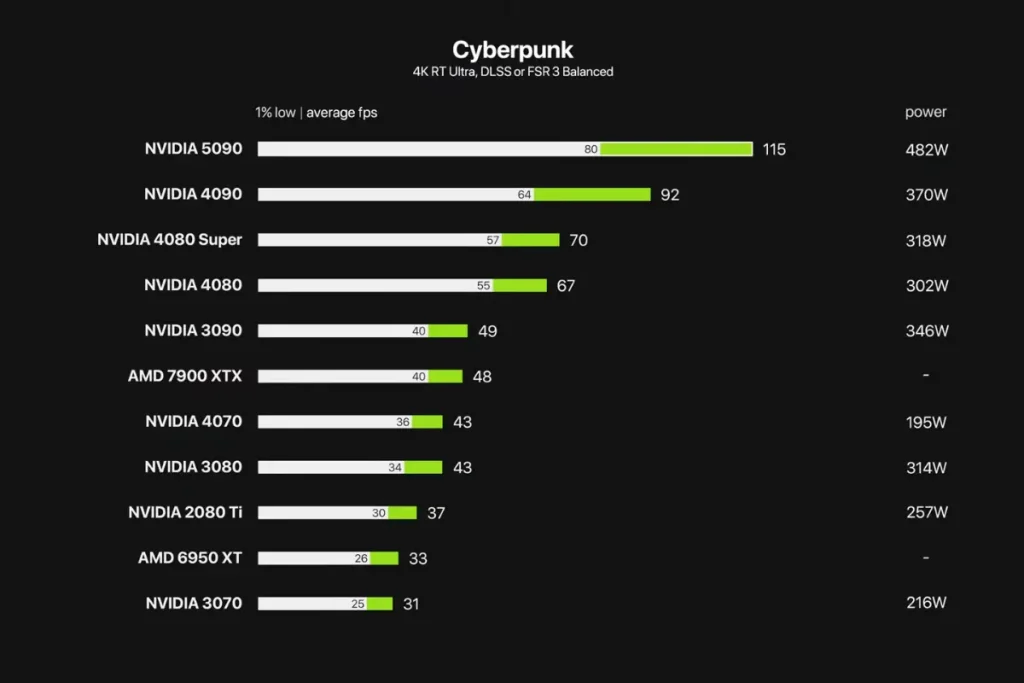
Performance benchmarks show that the RTX 5090 outperforms its predecessor, the RTX 4090. In fact, it can achieve more than 60 frames per second (fps) at 4K resolution in various games, such as Black Myth: Wukong.
Key features include:
- AI Support: Boosts performance and graphics quality with AI technologies.
- Multi-Frame Generation: Allows for hundreds of fps, providing smoother gaming experiences.
- DLSS: NVIDIA’s Deep Learning Super Sampling can further enhance frame rates.
The RTX 5090 also boasts low latency, optimizing the gaming experience. Users can expect high-quality graphics, making it a top choice for serious gamers and content creators.
Given its capabilities, the RTX 5090 represents the cutting edge of consumer graphics technology, suitable for high-performance builds and immersive experiences. For more detailed information, a review can be found here.
Technical Specifications
The RTX 5090 comes with impressive specifications designed for high performance in gaming and creative tasks. Key features include advanced GPU architecture, substantial memory capacity, optimized core clock speeds, and a balanced thermal design power for efficient operation.
GPU Architecture
The RTX 5090 is built on NVIDIA’s latest 5 nm architecture known as Blackwell. This architectural improvement allows for higher transistor density, which boosts performance while reducing power consumption.
With support for DirectX 12 Ultimate, it ensures full compatibility with modern gaming technologies, including real-time ray tracing and AI-enhanced graphics.
The GPU features an impressive CUDA core count of 21,760, enabling it to handle complex calculations swiftly. This architecture allows the RTX 5090 to perform better than its predecessors, making it a strong option for enthusiasts and professionals.

Memory Capacity and Type
The RTX 5090 is equipped with 32 GB of GDDR7 memory. This memory type provides exceptional bandwidth, allowing for faster data transfers necessary for high-resolution textures and demanding applications.
With a 256-bit memory interface, it ensures efficient communication between the GPU and memory. This setup also supports larger datasets, which benefits both gaming and creative workflows.
The large memory capacity enables the card to run modern games at maximum settings, making it an excellent choice for 4K gaming. It also improves performance in resource-intensive tasks like video editing and 3D rendering.
Core Clock Speeds
The RTX 5090 operates at a boost clock speed of up to 2.41 GHz. This high clock speed allows for increased processing power, enhancing the performance of demanding applications.
It also features dynamic boosting technology, automatically adjusting clock speeds based on workload and thermal conditions. This ensures that the GPU can maintain optimal performance levels when under strain.
These clock speeds give users a noticeable increase in frame rates during gaming and faster rendering times in creative software. This makes the RTX 5090 a versatile choice for a range of users.
Thermal Design Power
The thermal design power (TDP) of the RTX 5090 is set at 450 watts. This TDP rating indicates the maximum amount of heat generated under load, allowing for effective cooling solutions.
The card utilizes advanced cooling technologies, including a dual-fan system and vapor chamber cooling. These methods ensure the GPU remains within optimal temperature ranges, even during extended gaming sessions.
A well-designed cooling system not only prolongs the lifespan of the GPU but also enhances its performance by preventing thermal throttling. This TDP rating is crucial for users who plan to build high-performance gaming rigs.
Performance Benchmarks
The RTX 5090 showcases impressive performance across various applications. Its capabilities can be measured in gaming, professional workloads, and comparative analysis against previous models.
Gaming Performance
In gaming, the RTX 5090 delivers high frame rates and stunning graphics. For example, in F1 23, it achieved benchmarks such as 192 FPS at 4K Ultra settings with DLSS enabled.
Games like “Cyberpunk 2077” and “Alan Wake 2” also benefit from its advanced features, providing smoother gameplay and better visuals. It supports ray tracing efficiently, allowing for realistic lighting and shadow effects. The card excels in high-demand scenarios, showcasing its capability to handle next-gen titles seamlessly.
Professional and Creative Workloads
For professional and creative tasks, the RTX 5090 stands out in rendering and computational power. It performs significantly well in software like Blender and Adobe Premiere Pro. In Blender, the RTX 5090 outperforms its predecessor, the RTX 4090, by up to 36% in specific benchmarks.
This performance leap is vital for designers and animators who require speed and quality. Additionally, its compatibility with AI tasks enhances productivity in creative industries, allowing users to generate content faster. GPU acceleration in applications ensures that workflow remains efficient and fluid.
Comparative Analysis
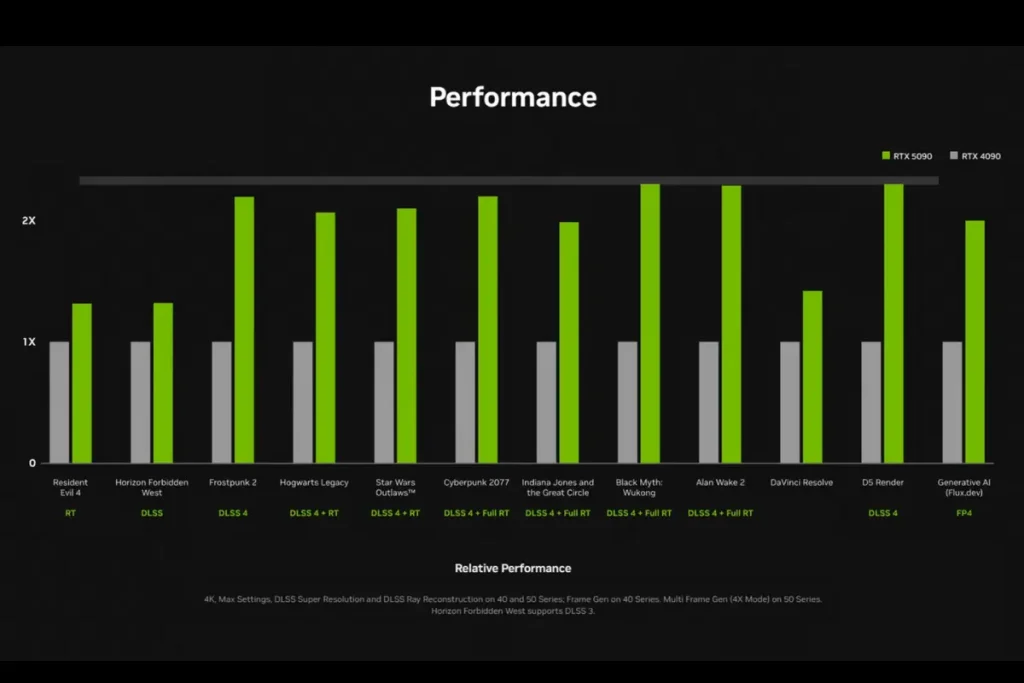
When compared to the RTX 4090, the RTX 5090 shows marked improvements. Benchmarks indicate it is approximately 40% faster in some rendering tasks, allowing for quicker project completion.
In gaming, the RTX 5090 consistently beats the RTX 4090 by a significant margin, particularly in high-resolution settings. This gives gamers a solid reason to consider upgrading. With advanced thermal management and power efficiency, the RTX 5090 not only performs well but also maintains stability during long gaming sessions or intensive workloads.
Cooling Solutions
The RTX 5090 features advanced cooling technologies to manage heat effectively. Two popular types of cooling solutions are air cooling and liquid cooling.
Air Cooling:
- Uses fans to move air across the components.
- Offers lower cost and less complexity.
- Example: The ROG Astral GeForce RTX 5090 utilizes a quad-fan design and a milled vapor chamber for efficient heat transfer.
Liquid Cooling:
- Involves a cooling system with liquid coolant circulated through a radiator.
- Often quieter and more effective at managing high temperatures.
- The MSI GeForce RTX 5090 Suprim Liquid uses a hybrid cooling system. It combines STORMFORCE Fans with a liquid cooling setup for exceptional performance.
Tests show that the RTX 5090 with liquid metal thermal interface material (TIM) runs cooler than those with standard thermal paste. For instance, there is only a 2°C difference noted in benchmarks.
In summary, choosing between air and liquid cooling depends on personal preferences for cost, noise levels, and performance needs. Each option offers distinct advantages for gamers and professionals using the RTX 5090.
Compatible Technologies
The RTX 5090 is designed to enhance gaming and creative experiences through advanced technologies. Key features include support for real-time ray tracing, G-SYNC compatibility, and DLSS AI acceleration. Each of these elements plays a vital role in delivering stunning visuals and smooth performance.
Ray Tracing Support
Ray tracing brings an unprecedented level of realism to video games. This technology simulates how light interacts with objects in real-time, creating more lifelike shadows, reflections, and lighting effects. The RTX 5090 supports advanced ray tracing techniques, allowing users to play the latest titles with breathtaking visual fidelity.
With ray tracing, gamers can see environments come to life, as light reflects realistically off surfaces. This capability enhances immersion, especially in dark or complex scenes. The performance improvements in the RTX 5090 enable users to experience high frame rates while utilizing ray tracing features, providing an enjoyable gaming experience.
G-SYNC Compatibility
G-SYNC technology eliminates screen tearing and reduces stutter, ensuring smoother gameplay. The RTX 5090 fully supports G-SYNC, enabling synchronization between the GPU and monitor for optimal performance. This feature is crucial for competitive gaming, where every frame counts.
When using a G-SYNC compatible monitor, the RTX 5090 dynamically adjusts the refresh rate. This results in a more fluid gameplay experience, especially during fast-paced action scenes. Gamers can expect fewer distractions from visual artifacts, enhancing their overall enjoyment.
DLSS AI Acceleration
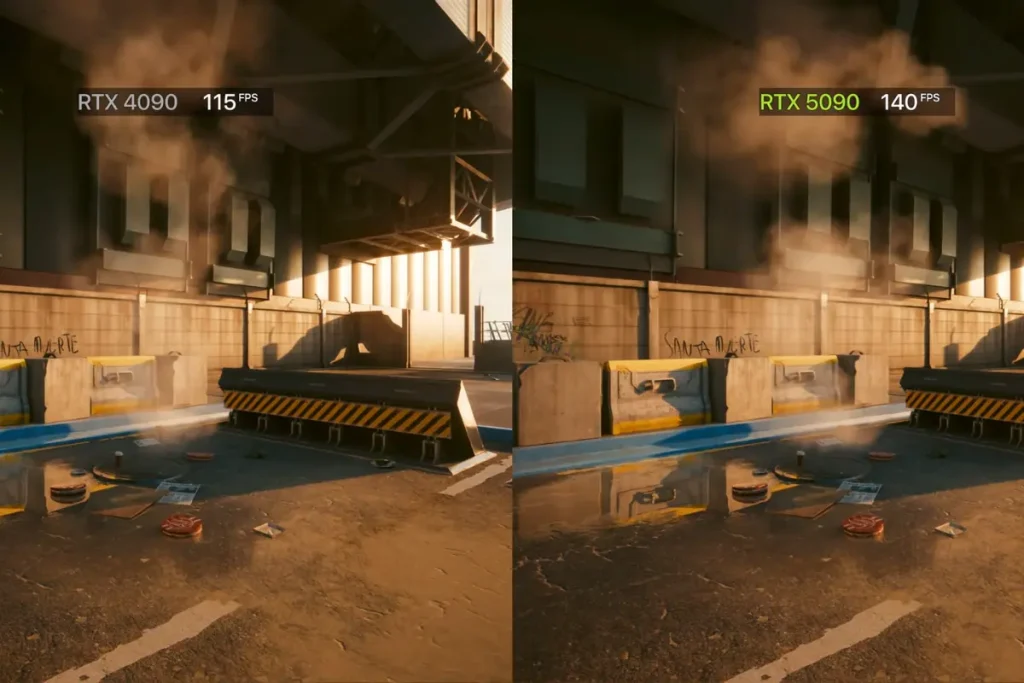
DLSS, or Deep Learning Super Sampling, uses artificial intelligence to boost frame rates while maintaining image quality. The RTX 5090 features DLSS 4, providing significant improvements in performance for compatible games. This technology allows gamers to enjoy higher resolutions without sacrificing visuals.
By rendering fewer pixels and using AI to upscale images, DLSS delivers smoother gameplay. This feature is especially helpful in resource-intensive titles, where maintaining high performance is essential. Gamers can experience a balance of stunning graphics and high frame rates, ensuring that the RTX 5090 meets their gaming needs.
Connectivity and Ports
The RTX 5090 offers advanced connectivity options to meet the needs of gamers and creators. Its ports enhance the user experience with high-quality visuals and reliable power supply.
Display Output Options
The RTX 5090 features multiple display output options, including three DisplayPort 2.1b ports and one HDMI 2.1b port. These ports allow for high-refresh-rate gaming and support for 8K resolution at 60Hz, making it ideal for high-definition monitors and TVs.
- DisplayPort 2.1b: Supports up to 8K resolution and high refresh rates, perfect for gaming and professional applications.
- HDMI 2.1b: Allows for features like variable refresh rates and enhanced bandwidth for high-quality video output.
With these options, the RTX 5090 accommodates a variety of setups, ensuring gamers and content creators can connect multiple displays seamlessly.
Power Connector Types
The power efficiency of the RTX 5090 is significant, using a unique power connector design. It has an angled power connector, which makes installation easier in tight spaces. The card requires specific connectors to function optimally.
- Recommended connectors: At least one 16-pin connector for proper power delivery.
- Power requirements: Users must ensure that their power supply units (PSUs) have adequate wattage to support the RTX 5090.
This connector setup allows the card to maintain stable performance during demanding tasks, ensuring reliability for any user.
Power Requirements
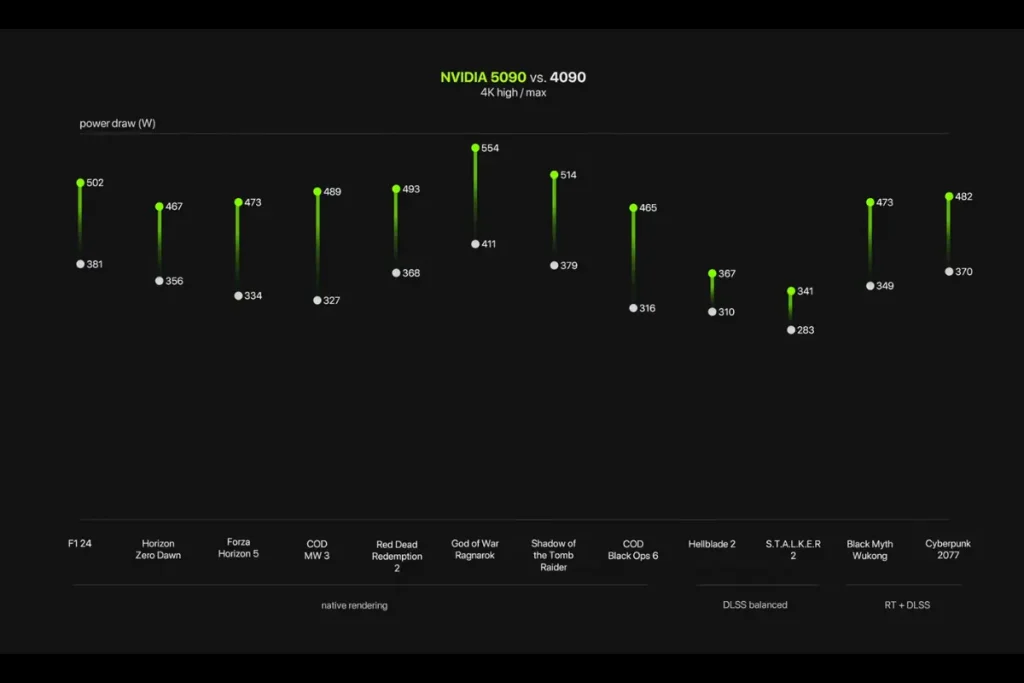
The RTX 5090 has specific power needs that users must consider before installation. It draws power through a single 16-pin connector and can reach a maximum power draw of 575 watts.
Many users were relieved to find that the power requirements are somewhat lower than initially expected. The RTX 5090 does not max out the full 600-watt capacity of the 12V2x6 / 12VHPWR standard.
Recommended Power Supply (PSU) wattages for the RTX 5090 typically fall in the range of 850 watts or more. This ensures that the GPU operates efficiently and safely without straining the power supply.
When choosing a PSU, users should look for units that provide good power efficiency and stability. Older power supplies might need reliable 16-pin adapters to support the RTX 5090.
Key Specifications:
- Power Connector: 1x 16-pin
- Maximum Power Draw: 575 W
- Recommended PSU Wattage: 850 W or higher
It is essential to ensure that the chosen power supply meets these requirements to avoid performance issues.
Software and Driver Support
The RTX 5090 offers robust software and driver support to enhance user experience. Key features include integrated tools for customization and regular updates to ensure performance and stability.
GeForce Experience Integration
The GeForce Experience software is designed to complement the RTX 5090. It allows users to optimize game settings easily based on their hardware. This includes features like automatic updates for drivers and the ability to capture gameplay footage.
Users can also utilize NVIDIA’s Game Ready drivers, which are optimized for the latest games. This ensures gamers have the best experience with high performance and minimal bugs. GeForce Experience also includes features like NVIDIA Highlights, which automatically captures key moments in gameplay.
Driver Stability and Updates
Driver stability is crucial for any graphics card, and the RTX 5090 provides reliable updates. NVIDIA regularly releases driver updates that improve performance across various applications, including gaming and creative software.
With enterprise-level support, users benefit from long life-cycle driver updates. This includes security patches and enhanced compatibility with new software. The drivers are tailored to meet the needs of demanding workloads, ensuring consistent performance across the board. Regular updates keep the RTX 5090 performing at its best, making it a dependable choice for gamers and creators alike.
Design and Build Quality
The RTX 5090 features a robust design that balances performance with aesthetic appeal. With attention paid to dimensions and materials, this graphics card ensures longevity and effectiveness in demanding computing tasks.
Card Dimensions
The RTX 5090 comes with substantial dimensions that reflect its high-performance capabilities. Its size is approximately 13.5 inches long and 5.5 inches wide, requiring ample space within the PC case. This larger footprint allows for enhanced cooling systems and more powerful hardware components. The card is designed to fit in most mid and full-tower cases but may be too large for compact builds.
Users should check the clearance in their chassis to ensure proper installation. Additionally, its weight can reach roughly 3.5 to 4 pounds, so securing it properly in the PCIe slot is vital to prevent sagging. In summary, the dimensions of the RTX 5090 make it a significant component demanding thoughtful planning for DIY builds.
Build Materials
The materials used in the RTX 5090 contribute to its durability and thermal performance. The card employs a multi-PCB design allowing for better power distribution and heat dissipation. Its exterior features a blend of high-grade plastic and metal, offering strong protection while minimizing weight.
A noteworthy aspect is the improved cooling solution, featuring larger fans and heatsinks. This helps maintain quieter operation even under heavy loads. Additional details, like reinforced backplates, enhance structural integrity against bowing or bending. The choice of materials and design elements reflects Nvidia’s commitment to creating a reliable and efficient product for serious gamers and professionals alike.
Market Position and Target Audience
The RTX 5090 is positioned as a high-end graphics card aimed at enthusiasts and gamers. Its significant price tag of $1,999 suggests that it targets users who prioritize top-tier performance over cost.
This GPU is likely designed for those who demand the best in gaming and creative work. It caters to individuals looking for superior experience in high-resolution gaming, including 4K and even 8K.
Nvidia’s focus on innovation places the RTX 5090 at a technological peak. With improved performance metrics, it attracts professionals in fields like game development and graphic design.
The target audience consists primarily of:
- Hardcore Gamers: Seeking the latest technology for immersive gameplay.
- Content Creators: Requiring powerful GPUs for video editing and 3D rendering.
- Tech Enthusiasts: Wanting to upgrade to cutting-edge hardware with significant power.
Nvidia’s CEO has noted the GPU’s capability to deliver not just higher frame rates but also advancements in ray tracing. This aligns with the needs of users who want realistic graphics in their applications.
Overall, the RTX 5090 stands as a premium offering in the market, catering to those willing to invest in top performance and advanced features. The gap in performance compared to its predecessor, the RTX 5080, emphasizes its appeal to a niche audience that values cutting-edge technology.
Price Point Analysis
The Nvidia GeForce RTX 5090 is priced at around $1,999. This places it at the high end of the graphics card market.
In comparison, the previous model, the RTX 4090, was priced lower. This significant price difference highlights the premium positioning of the RTX 5090.
Here is a quick overview of the price points of the RTX 50 series:
| Model | Expected Price |
|---|---|
| RTX 5090 | $1,999 |
| RTX 5080 | $999 |
| RTX 5070 Ti | TBD |
| RTX 5050/5060 | $400 – $500 |
High demand and limited supply may also influence prices. Scalpers and retailers could raise prices above the suggested retail price.
For enthusiasts, the performance boost of the RTX 5090 can justify its cost. Reports indicate a 70% increase in performance over the RTX 4090.
While it may seem like a hefty investment, the capabilities it offers cater to serious gamers and professionals.
Frequently Asked Questions
This section answers common questions about the RTX 5090, covering its specifications, performance compared to the 4090, release date, pricing, improvements, and review ratings.
What are the specifications for the latest high-end graphics card?
The RTX 5090 features advanced technology with 32GB of GDDR7 memory. It is designed to utilize NVIDIA’s latest architecture, which enhances both performance and efficiency for demanding applications.
How does the graphics card compare to its predecessor in terms of performance?
In benchmarks, the RTX 5090 shows a performance increase of around 30% compared to the RTX 4090. This makes it a strong option for gamers and professionals requiring high computational power.
When was the latest graphics card officially released?
The RTX 5090 is set to hit store shelves on January 30, 2025. This release is highly anticipated due to its advancements over previous models.
What is the expected price range for the newest graphics card model?
The official base MSRP for the RTX 5090 is $1,999. This price represents a $400 increase compared to the RTX 4090, making it a significant investment.
What are the improvements over the last generation of graphics cards?
The RTX 5090 includes features like DLSS 4, which enhances graphics quality and performance in gaming and creative applications. Other improvements focus on energy efficiency and faster processing speeds.
How do professional reviews rate the latest graphics card?
Early reviews of the RTX 5090 highlight its superior performance in rendering and AI tasks. Many reviewers praise its capabilities, noting it stands out in the current market for high-end graphics cards.