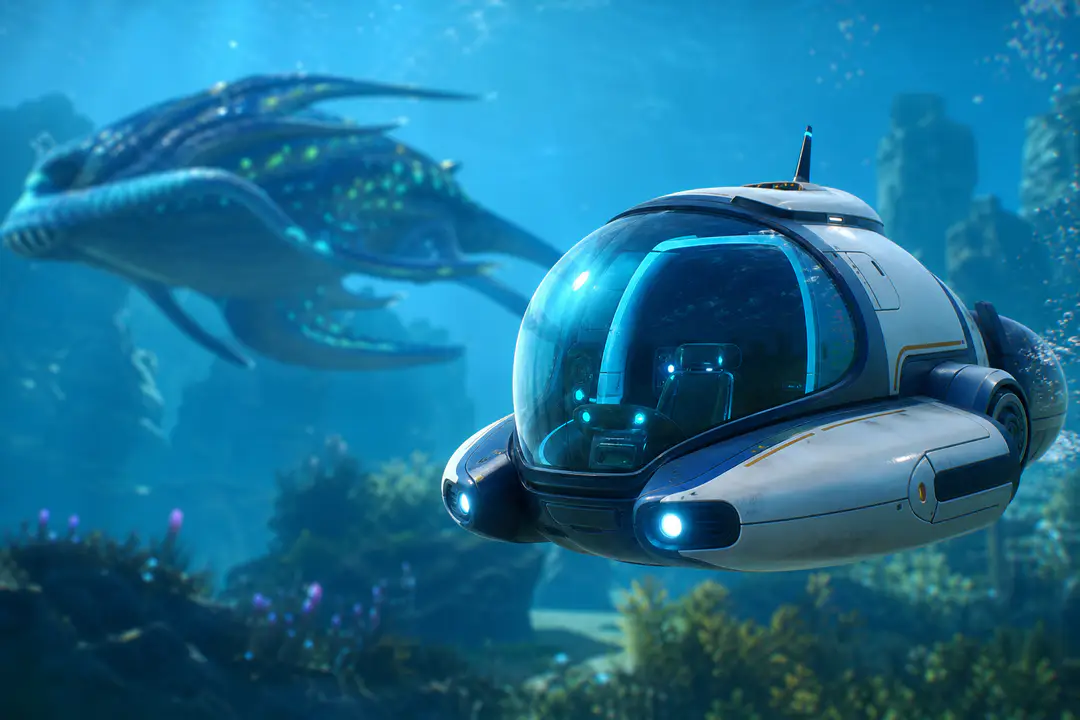
Subnautica 2 beginner guide and early tips
Subnautica 2 can feel overwhelming fast because the game expects you to figure things out through free-exploration, clues, and your PDA instead of handing you a strict quest path. That design is the point, but it also means new players and returning players often waste their first few hours on the wrong priorities. The best way to start is with a minimum-spoiler approach: play in Survival, ignore the urge to rush dangerous areas, and build habits that keep oxygen levels, food, water, and storage under control while you unlock blueprints naturally. If you want early momentum without ruining discovery, the first wins come from scanning, careful resource gathering, and placing markers before the world gets confusing.
Start With the Basics
For a first run, Survival mode is the right choice. It teaches the full loop of resource gathering, crafting, hunger, thirst, and oxygen management without the one-death pressure of hardcore, which is not a smart first try in a survival game built around learning through mistakes.
The larger mindset shift is simple: Subnautica, Subnautica: Below Zero, and Below Zero (BZ) all reward curiosity more than speed. Progress is equipment-gated, so when a route feels too deep, too dark, or too dangerous, the answer is usually not brute force. The answer is better tools, more blueprints, and more careful exploration.
- Pick Survival for your first save, even if you plan to try hardcore later.
- Treat the PDA as your mission log, hint system, and clue archive. Read it.
- Expect minor spoilers from UI names and blueprint categories, but avoid full route guides early.
- If you feel lost, look for signals, revisit logged clues, and search nearby biomes more thoroughly before pushing farther out.
If you are coming from Subnautica 2 gameplay details, keep expectations in check: the early game still follows the series rule that information is progression. New recipes matter as much as new locations.
Configure Your Early Priorities
Players often ask whether they need a base immediately. You do not. You can survive off your pod for a while, but the early game becomes much cleaner once you create dependable storage and a safe place to reset between trips.
The first hours are easier if you follow this order: basic tools, scanner use, small material stockpile, then a tiny base. That sequence keeps your inventory from turning into a mess of duplicate junk and half-finished crafting plans.
| Early need | Why it matters | What to do first |
|---|---|---|
| Oxygen | It limits every trip more than distance does | Upgrade tanks and return before oxygen levels become critical |
| Blueprints | Unlocking recipes drives progression | Scan everything, especially fragments and unfamiliar tools |
| Storage | Crowded inventory slows crafting and exploration | Build a small base and lockers instead of relying on floating storage |
| Navigation | The mapless structure gets confusing quickly | Carry and place a beacon at useful locations |
A common beginner mistake is overusing floating storage boxes. One can be useful, but building several is wasteful because those materials cannot be recycled later. The same logic applies to air pumps and pipes. They exist, but they are clunky, limited in practical use, and poor value compared with simply improving your gear and building a compact base.
Scan, Read, and Experiment
The most efficient beginner rule in any Subnautica game is to scan everything. New players often think the scanner is for obvious machine parts only, then miss flora, fragments, wreck pieces, and small interactables that feed straight into unlocking recipes. The game hides progress in plain sight.
Follow a simple scan loop
- See anything unfamiliar: scan it before picking fights or swimming past it.
- Open the PDA entry after the trip, not mid-panic underwater.
- Check whether the scan unlocked blueprints, habitat pieces, tools, or clues.
- If an item seems useless, keep one sample in storage until its recipe path is clear.
The PDA matters more than many players expect. It does not just store lore. It nudges you toward biomes, materials, and systems you are ready for. If a build tool entry hints at compartments, hatches, or power, that is the game telling you how your first real habitat works without forcing a tutorial screen.
Experimentation should still be controlled. Crafting random items burns through early copper, titanium, and other basic materials that you need for tools and habitat pieces. A better habit is to test one new item at a time, then go back out with a purpose: fragments, seeds, mineral deposits, or a specific resource chain.
- Scan fragments even when you already own similar equipment.
- Read blueprint descriptions carefully; they often contain the clue you missed in the field.
- Scan flora and collect seeds when available so your later food and base options open naturally.
- Use your scanner as progression, not flavor text.
The series trains the same reflex across games, so anyone moving over from general gameplay guides should still adjust here: reading the PDA is not optional busywork. It is how the game replaces a traditional objective marker.
Manage Food, Water, and Oxygen
Most early deaths do not come from monsters. They come from bad trip planning. If your inventory is full, your oxygen tank is weak, and night falls while you are still searching for one more fragment, the ocean does the rest.
Oxygen is the hard limit that shapes every early expedition. Distance matters less than ascent time. A cave that looks close can be far deadlier than an open-water route because panic adds seconds, and seconds are everything.
Handle oxygen like a timer
Watch oxygen levels on the way down, not when you think you are done. Turn back earlier than feels necessary until you learn local terrain. Some players carry a second oxygen tank and swap it mid-dive after equipping it once to fill it properly. That works, but it also consumes inventory space, so use it for deliberate fragment runs rather than every outing.
Keep food and water practical
Catch only what you need for the next stretch. Hoarding edible fish early creates another problem because food rots. That turns “prepared” into wasted resources. Cook or process food close to when you plan to use it, and avoid loading lockers with perishables unless you have a reason.
Build routines that reduce risk
- Start each run with empty inventory space, full health, and a clear target.
- Return after a good haul. Do not stay out because one more fragment feels close.
- Use shallow, familiar zones to restock basic materials instead of forcing dangerous biomes while low on water.
- Pick up local flora samples and seeds when they support later sustainability.
If you keep dying with resources in your pockets, the problem is not courage. It is route discipline, and Subnautica rewards calm loops where you gather, surface, craft, read, then push a little farther.
Exploration Layers
A beacon looks simple, but it solves one of the biggest early-game problems: remembering where anything is. In a mapless world, your memory gets messy long before the world gets hard. Useful caves, wrecks, mineral deposits, and story points blur together unless you label them.
Exploration also works best in layers. First, learn the ring around your starting area. Then push outward. Then revisit older places with better tools. That rhythm fits the game’s equipment-gated structure far better than long blind swims in one direction.
- Drop a beacon at any wreck, cave entrance, or resource-rich route you know you will revisit.
- Name beacons by function, not emotion. “Copper cave” beats “weird tunnel.”
- Leave dangerous landmarks marked even if you are avoiding them for now.
- When you receive clues through signals or the PDA, use them as direction, not as the only thing worth investigating.
New players often assume that if a signal points somewhere important, everything off that line is optional. It is not. Side paths contain fragments, survival upgrades, and resource chains that quietly unlock the next tier of crafting. If a region feels too punishing, mark it, leave it, and return once your equipment catches up.
That habit becomes even more important once the world starts hinting at larger structures and systems, including late-game concepts like a Portal. You do not need to solve those immediately. You need to remember where relevant clues were found.
Build a Small Base Early
The best first habitat is tiny. Players often wait for a large multipurpose room or a perfect scenic location, but early base building is about function: oxygen refill, organized storage, and a steady crafting hub.
A simple starter base can be just an X-Compartment, a Hatch, and a Solar Panel. That combination gives you a working seafloor shelter with room for essentials. It also teaches a key lesson many beginners miss: those pipe-like compartment pieces are not decorative connectors only. Add a hatch and they become a usable base.
What your first base should do
- Hold several lockers so storage stops clogging your pod.
- Give you a safe place to reset oxygen on local runs.
- Support crafting expansion once your fabricator needs grow.
- Use solar power while you are still operating in relatively shallow zones.
Solar panels are more flexible than many players assume. They work underwater, they do not need careful panel angle placement, and they remain practical in surprisingly deep early setups. Using them down to 150m is comfortable, while bases below 200m are where many players switch priorities because the lighting and feel of those depths change sharply.
There is also a clean materials argument for early base building. Interior pieces in a small base can be reclaimed and reused later, while floating storage and pipe setups tend to feel like dead-end spending. Build for reuse from the start and your next habitat expansion will cost less.
Your pod remains useful, but once your base has lockers and power, the game opens up. Crafting becomes faster, resource gathering becomes targeted, and exploration routes stop starting from total chaos.
Use the Fabricator Intelligently
The fabricator is where good habits either pay off or collapse. If you feed it every random ingredient the moment you get one, you end up with duplicate tools, no spare materials, and no clear route to the next unlock. If you treat crafting as a response to a specific need, progression stays smooth.
Craft for the next problem
If oxygen is the limit, prioritize tank upgrades and support gear. If your issue is navigation, craft a beacon. If inventory is the pain point, shift into base building and storage before chasing luxury items. The fabricator should answer the obstacle that is currently blocking your exploration.
Separate stockpiles by purpose
One locker for food and water items, one for common minerals, one for crafted components, one for scanned oddities works well early. That simple sorting method prevents the classic beginner problem where the ingredient you need is buried under creature eggs, spare batteries, and random flora samples.
Blueprints also have a quiet hierarchy. Some feel exciting but do not change your practical range much. Others immediately widen your exploration radius because they improve survival, storage, mobility, or power. Prioritize the second group first. The game will still let you experiment, but efficient crafting comes from recognizing what actually removes a bottleneck.
The same logic applies whether you started with Subnautica or Subnautica: Below Zero. BZ is a little more directed in places, but both games reward players who build with intention rather than impulse.
Avoid the Early Mistakes
Most early frustration comes from a handful of repeat errors. They are easy to fix once you know what the game expects.
| Mistake | Why it hurts | Better move |
|---|---|---|
| Starting on hardcore | One death erases the learning phase | Use Survival first |
| Ignoring the PDA | You miss clues and blueprint context | Read entries after each scan run |
| Using many floating lockers | Weak storage value and no material recovery | Build a small powered base |
| Forcing deeper areas early | Progress is equipment-gated | Upgrade tools, then return |
| Exploring without beacons | You lose key locations | Mark caves, wrecks, and routes |
One more subtle mistake is treating discovery and efficiency as opposites. They are not. A minimum-spoiler approach does not mean wandering without structure. It means using the game’s own systems, clues, and environment to guide your next move instead of looking up a full route the moment progress slows.
If you like keeping up with broader gaming news and updates, resist bringing that headline-chasing mindset into your first save. Subnautica works best when progression is earned through observation, not checklist speed.
FAQs
What is the best mode for a first Subnautica 2 run?
Survival is the best starting mode because it teaches the full loop without punishing every mistake with a save wipe. Hardcore is better saved for later runs.
Should new players build a base right away?
You do not need a base immediately, but building a small one early makes the game smoother. Storage, oxygen resets, and organized crafting are the big reasons.
Why is scanning so important?
Scanning unlocks blueprints, adds PDA entries, and reveals how systems connect. If you skip scans, progression feels slower and more confusing than it should.
Are floating storage boxes worth using?
One is fine if you need a temporary extra container. Building several is inefficient because their materials cannot be recycled later.
How should I handle food and water in the early game?
Carry what you need for the next outing and avoid stockpiling too much cooked food because food rots. Short, regular supply runs are better than oversized hoards.
When should I explore deeper areas?
Go deeper when your current equipment stops feeling like the main obstacle. If depth, darkness, or oxygen pressure feels unfair, you are usually meant to improve gear and come back.
Do I need to follow story signals exactly?
No. Signals and clues point you forward, but side exploration is where many useful fragments, resources, and upgrades are found.
The Bottom Line
The best Subnautica 2 start is patient, organized, and curious. If you scan everything, trust the PDA, mark useful places with a beacon, and build a small base before chasing danger, the game stops feeling hostile and starts feeling readable. The players who progress fastest are usually the ones who learn how to slow down at the right moments.