Mobile Legends ranks from Warrior to Mythic
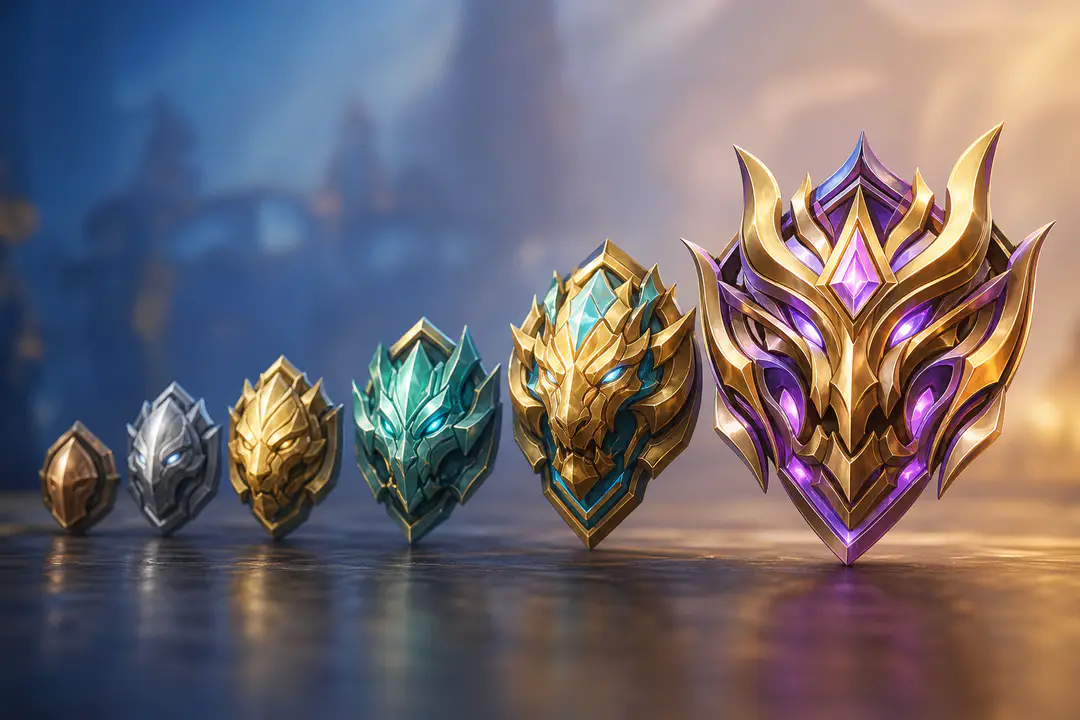
Mobile Legends: Bang Bang’s ranked mode is the game’s competitive queue, and its ladder runs in a fixed order: Warrior, Elite, Master, Grandmaster, Epic, Legend, and Mythic. Progress through the early rank tiers is built on stars and divisions, while high-end progression shifts into mythic points and named Mythic sub-tiers. The part that trips up many players is not the rank order itself, but the rules attached to each bracket: when Draft Pick replaces blind pick, how promotion and demotion happen, what your credit score can block, and why the same lobby feels very different in solo queue and team queue.
Mobile Legends rank order
There are seven main ranks in Mobile Legends: Bang Bang. That sounds simple, but the experience changes sharply once you move from the lower ladder into Epic and above, where matchmaking rules and hero selection become much stricter.
- Warrior
- Elite
- Master
- Grandmaster
- Epic
- Legend
- Mythic
Within that ladder, the lower and middle ranks use divisions and stars. Winning a ranked match gives stars; losing costs stars. Fill the required stars in your current division and you earn promotion into the next one. Drop enough matches and demotion follows, which is why climbing in Master or Grandmaster often feels steady, while climbing in Epic can stall once drafting errors start deciding games.
Mythic is not a single flat endpoint. It expands into Mythical Honor, Mythical Glory, and Mythical Immortal, so the top of the rank system keeps separating players long after they leave Legend behind. If you are still learning hero pools, lane assignments, and counterpicks, the article on Mobile Legends heroes is useful context because ranked pressure rises fast once your available picks are tested in draft.
What each rank feels like
Warrior to Master
These tiers teach the basics more than they test refined macro play. Blind pick is the norm, team coordination is inconsistent, and many players are still learning how roles work. A strong comfort pick often matters more than draft theory here because match quality swings on simple errors: overchasing, missing objectives, or running heroes in the wrong lane.
The practical goal in these brackets is not flashy win streaks. It is building a small, repeatable pool of heroes and understanding how stars convert clean mechanics into promotion. Players who switch roles every other match often stay stuck longer than players who spam two dependable choices.
Grandmaster to Epic
Grandmaster is the last stretch before ranked starts demanding much more discipline in hero selection. You still see plenty of uneven games, but the average lobby begins to punish one-dimensional players. By Epic, the game changes shape because Draft Pick enters the picture and the ban phase starts affecting every match.
That jump is why many players describe Epic as the first real filter in Mobile Legends: Bang Bang. Mechanical skill still matters, but reading the enemy draft, avoiding duplicate role problems, and entering queue with enough usable heroes suddenly matters just as much.
Legend to Mythic
Legend is where weak habits become expensive. A player who reached Epic by forcing one assassin can still scrape by. A player who reaches Legend without understanding jungle tempo, side-lane priority, or how to trade bans usually gets exposed fast. Team queue also feels different here because coordinated groups can punish random solo queue mistakes much harder.
Mythic is where the ladder stops behaving like a simple star climb and starts separating players with finer measurements. At that point, flex rank value becomes obvious. Being able to move between gold lane, roam, and jungle is often more useful than being excellent on one narrow hero type.
How ranked progression works
Most of the ladder is built on a familiar loop: win, gain stars; lose, drop stars. That sounds straightforward, but the combination of divisions, promotions, and demotions creates the real pressure. A player near the top of a division is one win from moving up and one loss from stalling. A player at the bottom of a division is playing to avoid losing ground.
In practical terms, ranked progression has four moving parts:
- stars determine short-term movement after each match
- divisions split a rank tier into smaller checkpoints
- promotion happens when the required stars are filled
- demotion follows repeated losses or failure to hold the current level
This is why two players can have similar win rates and very different climb stories. One player strings wins together and crosses multiple divisions cleanly. Another alternates wins and losses, gains little net progress, and spends hours treading water. In solo queue, that pattern is common because you are exposed to wider variance in teammate roles and decision-making. In team queue, the match rules stay the same, but coordination smooths out some of that volatility.
Credit score matters here too. Ranked access is tied to account behavior, so poor conduct does not just damage reputation; it can lock you out of the competitive queue entirely. If your account has already been restricted, the steps in this Mobile Legends ban appeal guide cover the recovery process and what to prepare before contacting support.
Entry rules
Not every account can jump straight into ranked. Mobile Legends gates its competitive queue behind basic account readiness, and the reason is simple: players need enough familiarity with heroes and match flow to participate without sabotaging every lobby they enter.
- You need access to Ranked mode before entering the ladder.
- Your credit score must be high enough to queue.
- Your available heroes matter once draft pick begins in higher ranks.
- Your queue type changes the lobby experience, especially between solo queue and arranged teams.
The hero requirement becomes more important than many newer players expect. In blind pick, a narrow pool is inconvenient. In draft pick, it can become a direct handicap if your preferred heroes are banned or picked first. That is why players climbing toward Epic should build role coverage early rather than waiting until draft starts forcing the issue.
There is also a practical difference between standard live play and the advanced server environment. The advanced server is where new changes can appear first, but ranked understanding should still be built around the live match rules players actually face on the main server ladder.
Draft Pick
Epic is the turning point because ranked stops being mostly blind pick and becomes a drafting contest before the match even starts. A bad composition in Epic or Legend can lose before the first turtle fight. A balanced composition with wave clear, engage, and damage often wins games that look even on pure mechanics.
When Draft Pick starts
Draft Pick begins at Epic and continues through Legend and Mythic. Below that, blind pick defines most ranked hero selection, which keeps queues simpler but also makes overlap and role collisions more common.
What changes in draft
- The ban phase removes contested heroes before picks begin.
- Teams must react to visible enemy choices instead of selecting blindly.
- Role overlap is punished more clearly because composition weaknesses are easier to spot.
- Hero pool depth becomes part of ranked skill, not just an account detail.
A common Epic scenario shows why this matters. Your team first-picks a jungler, the enemy answers with hard crowd control and backline dive, and your side still locks a second farm-heavy damage hero instead of adding peel or frontline. Nothing about that mistake shows up in stars until the match ends, but the draft itself created the problem. That is why players who understand bans and flex rank options climb more cleanly than players with similar mechanics but weaker drafting habits.
Matchmaking also deserves a realistic view. It is designed to place players into competitive lobbies, not to guarantee evenly skilled teammates every game. Queue type, current rank tier, and whether you enter as solo queue or in a pre-made lobby all shape what kind of match you get. If you want more general context on competitive play habits across phones and tablets, mobile gaming habits help explain why queue environments vary so much by time and region.
Mythic sub-tiers
Reaching Mythic is a milestone, but it is not the end of the ranked ladder. Once players enter Mythic, progression is separated further into named tiers that distinguish top-end performance much more clearly than the lower star-and-division structure.
| Mythic level | Position in the ladder | Progression note |
|---|---|---|
| Mythic | Top main rank | High-level ranked progression begins here |
| Mythical Honor | Above base Mythic | Marks players who have moved beyond entry Mythic |
| Mythical Glory | Above Mythical Honor | Represents a higher competitive bracket |
| Mythical Immortal | Top Mythic sub-tier | Highest named Mythic bracket |
The key mechanical shift in this bracket is mythic points. Lower ranks teach players to think in stars and divisions. Mythic asks them to think in sustained performance across a more selective field. That changes how players judge progress: a brief streak no longer tells the full story, and consistency starts to matter more than simple momentum.
It also changes hero priorities. In lower rank tiers, many games are won by raw execution and snowballing. In Mythic, drafts are cleaner, punish windows are shorter, and role discipline matters more. A roam player who knows exactly when to abandon lane and secure vision can influence mythic points just as much as a carry with strong mechanics.
Why players get stuck
Most rank plateaus come from one of three problems: too few heroes, poor draft decisions, or unstable queue choices. Players often blame matchmaking first, but long stretches of ranked data usually point back to repeatable mistakes. The fix is rarely dramatic. It is usually role discipline, cleaner objective timing, and fewer risky picks in unfamiliar lobbies.
- One-tricking becomes risky at Epic because bans and counterpicks are constant.
- Ignoring the ban phase gives away comfort heroes and draft leverage.
- Queueing tilted turns close promotion games into avoidable demotion streaks.
- Playing every role without mastering any role weakens consistency.
A useful benchmark is whether you can enter a ranked lobby and cover at least two roles without forcing low-confidence heroes. If the answer is no, the fastest improvement path is not more grinding. It is broadening your pool enough that draft pick stops controlling you. Players often use the Mobile Legends: Bang Bang Wiki to double-check rank names and historical ladder details, but the real climb still comes down to match rules, composure, and repeatable choices inside the lobby.
Final Thoughts
Mobile Legends ranks are easy to list and much harder to master. The climb stops being a simple star chase the moment draft pick, team composition, and mythic points start deciding outcomes. Players who treat ranked as a system, not just a streak machine, are the ones who keep moving when the ladder gets tighter.