
How to Optimize Courier Dispatching for High-Priority Business Deliveries
Manual dispatching is causing more harm to the bottom line of your B2B courier contracts than you might realize. When time-critical orders arrive and a dispatcher is going through spreadsheets or on the phone trying to work out who is nearest, you’ve lost time that SLA isn’t going to get back.
That delay compounds quickly – a two-minute lag in assignment can mean a driver sits idle while another races to cover a window they were never supposed to own. In an industry where margins are already thin, those inefficiencies aren’t just operational friction. They’re a liability.
The Real Bottleneck Isn’t Traffic – It’s Static Routing
Most courier operations that struggle with high-priority deliveries don’t have a traffic problem. They have a routing logic problem. Static routes built the night before can’t absorb a 9am urgent pickup without someone manually pulling a driver off another job and hoping it doesn’t cascade into missed windows elsewhere on the run sheet.
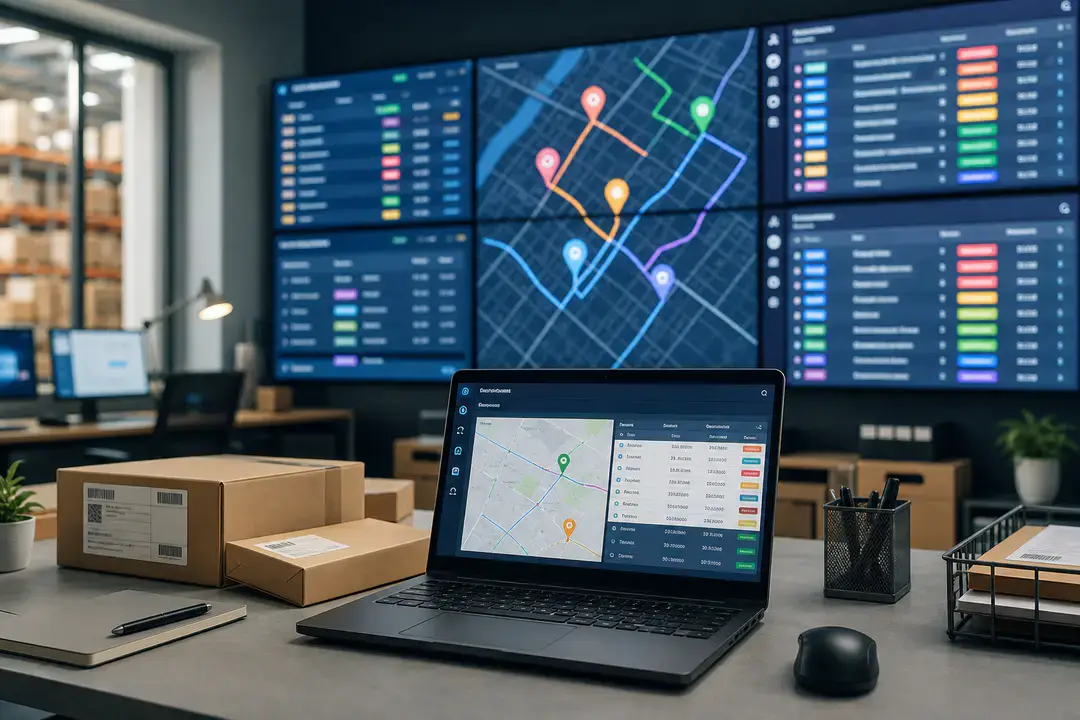
Dynamic dispatching solves this by treating routes as living structures. When a new high-priority order comes in, the system evaluates every active driver – their current location, remaining capacity, and committed delivery windows – and inserts the job where it fits without breaking existing SLAs. No phone calls. No guesswork. The dispatcher sees a recommended assignment in seconds and confirms it.
This isn’t a marginal improvement. It’s the difference between a dispatcher managing 12 drivers reactively and managing 30 drivers proactively.
Building The Right Technology Foundation
The dispatch layer isn’t in a vacuum, either. High-priority business runs come from an ERP, an order management system, or the customer’s internal system. If there isn’t a seamless API connection between those engines and your dispatch software, someone is pushing that order through by hand – making mistakes and causing the sort of lag that will blow a tight delivery window.
A properly configured transportation management system does this automatically, injecting the order the moment a customer books a run. It arrives in the dispatch queue pre-formatted with priority markers, delivery-window mandates, and special instructions. No need to push it. No lag.
Last-mile delivery is already where you wring out 41% of total supply-chain costs (the Capgemini Research Institute said that three years ago). That number grows when each high-priority run triggers manual input and manual handling. This technology isn’t an expense. It’s the bottom line.
Automate Driver Assignment Before You Scale
Depending on a dispatcher’s gut feeling to make these choices works when you don’t have much volume (you can roughly remember who’s nearby and who’s free). When you’re doing significant volume, that tiny delay while your dispatcher pages through the mental roster of drivers means some assignments are going to keep drivers waiting uncomfortably long at hubs or spool up urgent deadlines while a vehicle remains unused.
Automated scheduling lets all your driver assignments happen immediately, based not on looking at the position of vehicles every 20 minutes (or however long it takes for the dispatcher to remember to take a look) but on a constantly calculated real-time position and capacity. A driver was just 200 yards away when needed and had a half-empty truck? They get the job.
Electronic Proof Of Delivery Isn’t Optional For B2B Clients
B2B clients have a different set of needs compared to individual consumers. For instance, a medical supplier or a legal firm or a manufacturing client may require a documentation of a high-value delivery that can be used internally or as a legal document if needed. Just having a verbal confirmation from the driver will not suffice.
Electronic proof of delivery includes a photo of the receiving authority who signed off, the GPS location of the delivery, and a time and date stamp confirming when the delivery was completed – creating a clear, consent-verified record. This entire ledger-style entry is immediately available in your client portal once the driver marks the job as complete.
This type of proof also protects you as the courier. Disputes about the delivery/the timing of the delivery/the authority accepting the delivery, etc, are all immediately concluded simply by referring to the ePoD records. For couriers running on tight SLA contracts, this protection has actual dollar and cents value.
Use Post-Trip Data To Tighten The System Over Time
Dispatch optimization is not about configuring the system once and forgetting about it. After each completed route, you have years of historical data showing what happened in the real world: where delays actually occurred, which routes your drivers hit on schedule, which driver and job pairings tended to perform the best. When a high-pressure B2B rush comes in, how long did it take you to reshuffle and respond?
Job-level SLA compliance tracking will clearly flag whether some of your delivery windows are just being missed day in and day out in certain regions, at certain times, with certain job types. That’s something you’ll never notice without route optimization software because those orders don’t prompt complaints. Similarly, your high-value customers in contract logistics will wear a path to your door with complaints about how long their trucks have to wait at shipping.
The dispatch algorithm gets much better as you go through several iterations feeding it clean data, especially for hard-to-schedule reverse logistics jobs where you’ll quickly see patterns forming in the replan list. And the right logistics manager will schedule their workers to arrive at 3 pm on Monday when the optimizing overlay tells them a dozen of their orders will be available for pick up in the warehouse at that time.
Emergency business deliveries won’t even put a dent in you. B2B customers are going to keep expecting more in terms of visibility, speed, and traceability. The carriers who keep those B2B customers are more and more the ones whose systems handle the dispatch, not the ones who handle it personally.
Further Reading