How Does AI Use Water? Cooling, Power, and the Hidden Footprint
AI does not use water while generating a response on your device. Its water footprint comes from the data centers running the software, the power plants supplying electricity, and the factories making chips. The amount varies by model, workload, cooling design, climate, electricity mix, and access to reclaimed water.
How Do AI Data Centers Use Water?
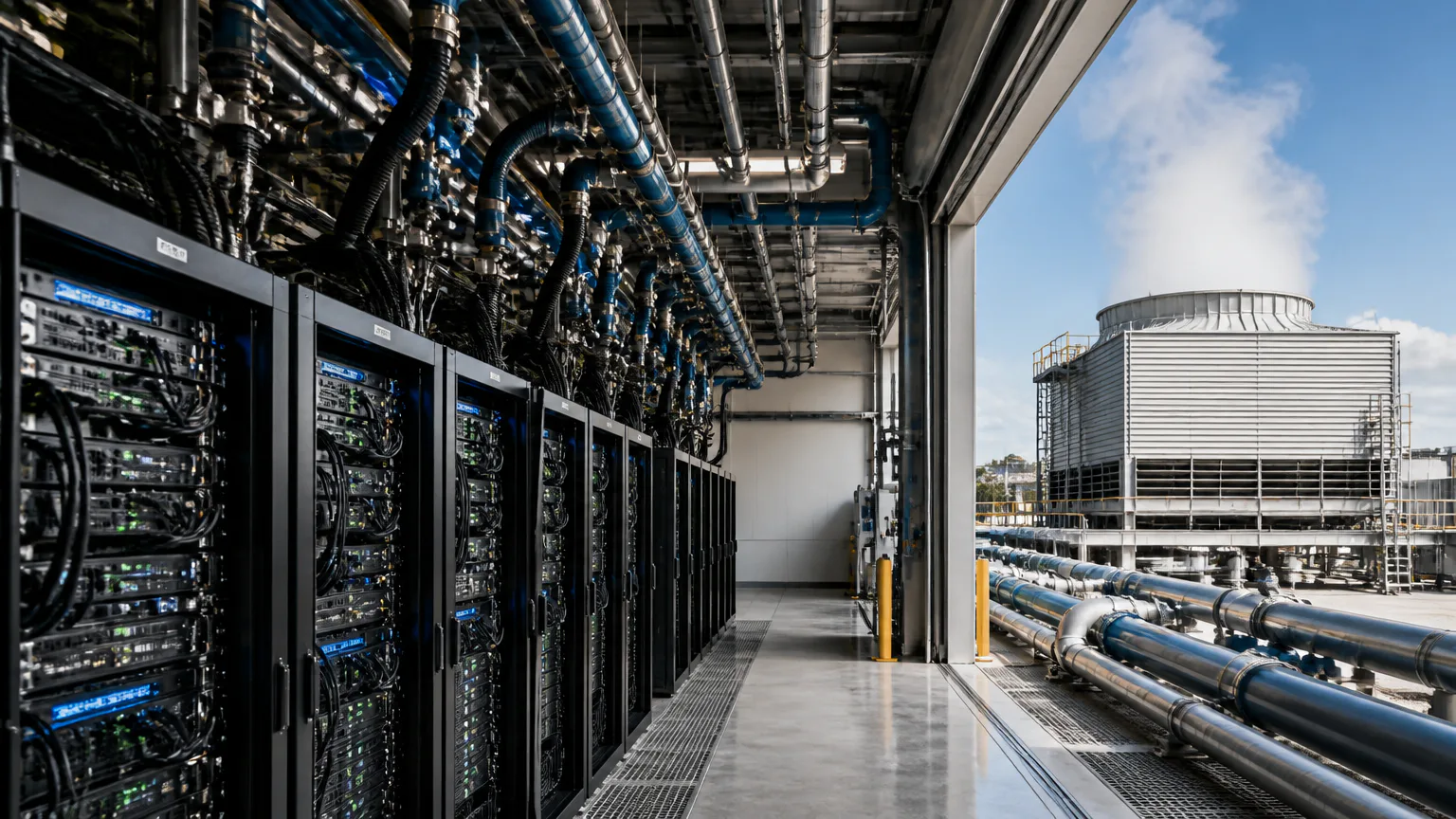
Generate server heat. GPUs and high-core CPUs turn electricity into computation and heat while training large language models or answering requests through services such as ChatGPT.
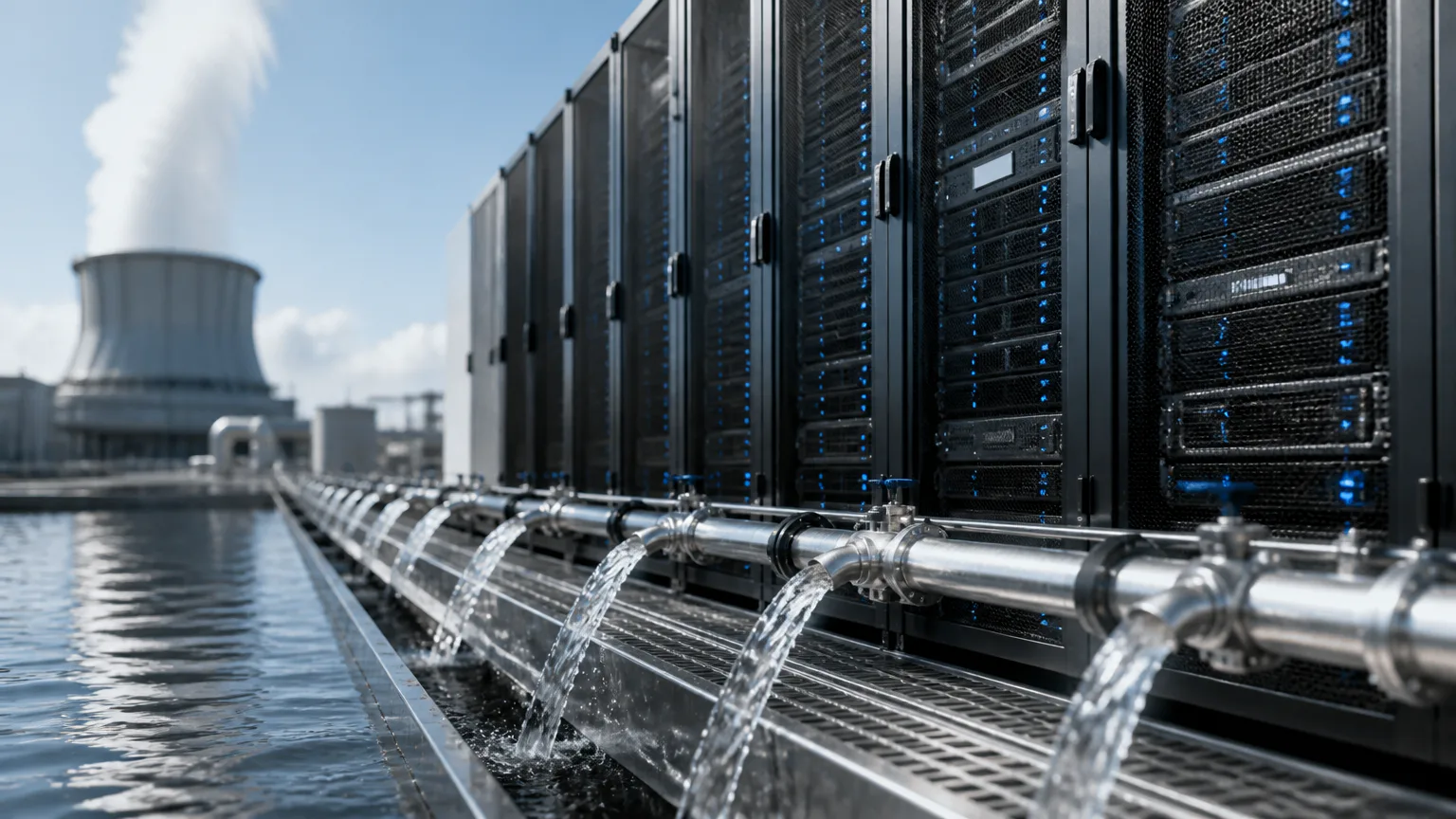
Transfer server heat. Cooling systems move heat away from chips with air, evaporative cooling, direct-to-chip liquid cooling, immersion cooling, or a combination of these methods.
Evaporate cooling water. Cooling towers release heat by turning part of their water supply into vapor. This creates direct onsite water consumption.
Generate electricity. Thermal power plants use water to produce steam and cool condensers, creating an indirect water footprint for AI workloads.
Manufacture AI chips. Semiconductor factories use ultrapure water to clean and process GPUs, CPUs, and other components before they reach a data center.
Why Does AI Need Water?
AI needs water mainly because its computing equipment produces substantial heat. A single high-performance GPU can run continuously inside a densely packed server rack, and thousands of GPUs operating together create a thermal-management problem that air alone cannot always solve efficiently.
Water carries heat efficiently. In an evaporative system, it absorbs heat and some of it becomes vapor. In a liquid-cooling system, coolant carries heat away from cold plates or immersed equipment and transfers it to another loop. Water is therefore tied to heat removal, not to the mathematical process of generating text or images.
There are two main accounting categories. Direct water use occurs at the data center, especially through cooling towers. Indirect water use occurs at power plants that generate the electricity consumed by servers. For U.S. data centers, broad national estimates put the indirect portion above the direct cooling portion.
How Much Water Does AI Use?
Measure | Water amount | What it represents |
|---|---|---|
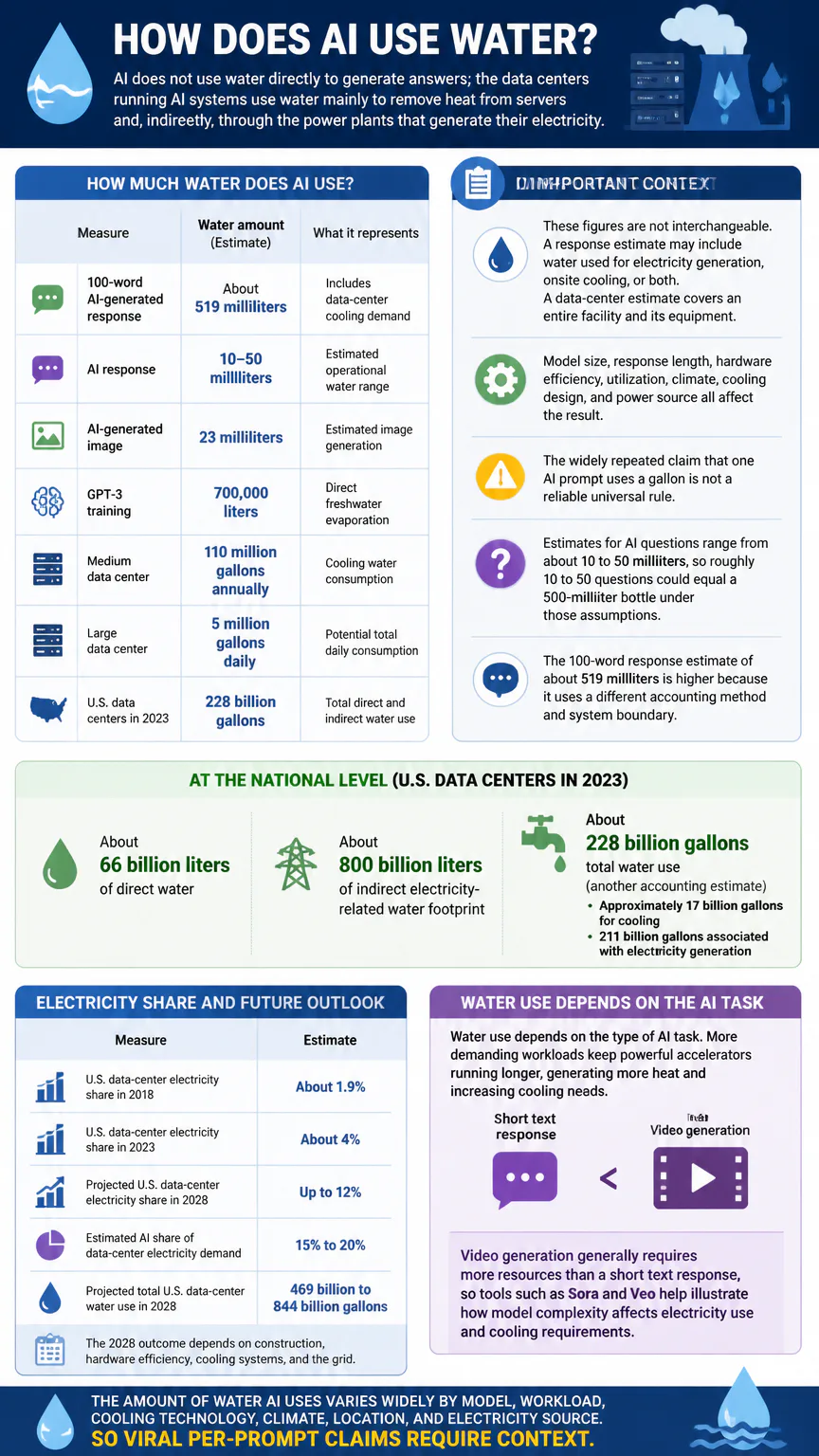
100-word AI-generated response | About 519 milliliters | Includes data-center cooling demand |
AI response | 10–50 milliliters | Estimated operational water range |
AI-generated image | 23 milliliters | Estimated image generation |
GPT-3 training | 700,000 liters | Direct freshwater evaporation |
Medium data center | 110 million gallons annually | Cooling water consumption |
Large data center | 5 million gallons daily | Potential total daily consumption |
U.S. data centers in 2023 | 228 billion gallons | Total direct and indirect water use |
These figures are not interchangeable. A response estimate may include water used for electricity generation, onsite cooling, or both. A data-center estimate covers an entire facility and its equipment. Model size, response length, hardware efficiency, utilization, climate, cooling design, and power source all affect the result.
The widely repeated claim that one AI prompt uses a gallon is not a reliable universal rule. Estimates for AI questions range from about 10 to 50 milliliters, so roughly 10 to 50 questions could equal a 500-milliliter bottle under those assumptions. The 100-word response estimate of about 519 milliliters is higher because it uses a different accounting method and system boundary.
At the national level, U.S. data centers used about 66 billion liters of direct water in 2023. Their indirect electricity-related water footprint was estimated at about 800 billion liters. Another accounting estimate puts total U.S. data-center water use in 2023 at about 228 billion gallons, including approximately 17 billion gallons for cooling and 211 billion gallons associated with electricity generation.
Measure | Estimate |
|---|---|
U.S. data-center electricity share in 2018 | About 1.9% |
U.S. data-center electricity share in 2023 | About 4% |
Projected U.S. data-center electricity share in 2028 | Up to 12% |
Estimated AI share of data-center electricity demand | 15% to 20% |
Projected total U.S. data-center water use in 2028 | 469 billion to 844 billion gallons |
The 2028 outcome depends on construction, hardware efficiency, cooling systems, and the grid.
Water use depends on the type of AI task. More demanding workloads keep powerful accelerators running longer, generating more heat and increasing cooling needs. Video generation generally requires more resources than a short text response, so tools such as Sora and Veo help illustrate how model complexity affects electricity use and cooling requirements.
Is AI Cooling Water Recycled?
Much of the water in a cooling system circulates repeatedly. A cooling loop can reuse water dozens or hundreds of times before a controlled discharge called blowdown removes concentrated minerals and other contaminants. This reduces the need for new water, but it does not eliminate water loss.
Evaporative cooling permanently removes the evaporated portion from the onsite supply because the water leaves as atmospheric vapor. Evaporation may account for approximately 80% of water withdrawn for data-center cooling. The remaining water can be recirculated, discharged for treatment, or replaced with fresh or reclaimed water.
Reclaimed water is treated municipal wastewater or recycled industrial water that is not intended for drinking. Data centers can use it in cooling towers, reducing pressure on potable supplies when local treatment infrastructure and water quality support the arrangement. Evaporated water eventually returns to the broader water cycle, but it may not return to the same watershed or be available during the same period of local demand.
Which Cooling Methods Use Less Water?
Cooling method | How it removes heat | Water-use profile | Main limitation |
|---|---|---|---|
Air cooling | Fans and heat exchangers | Low direct water use | Higher electricity demand in hot conditions |
Evaporative cooling | Water evaporation in cooling towers | High direct water consumption | Ongoing evaporation and blowdown |
Direct-to-chip cooling | Coolant through GPU and CPU cold plates | Low evaporative loss in closed loops | Requires specialized server hardware |
Immersion cooling | Dielectric fluid around IT equipment | No direct water-to-air evaporation in the data hall | Requires compatible equipment and fluid handling |
Hybrid cooling | Combination of air and liquid systems | Water use adjusted to operating conditions | More complex controls and maintenance |
Air cooling can avoid direct water consumption, but it may require more electricity to move and chill air, particularly in hot climates. Evaporative cooling often uses less electricity for heat rejection while consuming more water. Facilities therefore have to balance water availability, energy efficiency, local temperatures, and grid conditions.
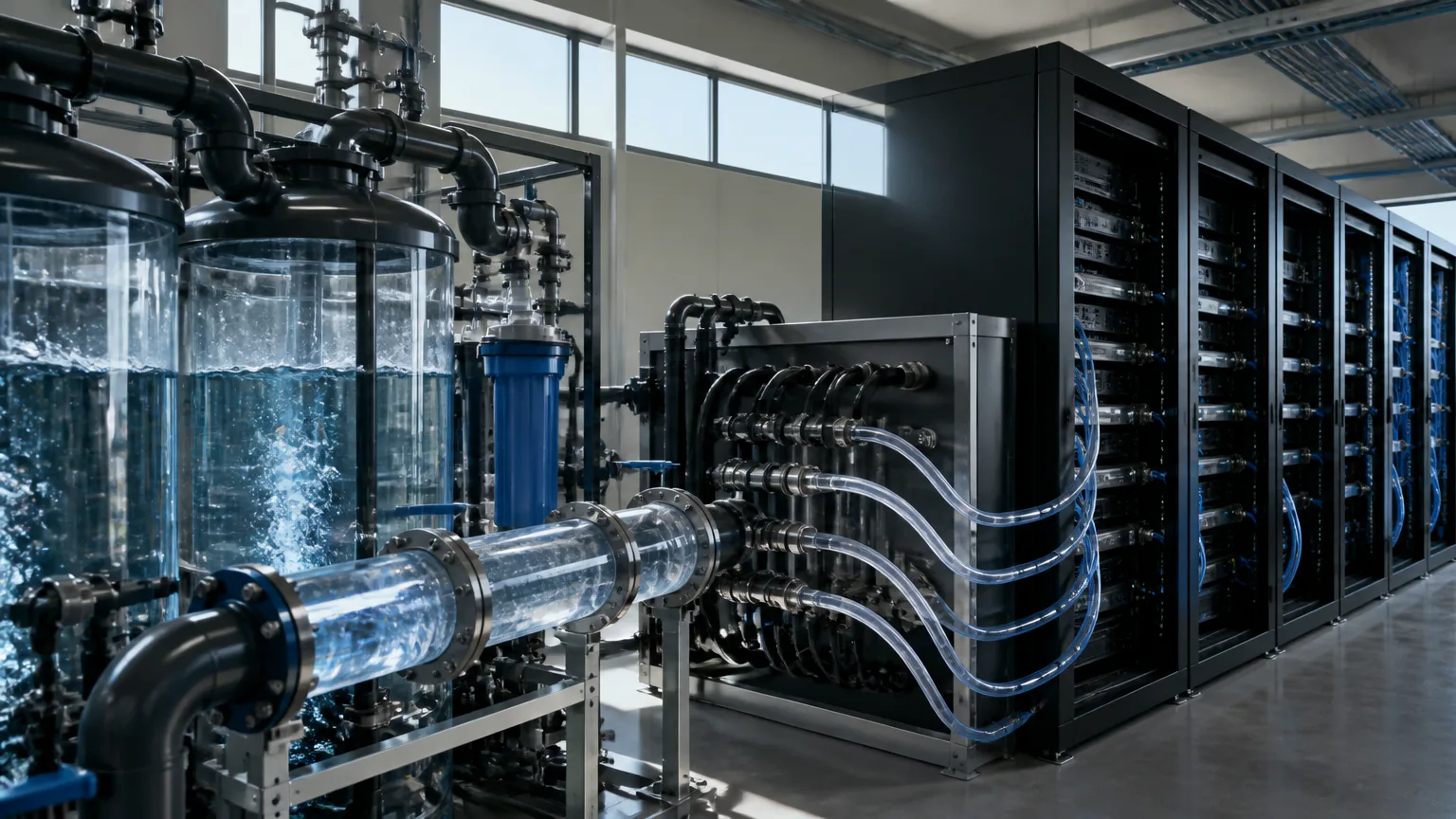
Direct-to-chip liquid cooling pumps coolant through cold plates attached to GPUs or CPUs. Closed-loop designs keep the coolant circulating and reduce evaporative losses. Immersion cooling submerges servers in a non-conductive dielectric fluid, which transfers heat to a secondary water loop without direct water-to-air evaporation inside the data hall.
Why Location Changes AI Water Use
The same AI workload can have different water impacts in different regions. A hot, dry location may need more cooling energy or water during peak demand, while a cooler location can reject heat with less mechanical cooling. Local humidity, seasonal temperatures, cooling-tower design, and access to reclaimed water all affect direct consumption.
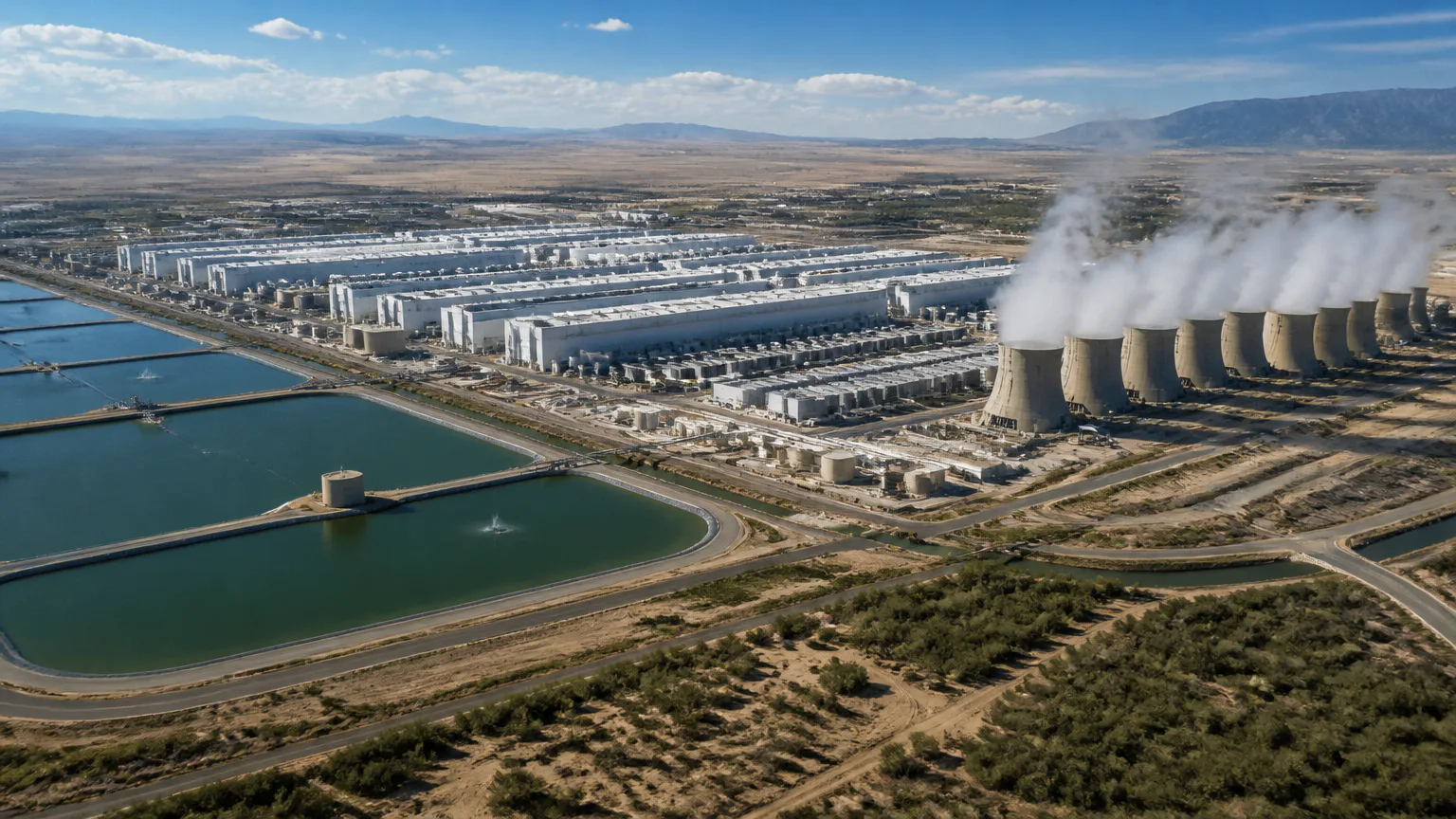
The electricity mix changes the indirect footprint. Thermal power plants use water for steam generation and condenser cooling, while wind and solar generation generally have much lower operational water requirements. About 56% of the electricity used by U.S. data centers comes from fossil-fuel sources, so grid composition remains an important part of the calculation.
Water scarcity matters more than a national average suggests. A facility using reclaimed water in a water-abundant area creates a different local risk from one drawing freshwater in a drought-stressed watershed, even if their annual totals are similar. Water withdrawal means taking water from a source before discharge; water consumption means the amount withdrawn minus the amount returned.
How Can AI Water Use Be Reduced?
Reducing water use requires changes at the facility, electricity, hardware, and software levels. The most useful measures address both direct cooling and the indirect water footprint of power generation.
Use reclaimed water in cooling towers where treatment systems and local regulations permit it.
Install closed-loop direct-to-chip systems for high-density GPU and CPU servers.
Deploy immersion cooling where compatible equipment and maintenance practices are available.
Match models to tasks so a smaller model handles routine classification, summarization, or drafting work.
Batch workloads when timing allows, improving server utilization and reducing repeated startup demand.
Schedule flexible computing during periods when the local grid has lower water-intensive generation.
Use lower-water electricity from renewable sources or power contracts with clear generation details.
Publish water-use effectiveness data, including the distinction between withdrawal, consumption, reclaimed water, and indirect electricity-related use.
Data-center water-use effectiveness, or WUE, averages about 1.9 liters of water per kilowatt-hour across reported facilities. A lower WUE is useful, but it should be considered alongside local water scarcity and the facility’s electricity-related footprint.
How Does Chip Manufacturing Use Water?
Water use begins before an AI server enters a data center. Semiconductor manufacturing uses ultrapure water to rinse wafers, clean equipment, remove chemical residues, and control contamination during fabrication. Estimates put the requirement at about 2.1 to 2.6 gallons per chip, although the total varies by chip design, process technology, and production stage.
This upstream use is separate from the water consumed while a GPU or CPU runs an AI model. A complete footprint includes chip manufacturing, server operation, facility cooling, electricity generation, and eventual equipment replacement. Manufacturing can also involve chemical treatment and wastewater management that a simple per-response estimate does not capture.
How Harmful Is AI to the Environment?
AI’s environmental effect depends on scale and location. Individual text requests have small water and energy footprints, but millions or billions of requests, large training runs, and continuous operation can create substantial demand for electricity, cooling infrastructure, and semiconductor production.
Water stress is a local concern because data centers can draw from the same rivers, aquifers, or municipal systems used by households, farms, and industry. The U.S. crop-production sector used about 183 trillion gallons of water in 2019, far more than data centers, but that comparison does not remove the need to manage data-center withdrawals carefully in areas with limited supply.
The main environmental questions extend beyond whether a single response uses a few milliliters. They include where the facility operates, whether it uses potable or reclaimed water, how much water evaporates, what generates its electricity, and whether demand is growing faster than local infrastructure can support.
FAQs
Why does AI use freshwater instead of saltwater?
Freshwater is easier to treat and less corrosive to cooling equipment than seawater. Saltwater can be used in specialized systems, but it requires corrosion-resistant materials, intake controls, and treatment, which add engineering complexity and cost.
Does generating an AI image use more water than text?
Yes. An AI-generated image is estimated at about 23 milliliters of water, while an AI response estimate ranges from about 10 to 50 milliliters. The figures vary with image resolution, model complexity, hardware, cooling system, and electricity source.
How much water can a data center use in one day?
A large data center can consume up to 5 million gallons per day. Actual use depends on facility size, workload, climate, cooling technology, seasonal conditions, and whether reclaimed water supplies the cooling system.
Conclusion
AI uses water mainly to remove server heat and generate the electricity that powers computation. Efficient models, closed-loop or reclaimed-water cooling, and transparent reporting of direct and indirect water use can all reduce its footprint.