Losing Twitter Followers: Why It Happens and Fixes
A follower drop can be unsettling when your content strategy seems unchanged. Many people run into this problem without a clear reason, which makes it hard to know whether to adjust their posts or wait it out. The challenge is separating normal platform shifts from real audience dissatisfaction. This guide helps you spot the difference and respond more confidently.
Key Takeaways
- Follower drops are often cleanup-related, because Twitter regularly removes bot, spam, and inactive accounts that were never likely to engage in the first place.
- Algorithm changes can cut visibility, which reduces impressions and audience engagement and often leads to slower growth or gradual unfollows.
- Better follower retention usually comes from more relevant content, a steadier posting schedule, and authentic interaction with the audience you want to keep.
Why You’re Losing Twitter Followers
-
Bot and Inactive Account Purges
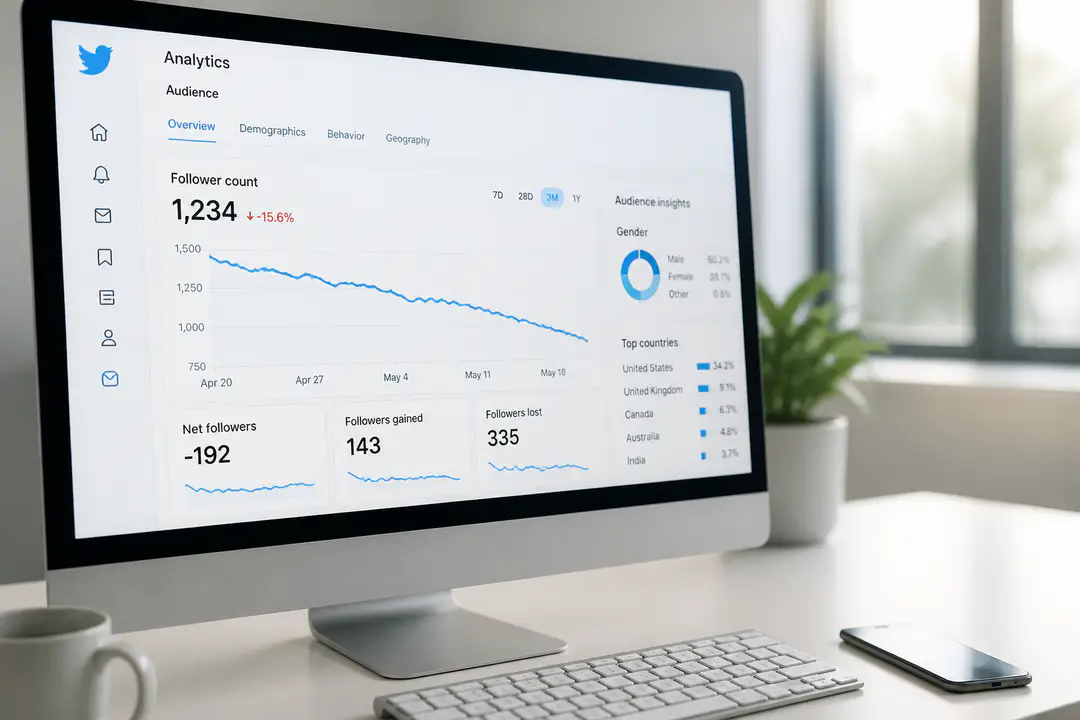
One of the most common reasons for a sudden drop is a platform cleanup. Twitter periodically purges inactive accounts, ghost followers, and spam networks, so your number can fall even if your content is performing normally. A sharp decline over one or two days often points to a spam purge rather than a real audience rejection.
That pattern became especially visible in late 2025, when X removed 1.7 million bot accounts in a major cleanup aimed at reply spam. Large accounts lost thousands of followers overnight, but those losses mostly reflected fake or low-value accounts disappearing. If your impressions and replies stayed steady while your count fell, that is a strong sign you lost weak followers, not loyal ones.
-
Algorithm Changes and Visibility
Follower loss can also be indirect. In January 2026, X replaced its legacy recommendation system with a Grok-powered transformer model, which changed how posts are surfaced. That shift affected who sees your content, how often they see it, and whether your posts earn enough early engagement to spread.
The Following feed is also now algorithmically sorted rather than purely chronological. That means time decay, engagement signals, and predicted interest all play a bigger role. If your tweets no longer match what the system thinks your followers want, fewer people see them consistently, and lower visibility often turns into lower engagement, then unfollows.
If you are trying to build a steadier presence, the same basics used in professional online brand planning apply here too: clear positioning, consistent topics, and posts that make people recognize why they followed you in the first place.
-
Content Quality and Relevance
- Content mismatch pushes people away. If followers came for industry insights and now mostly see personal rants, memes, or unrelated promotions, audience expectations break quickly.
- Too much self-promotion lowers trust. Accounts that mainly push links, offers, or repeated calls to buy often see follower fatigue.
- Low-value reposting hurts retention. If every post looks recycled, reactive, or thin, people stop seeing a reason to keep following.
- Controversial tweets can trigger a short-term unfollow wave, especially if they clash with your normal tone or brand identity.
- Inconsistent voice confuses your audience. A profile that shifts between niches without context often attracts the wrong people, then loses them.
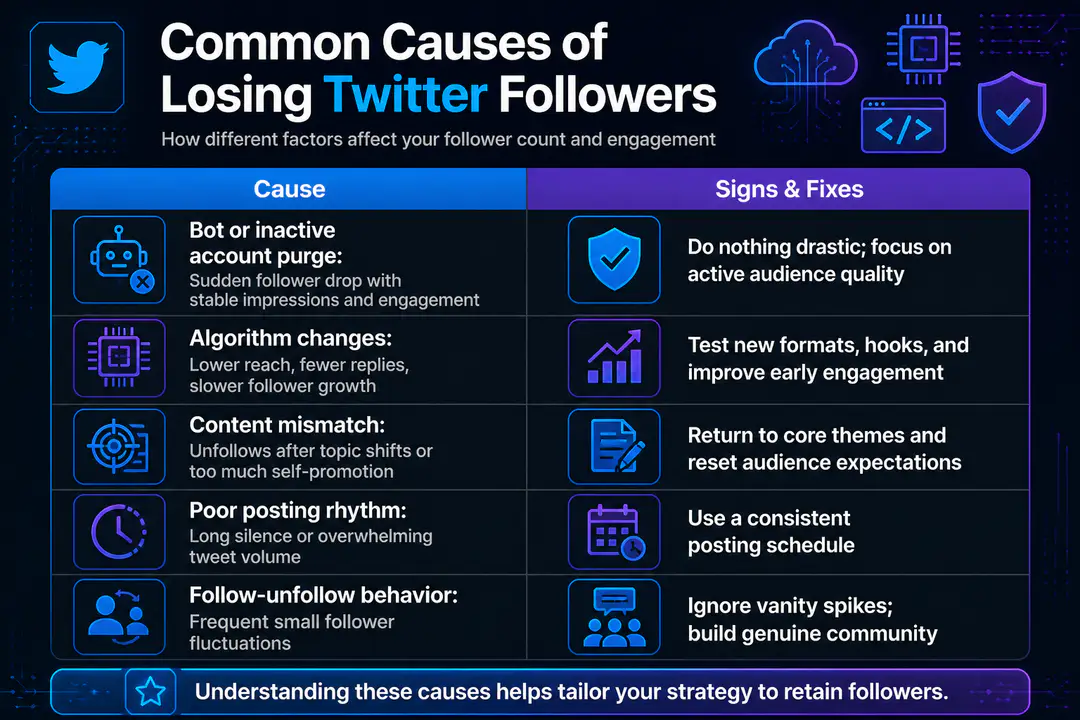
Cause What It Looks Like Best Fix Bot or inactive account purge Sudden drop with stable impressions Do nothing drastic; focus on active audience quality Algorithm changes Lower reach, fewer replies, slower growth Test formats, hooks, and stronger early engagement Content mismatch Unfollows after topic shifts Return to core themes and reset audience expectations Poor posting rhythm Long silence or overwhelming volume Use a consistent posting schedule Follow-unfollow traffic Frequent small fluctuations Ignore vanity spikes and build genuine community -
Posting Frequency and Timing
- Posting too little makes your account easy to forget. If followers rarely see you, they are more likely to unfollow during routine cleanup of their own following list.
- Posting too much can create fatigue, especially if several tweets say similar things or chase the same talking point all day.
- Irregular tweet frequency makes performance harder to read. A burst of activity followed by silence gives the algorithm mixed signals.
- Bad timing reduces early engagement, which matters more now because algorithmic sorting rewards posts that get quick interaction.
- Non-Premium accounts can feel visibility pressure more sharply if their posts do not attract immediate responses.
-
Follow-Unfollow Behavior
Not every loss reflects your strategy. Some users still play the follow-unfollow game to inflate their own numbers, which creates noisy fluctuations. Others follow during a viral moment, a trending controversy, or a giveaway-style post, then leave once that moment passes. Those swings are common, and they matter less than whether your engaged audience is sticking around.
Accounts built around trend spikes often feel this more sharply than accounts with a defined niche. That is why marketers tracking marketing trends usually separate temporary attention from long-term audience fit.
-
Steps to Stop Losing Followers
- Check the pattern first. If the drop happened overnight, compare it with impressions, likes, replies, and profile visits. Stable engagement with a lower follower count usually points to a purge, not a content failure.
- Audit your last 20 posts. Look for topic drift, repetitive self-promotion, weak hooks, or a tone shift. If a new content direction started right before the decline, that is your first clue.
- Recommit to 3 content pillars. Pick the main themes your best followers expect from you and post around them consistently. This reduces content mismatch and helps the recommendation system understand your audience.
- Improve tweet openings. Strong first lines increase stops, clicks, and replies. Ask a clear question, share one specific insight, or lead with a useful opinion instead of a vague setup.
- Fix your posting schedule. Choose a realistic rhythm you can maintain for at least 30 days. Consistency beats random volume because it helps both audience habits and algorithmic sorting.
- Reply more than you broadcast. Authentic interaction increases visibility and loyalty. Spend time responding to comments, joining relevant discussions, and engaging with peers in your niche.
- Reduce empty viral chasing. If trending posts bring the wrong crowd, your follower count rises fast and falls just as fast. Aim for relevance over reach.
- Review profile signals. Your bio, profile photo, header, and pinned tweet should all tell the same story. If people do not understand what they will get from following you, retention drops.
- Track follower retention weekly. A weekly review is more useful than checking daily swings. Daily changes are noisy, but weekly patterns show whether your adjustments are working.
Video-led accounts can also steady retention by using a repeatable content format. For example, creators who learn from unboxing videos often keep viewers longer because followers know what style and value to expect each time.
Profile Optimization Tips
- Use a clear profile photo that looks recognizable at small size.
- Write a bio that explains your topic in one sentence, not a list of vague traits.
- Match your header image to your niche or brand message.
- Pin a tweet that shows your value fast, such as a strong thread, best insight, or useful introduction.
- Add a consistent visual style so your posts feel familiar in the feed.
- Remove outdated links or offers that no longer match your current content.
Understanding Engagement Metrics
The follower count matters less when it is read alone. Watch impressions, reply rate, reposts, profile visits, link clicks, and follows gained per post. If followers are dropping but engagement rate is rising, you are often losing low-quality accounts and keeping a more active audience. If both follower count and engagement are falling together, that points to a real visibility or content problem that needs attention.
FAQs
Did Twitter purge inactive or bot accounts?
Yes. Twitter regularly removes spam, bot, and inactive accounts, and those cleanups can cause sudden follower drops even when your content has not changed.
Why did I lose followers overnight?
An overnight drop usually points to a spam purge or inactive account purge. If your impressions and replies stayed close to normal, that is the most likely explanation.
Can algorithm changes cause unfollows?
Yes. When visibility falls, followers see your posts less often, engage less, and become more likely to unfollow over time.
How long does it take to recover?
Recovery depends on how clear your niche is and how consistently you post. Most accounts need several weeks of steady content, better engagement habits, and a cleaner profile to see retention improve.
Conclusion
Losing followers is frustrating, but the fix starts with diagnosing the right cause instead of reacting to every dip. Focus on active audience quality, clearer content alignment, and consistent engagement rather than chasing raw numbers. Apply these steps consistently, stay patient while the patterns become clearer, and keep engaging with the audience you want to retain so you can regain and maintain followers over time.
Further Reading
- Clay Travis Twitter: Official Profile and Recent Tweets Guide
- Twitter Stalker Alert: How to Spot and Stop Unwanted Attention