Launching a Restaurant SaaS MVP: Orders, Reservations & Loyalty in One App
Most restaurants do not fail because of the food—they fail because the backend is broken. Staff juggle walk-ins, kitchen coordination, last-minute cancellations, and customer preferences, while relying on disconnected systems for orders, reservations, and loyalty. There’s no shared visibility, no central logic, and no room for error.
This operational gap is why over 60% of new restaurants shut down within their first year. Not due to bad menus, but broken workflows.
A unified SaaS platform that brings ordering, reservations, and loyalty into one interface isn’t an upgrade. It’s survival tech.
In this guide, we’ll break down how to build a lean, modular Restaurant SaaS MVP—from structuring the order engine to integrating smart reservations and retention-first loyalty systems—all designed to grow with the business, not complicate it.
Ordering as the Operational Core
Ordering is a system that cannot be broken.
Whether the order comes from the counter, a QR code, or online, the platform must handle real-time kitchen availability, modifier logic, item-level combinations, and tax or regional compliance, without delay or error.
In an MVP, ordering should support:
- Menu management with item-level status (in stock, sold out, prep time)
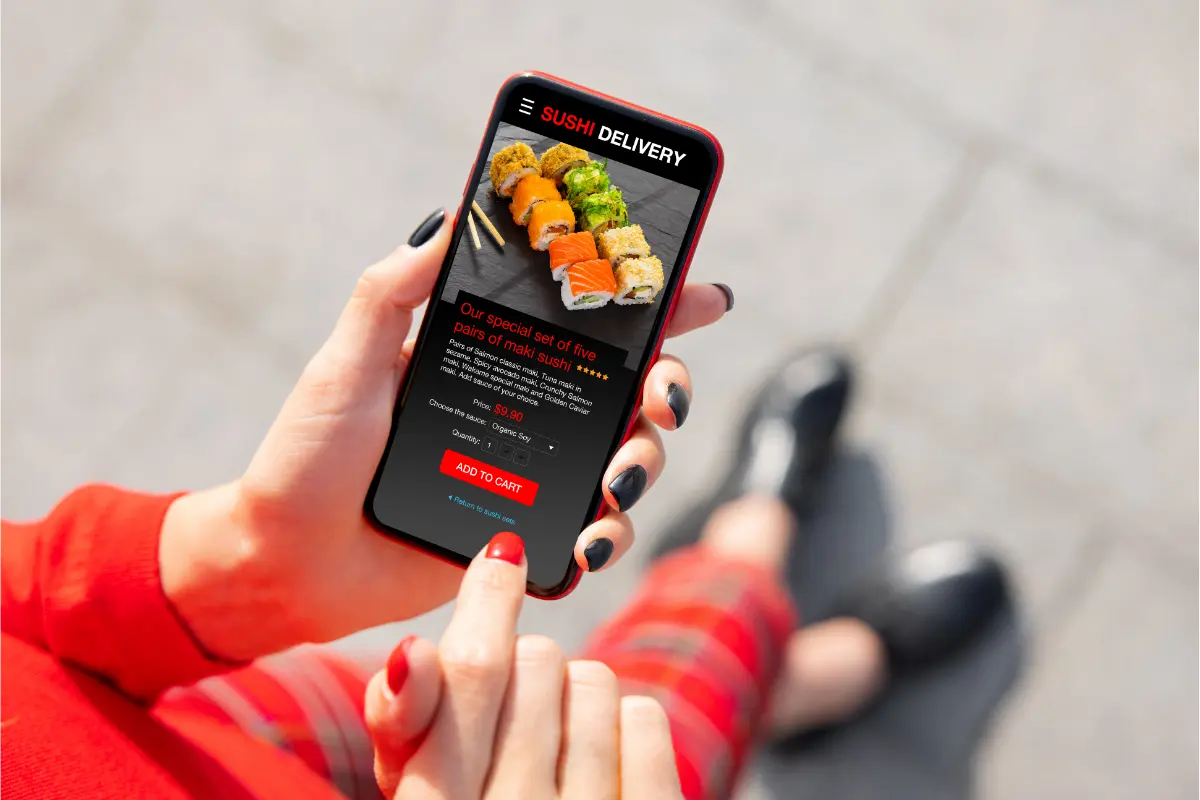
- On-premise QR ordering with table tagging
- Online ordering with scheduled pickup or delivery slots
- Modifier support (size, spice level, extra toppings)
- Real-time order updates and fulfilment status
The backend must sync with a POS or function as one. It must track each transaction by timestamp, order type, and item breakdown. Even if delivery logistics are outsourced, the app must own the order state. This means structured status flows—created, acknowledged, in prep, ready, completed—with triggers for notification, escalation, or error handling.
Start lean. Focus on orders placed inside the restaurant and for pickup. Add delivery logic only once fulfilment handoffs and time accuracy are stable.
Reservations That Manage Space and Time
Reservations are not calendar entries—they are dynamic logistics.
They synchronise tables, pacing, kitchen capacity, and customer expectations. A functional system prevents double bookings, balances walk-ins, and maps tables not just by availability, but by layout, turnover, and proximity.
At the MVP stage, reservation management must allow bookings by time slot with smart buffers to ensure smooth transitions between guests. It should permit manual overrides by staff, but only with audit trails that preserve operational clarity.
Waitlists must be surfaced in real time and communicated clearly to staff and diners through SMS or in-app updates. Tagging specific reservations as VIP, repeat, or event-related helps the team manage experience without increasing workflow complexity.
What defines a reliable system is not how many features it includes, but how fluently it reflects the floor world. A staff dashboard that shows upcoming reservations, current occupancy, and expected turnover within the same view makes decision-making sharper. Every action taken should reflect not just a time, but a context.
Loyalty That Drives Retention, Not Just Points
A loyalty system earns its place in the MVP only if it provides meaningful retention signals. This does not mean offering points for every order. It means structuring incentives that align with operational goals: increasing order frequency, promoting quieter hours, and identifying high-lifetime-value customers.
The MVP loyalty engine should include:
- Tiered or milestone-based reward logic (e.g., 5th visit, 3rd week in a row)
- Referral incentives with trackable invite codes
- Redemption tracking with item-level restrictions
- Simple opt-in at checkout or during signup
- Session-linked identification for loyalty accrual without full account creation
Avoid abstract point systems. Tie loyalty to specific behaviour. Offer a free dessert after three lunches. Grant early access to limited items for frequent diners. Use visit patterns, not only spend, as the base signal.
This module does not need deep personalisation in the first version. It needs trackability, redemption rules, and system-to-system visibility across ordering and reservations.
Cross-Module Foundations: Account, Admin, and Analytics
Though orders, reservations, and loyalty are the feature pillars, they must live under shared infrastructure:
- User Account Logic: Lightweight auth, optional social login, device-level session storage
- Admin Dashboard: Real-time view of orders, tables, customer activity, and performance trends
- Analytics Layer: Basic insights—average order value, reservation lead time, customer return rate
Each of these supports the others. Analytics without clear data models creates noise. Admin views without state updates create confusion. Authentication without structured profiles breaks loyalty.
Build shared data models that describe entities across modules: customer, visit, session, transaction, and table. Connect actions to these entities to enable clean filtering, notification triggers, and role-based access later.
Final Note on MVP Discipline
The goal is not to launch a fully featured suite. The goal is to support core actions end-to-end with minimal interruption: a customer places an order, books a table, earns a reward, without leaving the app, without needing a second system.
Each module must work independently, but integrate deeply where needed. Orders link to loyalty. Reservations link to capacity. Admin dashboards reflect all three.
What matters is not how many features exist on day one, but how each feature performs under real use.
Leading 3 Companies in the USA for Restaurant SaaS MVP Development
Building a restaurant SaaS MVP requires more than functional features. It demands technical clarity, structured integration, and the ability to translate complex operations into clean, usable interfaces. The companies below have delivered real-world platforms that unify ordering, reservations, and loyalty into cohesive systems, each built to scale with the business.
1. GeekyAnts – San Francisco, CA
GeekyAnts has delivered production-ready restaurant and hospitality applications with modular feature sets covering online ordering, reservations, loyalty rewards, and admin dashboards. Their development teams apply structured component logic, API-first architecture, and real-time state management to create systems where workflows are tightly connected and easy to expand.
In one restaurant chain project, they built a full-stack SaaS platform combining QR-based table ordering, smart reservation queues, and a rule-driven loyalty engine. The system included real-time updates for kitchen staff, flexible scheduling tools for hosts, and seamless reward redemption at checkout—all within a unified interface. Their ability to build scalable MVPs allowed the client to onboard multiple franchise locations quickly, each configured with shared logic but custom menus and hours.
Clutch Rating: ★ 4.9 / 5 (100+ reviews)
Address: GeekyAnts Inc, 315 Montgomery Street, 9th & 10th floors, San Francisco, CA, 94104, USA
Phone: +1 845 534 6825
Email: [email protected]
Website: www.geekyants.com/en-us
2. Sidebench – Los Angeles, CA
Sidebench designs and develops full-service platforms for hospitality and food-tech clients, often combining user experience strategy with robust backend engineering. Their applications focus on real-time operations and customer-centric design, enabling restaurants to run reservations, ordering, and loyalty features without relying on fragmented third-party tools.
In recent projects, Sidebench built web and mobile platforms that allowed restaurants to manage floor layouts, predict peak table turnover, and reward high-frequency guests through rule-based automations. Their system design prioritised configuration over customisation, helping chains roll out MVPs to multiple locations with consistent data models and shared dashboards.
Clutch Rating: ★ 4.7 / 5 (45+ reviews)
Address: 1732 Aviation Blvd, Suite 428, Redondo Beach, CA 90278, USA
Phone: +1 310 272 5600
3. Cheesecake Labs – San Francisco, CA
Cheesecake Labs develops mobile-first platforms for food delivery, logistics, and e-commerce. Their teams work with both emerging startups and growth-stage companies, building systems that support real-time updates, location-aware services, and layered access control. They emphasise speed-to-market while ensuring the architecture supports modular growth.
For a food retail client, Cheesecake Labs developed a SaaS app integrating in-app ordering, dynamic menu updates, and a rewards system triggered by user behaviour. Their reservation workflows featured adjustable time-slot logic and cancellation detection, all linked to a unified customer profile. Their loyalty layer focused on behavioural milestones over point accrual, supporting high engagement without complexity.
Clutch Rating: ★ 4.6 / 5 (65+ reviews)
Address: 995 Market Street, San Francisco, CA 94103, USA
Phone: +1 415 870 1893
Conclusion
Building a Restaurant SaaS MVP is not about launching a feature-packed product. It is about designing a stable, scalable foundation that solves the real operational pain points of modern restaurants. By focusing on three critical pillars—ordering, reservations, and loyalty—and integrating them under a shared infrastructure, developers can deliver a seamless, reliable experience for both staff and guests.
The success of the MVP will depend not on the breadth of features, but on how well each module performs under live conditions. A lean, well-structured system that enables clear workflows, reduces friction, and grows with the business will always outperform a bloated, disconnected platform. For restaurants navigating complex operations, such a unified SaaS solution is not a luxury. It is a competitive advantage.
Further Reading