The Practical Benefits of Using a Specialist to Import a Sports Car
Importing a sports car can look straightforward until the vehicle is held at the port. A specialist helps prevent the compliance, shipping and registration failures that can leave buyers with a car they cannot drive.
Compliance screening comes before money moves
The biggest risk in any overseas purchase is buying a car that cannot be registered for road use in your home market. Price matters, but it becomes irrelevant if the vehicle cannot legally reach the road.
Every market has its own safety standards and emissions rules. A car that is fully legal where it was first sold may fail local requirements where you live, and the gap is often wider for sports models with different tuning, equipment or lighting setups.
First-time buyers tend to discover this late. They agree on a price and pay for shipping, only to learn that the car needs work that costs more than planned or cannot be completed at all. You own the car, but you cannot use it.
A good specialist reverses that order. They check compliance before you commit, based on model year, original specification, source history and age exemptions that apply in many systems to older classics. If a car will need bumper or lighting changes, you hear about them upfront, along with the likely cost. If it cannot be made compliant at a sensible cost, they advise you to walk away.
This is standard due diligence in luxury car import and export rather than an added precaution. It protects your budget while keeping you from pursuing cars that were never realistic options.
Landed cost means more than purchase price
Purchase price is only the first figure to consider. The number that matters is landed cost, meaning everything you have paid by the time the car is legal and ready to drive.
That total has four parts beyond the seller’s price: import duty, ocean freight, brokerage support and compliance work. In the United States, the applicable import duty depends on the vehicle’s classification, country of origin and any current trade measures. Many DIY budgets stop there and overlook the remaining expenses.
Freight costs vary by route and container choice. Shared containers cost less, although they add handling risk, while single containers cost more and provide greater control. Marine insurance is another expense buyers often overlook until they calculate the full shipping cost.
That is why many buyers decide to explore a smoother way to buy your next sports car through a specialist that can source the vehicle and arrange fully insured worldwide shipping.
Compliance work is the unpredictable part. It may be minor for a late-model car built close to your home-market specification. For a grey-market car requiring emissions parts, software changes, lighting swaps and test fees, it can run into thousands. A specialist quotes this work upfront, allowing you to compare cars on the same basis.
You do not want surprises at this stage. A clear quote allows you to pass on an expensive car early instead of discovering the true maths after it lands.
Paperwork and shipping leave no room for error
Shipping a car creates a detailed paper trail, and every page has to match.
The bill of lading must show the correct buyer and vehicle identification number. Customs declarations must match the declared value and origin, while the available ownership and export documents must align with them. Port staff do not interpret intent. If the details conflict, they hold the car.
Holds become expensive quickly. Storage charges can accrue while errors are corrected, and a denied entry may require re-export or another remedy directed by the authorities. First-time buyers can lose weeks because of something as small as a misspelled name or missing stamp.
One typo is enough.
An experienced specialist can coordinate this chain with the customs broker and carrier. They can identify the documents likely to be requested, check identifying numbers before the ship sails and respond when something needs attention. The routine may be boring. That is exactly the point.
Local eyes and faster time to the road
Photos can conceal a lot. Auction sheets and seller listings may reveal even less.
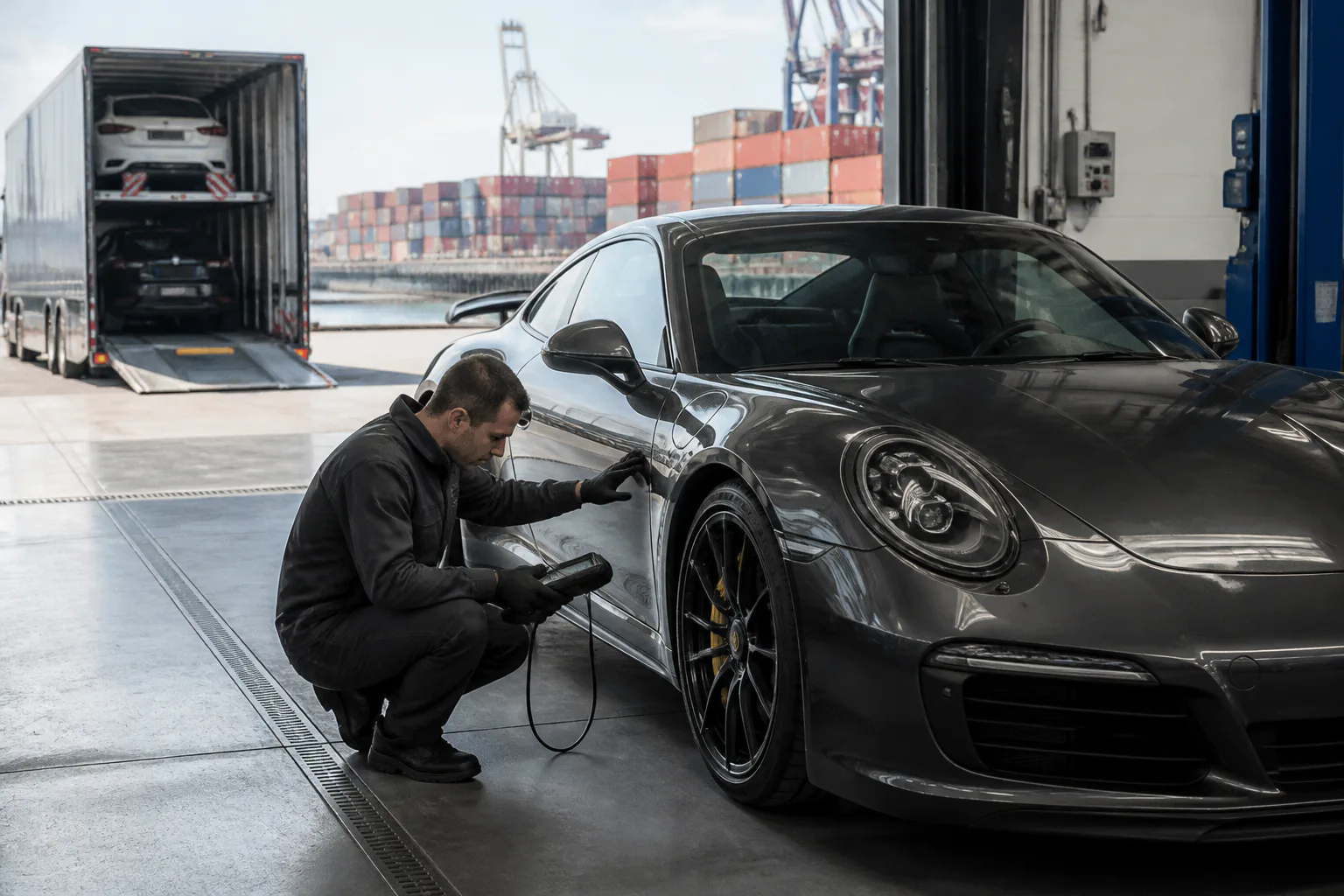
Specialists who source vehicles often have agents near the main buying regions. Those agents inspect the car in person, examine panel gaps and paintwork, verify the vehicle identification number against the documents and pull title history for salvage branding or odometer issues. You receive a report before bidding or paying a deposit.
This matters especially with sports cars because damage repair is common, and poorly repaired performance cars rarely drive as they should. A flood history or bent chassis can turn a dream car into a parts car. Remote buyers cannot identify every problem from listings alone, and sellers may not volunteer it.
Post-arrival support is another important part of the service. Once the car clears the port, it still requires transport and final titling with the registration office. If compliance work is due, it also needs workshop time. Specialists use bonded carriers they trust and understand what clerks will require for approval.
That network can shorten the timeline considerably. You avoid cold-calling workshops or making repeated trips to the counter with incomplete paperwork.
Marque focus adds another layer. A marque-focused team familiar with Porsche models knows which model years travel well and which specifications tend to cause problems. They filter early for the appropriate drivetrain and trim, saving inspection fees on cars that were never a suitable fit.
That combination of screening, costing, paperwork control and local checks is what you pay for. It will not make shipping free or change safety rules, but it can stop a complex purchase from becoming an expensive lesson. For most buyers, that trade is easy to justify.