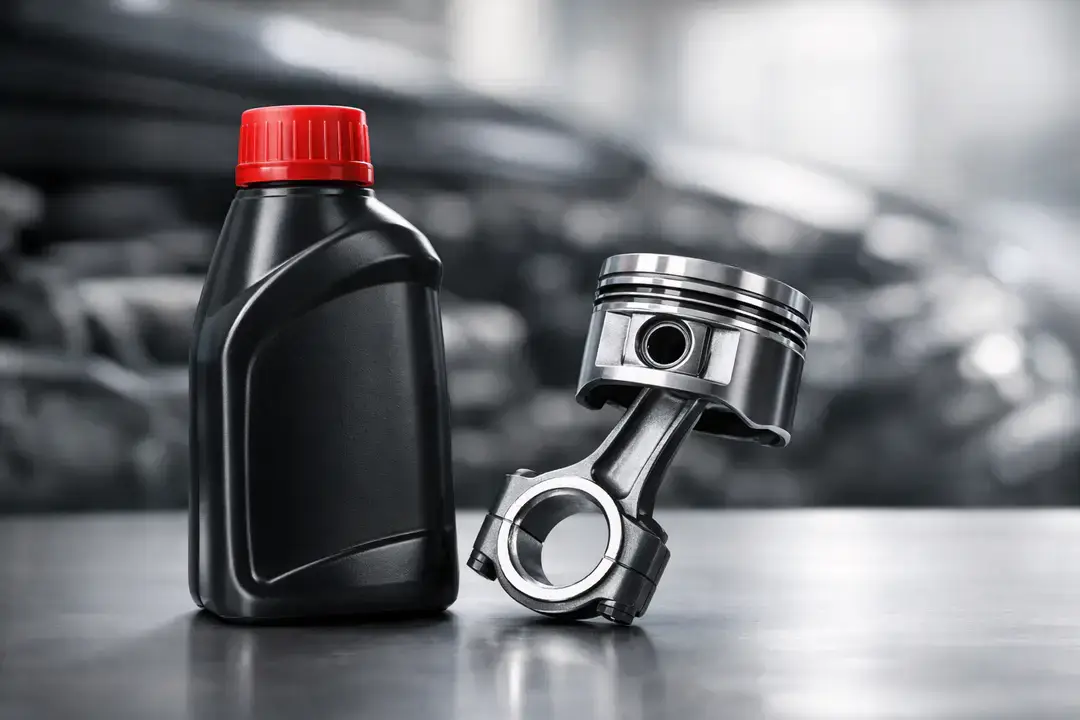
How Additives Support Long-Term Engine Health
Modern engines run at higher temperatures, tighter tolerances, and longer service intervals, placing constant stress on internal components. This makes lubricant performance central to long-term reliability. Additives are engineered to stabilise oil behaviour under load, protect metal surfaces, and slow wear. Understanding their function explains why consistent use supports sustained engine life rather than short-term improvement.
Maintaining Lubrication Under Thermal Stress
Base oils alone struggle to retain consistent viscosity when exposed to continuous heat cycles. Additives reinforce lubrication by introducing viscosity modifiers, anti-wear agents, and friction modifiers that keep protective films intact even as temperatures rise. In high-load environments such as towing, long-distance driving, or stop-start urban operation, this stability prevents metal-to-metal contact and reduces surface fatigue.
Within this context, formulations such as Lucas Oil additives and lubricants for engine care demonstrate how additive packages are structured to maintain oil film strength over extended operating periods. Their role is not to alter engine design but to support the lubricant’s capacity to perform consistently across varying thermal conditions.
Reducing Wear Through Protective Film Formation
Long-term engine health depends on the condition of internal surfaces, particularly camshafts, bearings, and cylinder walls. Additives containing anti-wear compounds and extreme pressure agents react with metal surfaces to form a microscopic sacrificial layer. This layer absorbs frictional forces before they reach the component itself, significantly slowing material loss over time.
This process becomes especially important during cold starts, when oil circulation has not yet reached full pressure. By maintaining a residual protective barrier, additives minimise the accelerated wear typically associated with these initial seconds of operation.
Controlling Deposits And Oxidation
Engine efficiency declines when oxidation by-products, sludge, and carbon deposits accumulate. These contaminants restrict oil flow, impair heat dissipation, and interfere with precise component movement. Detergent and dispersant additives keep particles suspended in the oil so they can be removed during filtration rather than settling on internal surfaces.
By stabilising the oil against thermal breakdown, additives also slow the chemical reactions that lead to thickening and varnish formation. The result is a cleaner internal environment that supports consistent compression, smoother valve operation, and more predictable fuel combustion.
Supporting Seal Condition And Oil Integrity
Ageing engines often experience gradual seal hardening and minor oil loss, which can compromise lubrication levels over time. Certain additive compounds are designed to condition elastomer materials, helping them retain flexibility and maintain a proper seal. This does not replace mechanical repair, but it does reduce the rate at which lubrication performance declines due to small leaks or pressure loss.
At the same time, corrosion inhibitors neutralise moisture and acidic combustion residues that would otherwise attack internal metal surfaces. This protection is particularly valuable in vehicles subjected to irregular use, where condensation can accumulate between operating cycles.
Extending Service Intervals Responsibly
Extended drain intervals are only viable when oil retains its functional properties. Additives contribute by improving resistance to shear degradation, stabilising thermal conductivity, and maintaining contaminant control. When the lubricant remains structurally sound for longer, it continues to perform its cooling, cleaning, and protective roles without premature breakdown.
This does not eliminate the need for scheduled maintenance, but it ensures that the engine remains protected throughout the full service cycle rather than experiencing a decline in performance before the next oil change.
Sustaining Performance Across Engine Lifecycles
As engines accumulate mileage, internal tolerances change and operating conditions shift. Additives help compensate for these gradual variations by reinforcing lubrication behaviour, preserving compression efficiency, and maintaining consistent oil pressure. This continuity supports smoother operation, quieter mechanical function, and reduced energy loss due to friction.
Over the long term, the cumulative effect is not a dramatic transformation but a measurable slowing of wear-related decline. Components remain within their functional limits for longer, which delays the onset of major mechanical intervention.
A Practical Approach To Engine Longevity
Additives support long-term engine health by stabilising lubrication under heat, forming protective surface films, controlling contamination, preserving seals, and sustaining oil performance throughout service intervals. Used as part of a structured maintenance routine, they act as a preventative measure that helps engines retain efficiency, reliability, and mechanical integrity over extended operating lifespans.
Further Reading