Mortal Shell 2 Review: A Bigger, Sharper Soulslike Sequel
Mortal Shell 2 is a better, bigger, and far more confident sequel than Mortal Shell. It keeps the original’s bleak metal-horror identity, but expands nearly every part of the formula: combat is faster, the shell system has more real build expression, exploration matters more, and the world now supports a full 25 to 30 hour campaign that can stretch closer to 40 hours if you chase dungeons and optional content.
That said, this is not a flawless soulslike. Camera problems, visibility issues, some uneven boss fights, and rough technical edges still drag on the experience, especially later on. But on PS5, Xbox Series X/S, and PC, this is the rare sequel that understands exactly what needed fixing and actually fixes most of it.
At a glance
The headline change is simple: stamina is gone. In its place, Resolve now drives the flow of combat, building as you land melee attacks and pushing you toward aggression rather than measured hit-and-retreat play. That one decision changes the combat pace more than any marketing bullet point could.
It also compares well in critical reception. Mortal Shell 2 sits at 84 on Metacritic and 85 on OpenCritic at the time of writing, a clear step up from the first game’s 76 aggregate range. In a 2026 field where Nioh 3 and Elden Ring still define the high end of the genre, that matters.
|
Category |
Mortal Shell 2 |
|---|---|
|
Developer |
Cold Symmetry |
|
Genre |
soulslike action-RPG |
|
Platforms |
PS5, Xbox Series X/S, PC |
|
Campaign length |
25-30 hours main path |
|
Long-play range |
Around 40 hours with extra dungeons |
|
Core combat shift |
Stamina removal, Resolve-driven offense |
Where the sequel improves
The first game had a strong identity but a narrow one. Mortal Shell 2 opens that up with a larger open environment, more dungeons, more weapon choices, and shells that feel less like minor stat swaps and more like distinct character archetypes with passive abilities and active abilities that change how you approach fights.
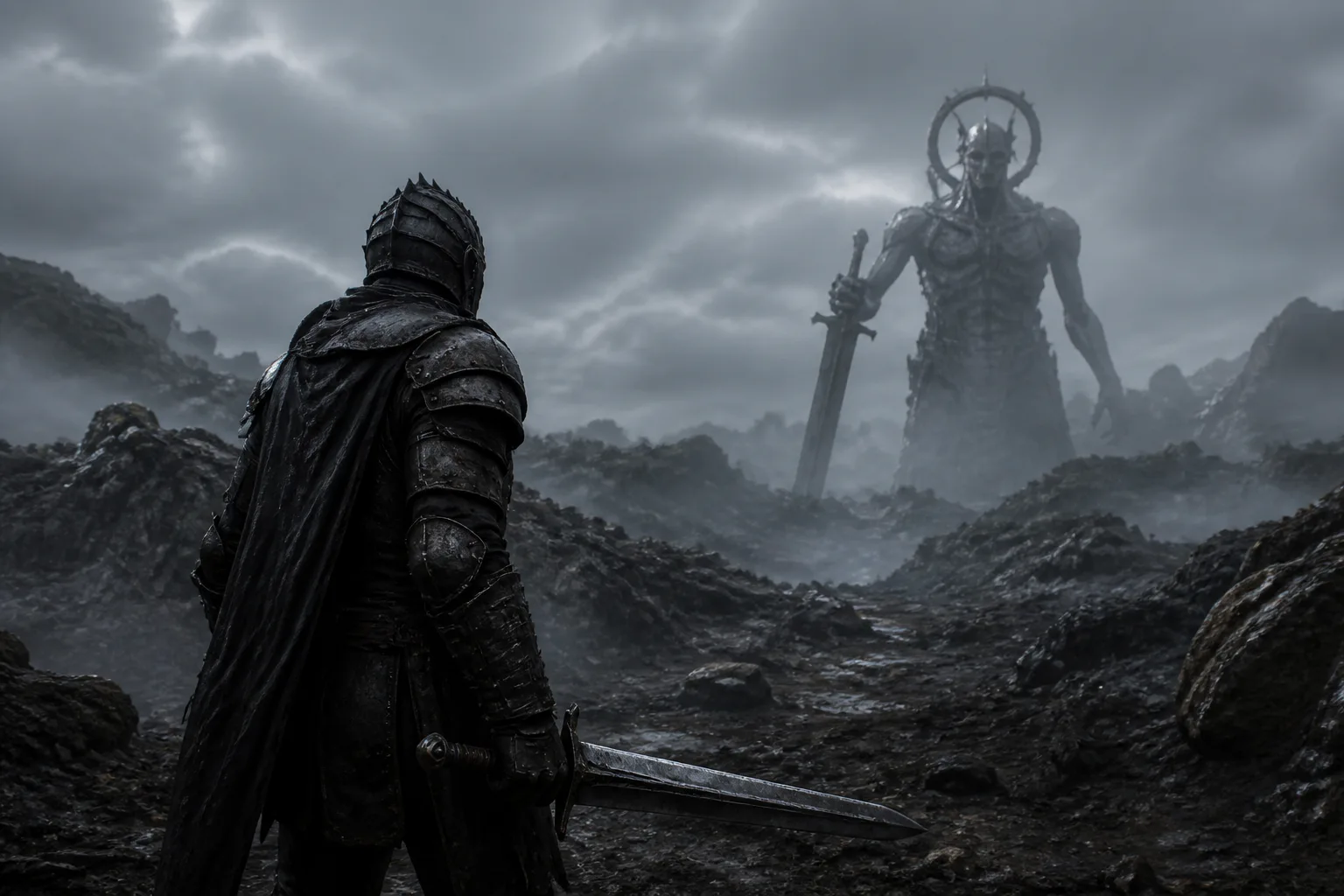
The result is a game with more range. If the original often felt like a concentrated cult favorite, the sequel feels closer to a full-scale action-RPG without losing its oppressive tone, grotesque art direction, or strange religious menace. Some of that visual identity recalls the same alien-horror instinct that makes Wayne Barlowe’s creature work so memorable.
Combat depth
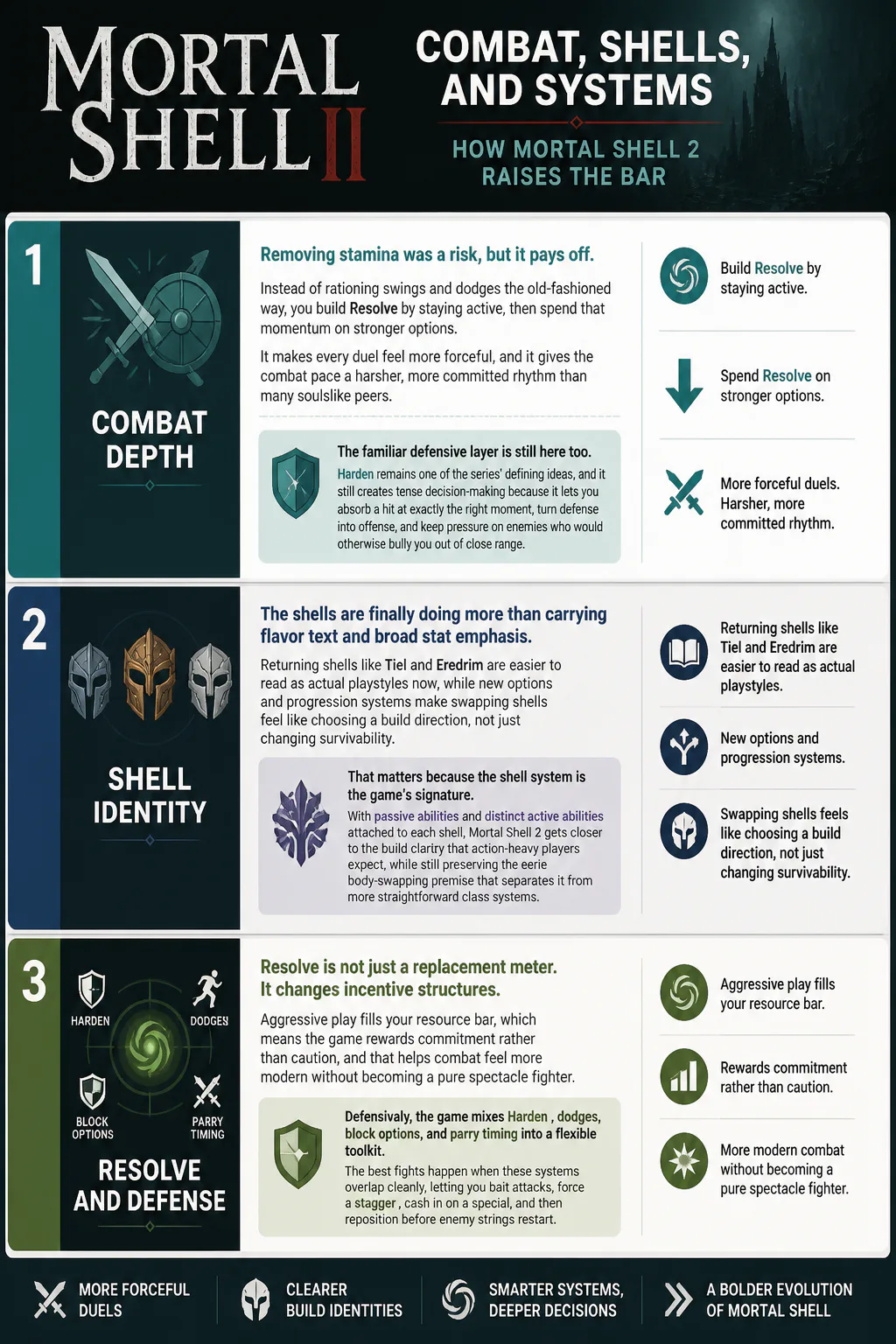
Removing stamina was a risk, but it pays off. Instead of rationing swings and dodges the old-fashioned way, you build Resolve by staying active, then spend that momentum on stronger options. It makes every duel feel more forceful, and it gives the combat pace a harsher, more committed rhythm than many soulslike peers.
The familiar defensive layer is still here too. Harden remains one of the series’ defining ideas, and it still creates tense decision-making because it lets you absorb a hit at exactly the right moment, turn defense into offense, and keep pressure on enemies who would otherwise bully you out of close range.
Shell identity
The shells are finally doing more than carrying flavor text and broad stat emphasis. Returning shells like Tiel and Eredrim are easier to read as actual playstyles now, while new options and progression systems make swapping shells feel like choosing a build direction, not just changing survivability.
That matters because the shell system is the game’s signature. With passive abilities and distinct active abilities attached to each shell, Mortal Shell 2 gets closer to the build clarity that action-heavy players expect, while still preserving the eerie body-swapping premise that separates it from more straightforward class systems.
Resolve and defense
Resolve is not just a replacement meter. It changes incentive structures. Aggressive play fills your resource bar, which means the game rewards commitment rather than caution, and that helps combat feel more modern without becoming a pure spectacle fighter.
Defensively, the game mixes Harden, dodges, block options, and parry timing into a flexible toolkit. The best fights happen when these systems overlap cleanly, letting you bait attacks, force a stagger, cash in on a special, and then reposition before enemy strings restart.
Build variety
Build diversity is where the sequel leaves the first game behind most clearly. Between shells, Seals, weapon choice, sidearms, and upgrade decisions, there is enough flexibility to support meaningful experimentation instead of funneling everyone toward a tiny handful of optimal setups.
The early Slayer Seal is a good example of how the sequel layers utility into progression. It boosts stagger damage and can heal you on special attacks, which makes it both a defensive crutch and an offensive enabler depending on how aggressively you play.
Weapons and Tarstones
The raw equipment pool is much stronger this time. There are eight main melee weapons and eight ranged sidearms, which immediately gives the game more replay value and more room for specialized builds than the original had.
Melee weapons: Eight main options, each built to support different timing, reach, and pressure patterns.
Sidearms: Eight ranged tools that add utility, burst damage, or safer openings in difficult encounters.
Tarstones: A key customization layer that supports build shaping beyond basic weapon selection.
Seals: Equipable modifiers that influence defense, stagger potential, sustain, or utility.
Upgrade materials: Exploration rewards feed character growth in a way that feels more integrated than before.
Currency: Progression ties spending choices to combat effectiveness, not just inventory clutter.
The sidearms deserve special mention because they stop ranged options from feeling like afterthoughts. Whether you are carrying a practical utility shot or something as absurdly memorable as the ballistzooka, ranged pressure can be part of your build logic rather than a panic button.
Exploration
Exploration is one of the sequel’s biggest wins. The larger open environment is not just bigger terrain for the sake of scale; it is packed with dungeons, upgrade materials, hidden routes, currency, and enough structural variety to make wandering feel productive.
The dungeons are especially strong. They add a distinct adventure-game pulse to the campaign, with clearer identity and more satisfying rewards than the original’s spaces often delivered. That is one reason the game stands out even in a year crowded by heavyweight action-RPG releases.
Difficulty and pacing
This is still a demanding game, but it is not trying to flatten every player into one exact rhythm. The faster combat pace, more expressive builds, and broad defensive toolkit make it more readable than the first game, even when encounters remain punishing.
The presence of difficulty settings also matters. If you want the intended pressure, normal conditions remain the best place to start. But Night mode, easy mode, and other tuning options widen the audience without stripping the game of its identity.
That balance is important because the sequel is not built around purity tests. It wants you to engage with systems, not just suffer through them. In practical terms, that makes it easier to recommend to curious soulslike players who bounced off the first game’s stricter roughness.
What holds it back
The rough edges are real. Camera problems can scramble close-quarters fights, visibility issues occasionally muddy enemy reads, and some late-game balance decisions make parts of the campaign feel less disciplined than the opening stretch.
The boss fights are also a mixed bag. Some encounters land beautifully because the interaction between parry timing, Harden use, and stagger windows creates tense exchanges. Others feel too telegraphed, which undercuts the fear and improvisation that this combat system can otherwise generate.
Technical issues also remain part of the package. They are not severe enough to erase the game’s strengths, but they do stop Mortal Shell 2 from reaching the absolute top tier occupied by the cleanest genre leaders.
Pros and Cons
Pros: Much stronger than the first game, excellent combat pace, meaningful shell identity, good build variety, strong dungeons, memorable tone, broad weapon and sidearm pool.
Cons: Camera problems, visibility issues, inconsistent boss fights, technical roughness, and some balance wobble toward the end.
Final verdict
Mortal Shell 2 is worth playing, and for soulslike fans it is easy to recommend. It does not dethrone the best in the genre, but it no longer feels like an interesting side project living on one clever mechanic. It feels like a fully formed sequel with a clear identity, real ambition, and enough improvements to make the original look like a draft.
If you liked Mortal Shell, this is the version of that idea you wanted the first time. If you skipped the 2020 game because it felt too narrow or too rough, Mortal Shell 2 is the better place to start.