
The Hidden Benefits of Upgrading Your Trucks Exhaust System
The exhaust system is not a very exciting part of a truck and that’s probably why it is the most neglected part too. However, if you’re going to be working the engine hard, pulling heavy loads, or making performance upgrades, how your truck handles the spent gases counts more than you think.
Backpressure Is Costing You More Than Power
Each time your engine fires, it has to expel the previous cycle’s exhaust gases to make room for the fresh charge. If the exhaust pathway is restricted – by undersize tubing, a bottlenecked manifold, or a clogged catalytic converter, for example – the engine is forced to labor harder to do its job, thus losing horsepower in the process. That resistance is backpressure. Reducing it is the largest motivating factor when upgrading to a higher-flowing exhaust system.
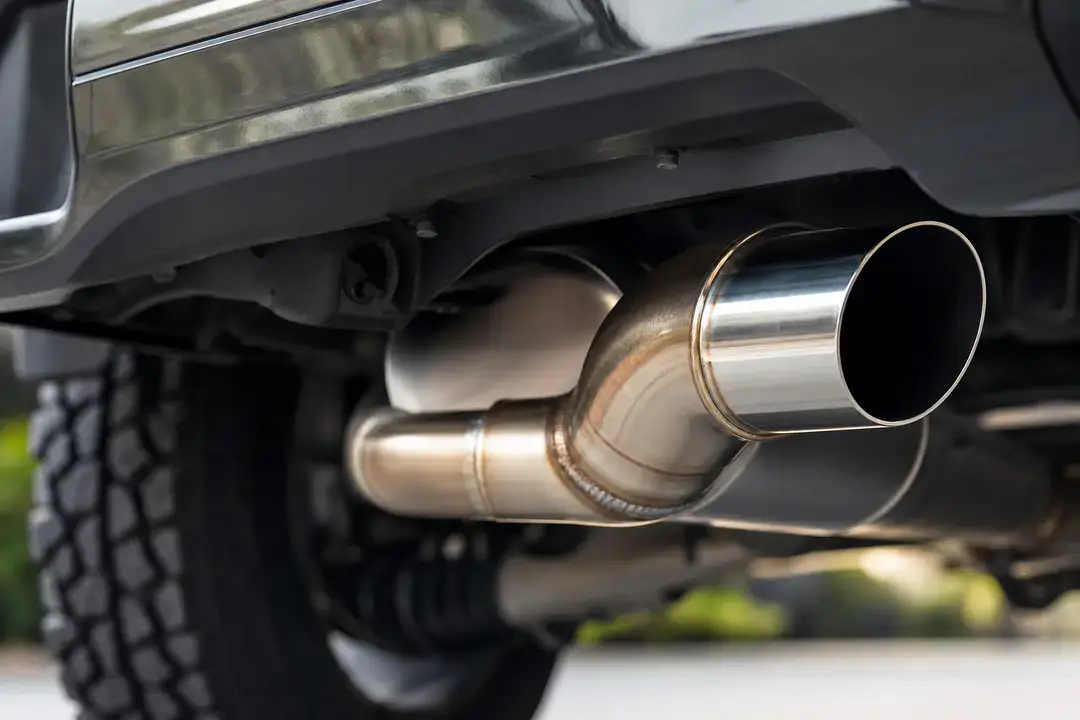
OEM exhausts are designed to a variety of specifications, many of which are diametrically opposed. Among them are cost, sound, and emissions compliance. More often than not, OE exhausts are constructed of mild steel because it is cheap, and then they are bent into shape using a crush method. Crush bending a pipe squeezes the diameter of the pipe in the bend into an unavoidable bottleneck. High-quality performance exhaust systems incorporate mandrel bending, which uses a device to insert a solid mandrel into the pipe as it is bent in order to maintain a constant and optimal diameter. This allows a higher volume of exhaust gases to pass and for them to exit the cylinder more easily.
The benefit of this is not only the potential for extra ponies under the hood. A freer-flowing exhaust lowers your exhaust gas temperature (EGT) measurably, accomplishing similar and more desirable rigors on your engine components. For instance, various aftermarket manufacturers have reported EGT decreases of 150-200 degrees under full throttle conditions by stepping up from the stock exhaust to a larger 4- or 5-inch system. Lower EGTs put less heat stress on the engine’s heads, turbo, and valves – not to mention your pocketbook come repair time.
An Exhaust Upgrade Is A Foundation, Not A Finish Line
This is really where an exhaust upgrade pays off. A cold air intake is sucking more air into the engine. A tuner is throwing in more fuel to match. If all that air and fuel come in with nowhere to go back out, then you’ve actually created a whole new set of pressure issues and inefficiencies only on the “IN” portion of the equation.
When truck owners are searching for the most complete collection of diesel performance parts online for their build, the exhaust system is the part that allows every other component to reach its max potential and the best return on your upgrade investment. Take it away, and all the rest is for nothing.
This is where the distinction between cat-back and turbo-back systems also is important. A cat-back replaces the back end from your cat on. It’s less intrusive and typically will keep your ride looking tip top legally. A turbo-back replaces the whole shooting match from the back of your turbo, giving you max flow, but also the likelihood of unknown legality in your area if you’re subject to emissions compliance laws. Make sure to do your research and know the regulations in your area before you piece together your turbo-back build.
What This Means When You’re Towing
If you own a diesel and you tow, you’ve undoubtedly felt that sensation of a truck that fires right up but starts falling flat on its face under a sustained load on a grade. Part of that is your engine working against itself. When exhaust gases don’t have a quick way out, the turbo takes longer to spool up, which means turbo lag, which means the boost is late, and that’s power right when you needed it most.
A high-flow exhaust lets the turbine wheel speed up faster. Your engine has a cleaner start on the next combustion event because its cylinders were more thoroughly evacuated during the exhaust stroke. Fuel atomizes better, and that torque – the kind you can feel right in the parking lot – follows. That’s the kind of torque you can feel in the mid-range when you’re trying to hold your speed with 15,000 pounds of camper trailer behind you.
And there’s the fuel economy benefit. On the exhaust stroke, your piston is pushing those exhaust gases out. Less resistance means less pumping loss. Less pumping loss means your engine makes the same power using less fuel. You won’t read an extra 2 mpg at a steady 1,800 rpm, but you’ll start seeing it as added range towing and improved mileage driving mixed cycles if you hop in the throttle a lot.
The Workhorse Case For Upgrading
Owners of trucks who care about durability and performance don’t have to look for the horsepower count to decide if upgrading the exhaust is worth it. Lower operating temps, better sustained torque under load, less wear on expensive parts, and a good starting point if other upgrades are in your future are all measurable returns on a simple investment. It’s not attractive, but changing the oil isn’t either. It’s called maintenance.
Further Reading