Stock, Clone, or Custom: Three Ways to Build AI Avatars for Video Ads
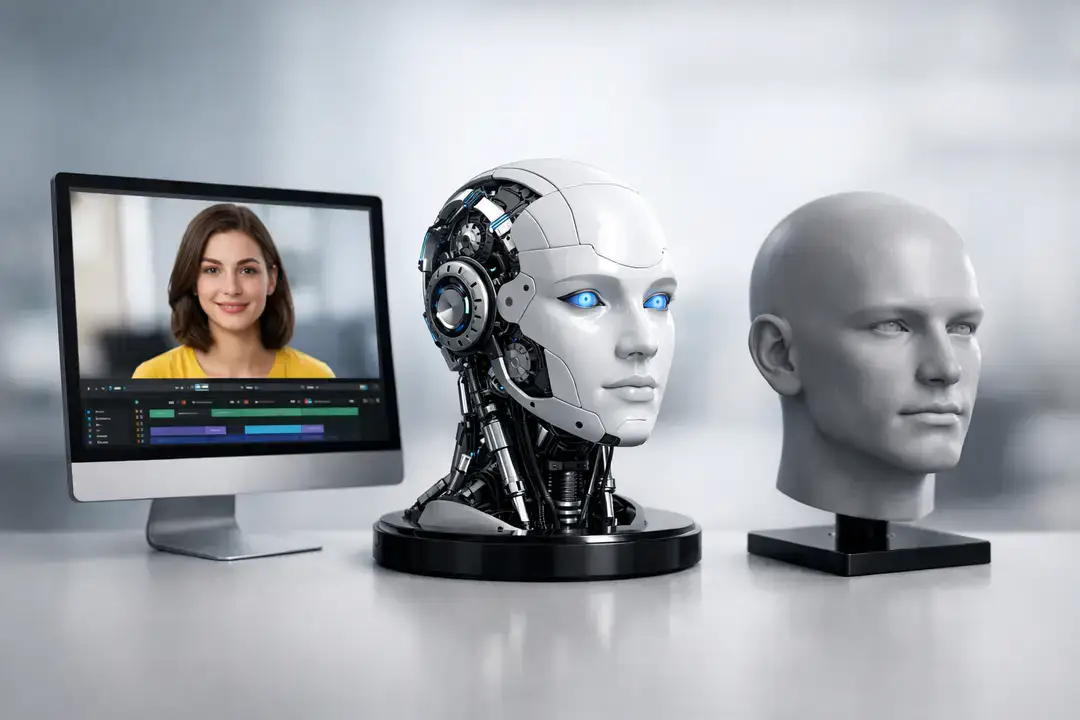
If you have tried creating AI video ads, you might have realized that different avatar options do not operate in the same way. Some programs provide you with a library to choose from, while others allow you to upload footage of yourself or someone on your team. Others create a character only based on a textual description.
These are not just different features, but also different strategic decisions with various pros and cons depending on what you want to achieve. Knowing the difference between stock, clone, and custom avatars informs how you design your creative workflow. Choosing the wrong one for your case will not only impact quality but also speed, cost, and the ability to consistently produce content at scale.
Stock Avatars: The Fastest Path to Production
Stock avatars are pre-designed digital presenters that are available for immediate use within the platform. You select a presenter who resembles your brand’s target audience from a collection and start producing videos right away. No setup, no recording, no waiting.
The most notable benefit is speed. If you are supposed to produce a lot of product ads this week and do not have time to create your own character, a properly selected stock avatar leads you to the finished content faster than any other method. For testing purposes -when you’re trying to figure out whether avatar-led video ads work for your audience before committing to a more involved setup -stock is the right starting point.
Exclusivity is the main drawback. All brands using the same platform have access to the same library, so your presenter may be featured in a competitor’s ads. For most performance ad use cases this doesn’t matter much -the script and targeting drive results more than the specific face does -but for brands where consistent, recognizable identity is a priority, it starts to feel like a real constraint.
Quality within the stock library varies considerably between platforms. Creatify’s AI-generated avatar library covers a wide range of ages, appearances, and presentation styles, which means you can usually find something that fits without compromising on brand alignment. The key is choosing based on who your customer identifies with, not just who looks good in isolation.
Avatar Cloning: Putting a Real Person on Demand
Cloning is about taking a real person -usually yourself, a colleague, or a professional presenter- and producing a digital representation of them that can be scripted and used without further recording sessions. You make a brief video of consent and training, the system works on it, and the outcome is an avatar that mimics the appearance and voice of the original person.
The use of founding personnality and personal branding is the first idea to pop up here. If you have built an audience based on your own face and voice, a cloned avatar will allow you to keep that deep personal connection during your entire video content without being at the camera for every piece of content that you produce. It’s a case of recording once and generating indefinitely.
Besides, it is a great-looking idea to have a spokesperson clone initiative in your brand. In the case a team member is your recurrent human face in customer-facing content, instead of having the same person present the new version of the product, the new seasonal campaign, or the new variety of ads simply clone this person once and then the avatar could be scripted as per the need. The spokesperson is there without the chaos.
Custom-Generated Avatars: Building a Persona From Scratch
The third method does not rely on either a library or a recording – it relies instead on a description. You describe your desired avatar through a text prompt or by giving a set of parameters, and the system comes up with a digital human that no one had seen before. We are talking here about a person being involved, a library being limiting, and exclusivity being a concern.
This is the most versatile route for companies that require a completely exclusive visual identity. The avatar is your property, looks like no other presenter, and can be created to your brand’s specific demographic targeting with a high degree of accuracy which is something that a stock library may sometimes not be capable of offering. E.g. if your main customer is a 40-year-old man doing manual work, then you can create a presenter that will closely resemble this type rather than opting for the nearest one in the stock catalog.
In addition, doing a custom generation also protects you from the talent risk altogether. There is no real person whose picture you have to control, no consent issues if the team member relationship changes, and no worry that a cloned spokesperson will say something out of character in their real life which will also impact your brand due to the association.
Matching the Approach to the Actual Use Case
The exact avatar type that would suit your needs is not a one-size-fits-all answer. It depends a lot on what you’re building and how quickly you need to get it done. Stock gives you the fastest speed and the least commitment. Planning to get some personal brand recognition? Then cloning is the way to go. If you want to set a long-standing brand infrastructure with full ownership, go for custom generation.
Most of the time, brands actually end up implementing more than one approach at the same time. Stock avatars for ramping up rapid testing and high-volume ad variations, a cloned founder for brand-building content which requires a human touch, and a custom-generated persona for targeting a specific product line or audience segment. The different approaches are not completely one way or the other, and if you use them as a toolkit rather than a strict decision it will probably lead to better creative output in general.
Budget is definitely a factor to consider. Typically, stock is bundled with the platform access. Cloning usually costs a higher-tier plan and involves a setup process. Custom generation depends on the platform but is generally considered to be somewhere in between. If you are just beginning to test AI video ads, it would make more economic sense to start with stock and then move on to clone or custom only after you have validated the format, rather than committing to a more complex setup before you actually know if it is effective for your audience.
What Stays the Same Regardless of Which Path You Choose
The kind of avatar affects the presenter’s appearance and origin. It has no role in content performance. That side still depends on basics: an engaging hook, a benefit-oriented clear script, proper audience targeting, and a testing frame to provide actionable data.
Apoorly-written script delivered by a beautifully created custom avatar will definitely be defeated by a stock presenter delivering a sharp one. The creative hierarchy hasn’t changed – it’s still hook, then message, then everything else. An avatar is only the face of an advertisement, not the engine of its performance. In essence, AI avatar options, no matter the type, offer to produce at a volume that makes real creative testing feasible. A single version of an advertisement provides you with an opinion. Ten versions provide you with data. The brands that are getting the most out of this technology are the ones that treat avatar-based videos as a volume game, running enough variations to learn something, and systematically applying those learnings rather than making creative decisions based on gut instinct alone.
Further Reading