
Tips for Moving Large Items in Central Auckland
Central Auckland’s dense neighbourhoods, one-way streets, and heritage apartments pose distinct challenges when you are trying to shift a piano, oversized sofa, or gym equipment. Large belongings can be moved safely and efficiently, but they demand careful timing, precise measurements, and the right tools. The guidance below focuses on the realities of moving hefty items through the city’s tight corridors while preserving both the building fabric and your peace of mind.
Plan Your Route and Parking Early
Navigating central streets built long before modern traffic volumes means you cannot assume there will be room to park a moving truck at the kerb. Visit your building manager or body corporate well in advance to secure loading bay access and lift bookings, then lodge any required council permits for temporary parking suspensions. If you would rather outsource the logistical puzzle, professional Auckland moving services and relocation support teams already know which streets flood with commuter traffic after 07:00 and where clearance under awnings drops below three metres. Their familiarity with timing windows and service-lane restrictions prevents awkward last-minute detours that add stress and cost.
Measure Access Points Before You Lift
Doorways, stairwells, and lift cars in older blocks vary wildly in width and height. Record every critical dimension, including the diagonal clearance of lifts, and compare each one to the item’s longest edge. Where a snug fit is inevitable, removing detachable parts such as table legs or fridge doors can reduce bulk without compromising structural integrity. Sketching a simple floor plan keeps everyone aligned and eliminates surprises when fatigue sets in on moving day.
Protect Floors, Walls, and Lifts
Heavy furniture edges can gouge polished timber or scratch modern laminate faster than you can apologise to the landlord. Lay down furniture blankets, corrugated cardboard, or hardboard sheets along the planned path, and sheath sharp corners with foam. Many buildings insist on padded lift wraps, so confirm their availability beforehand; otherwise, rent a set and fit them yourself. This small outlay shields your bond and avoids costly remediation for dents in plasterboard or chipped skirting.
Use the Right Equipment and Teamwork
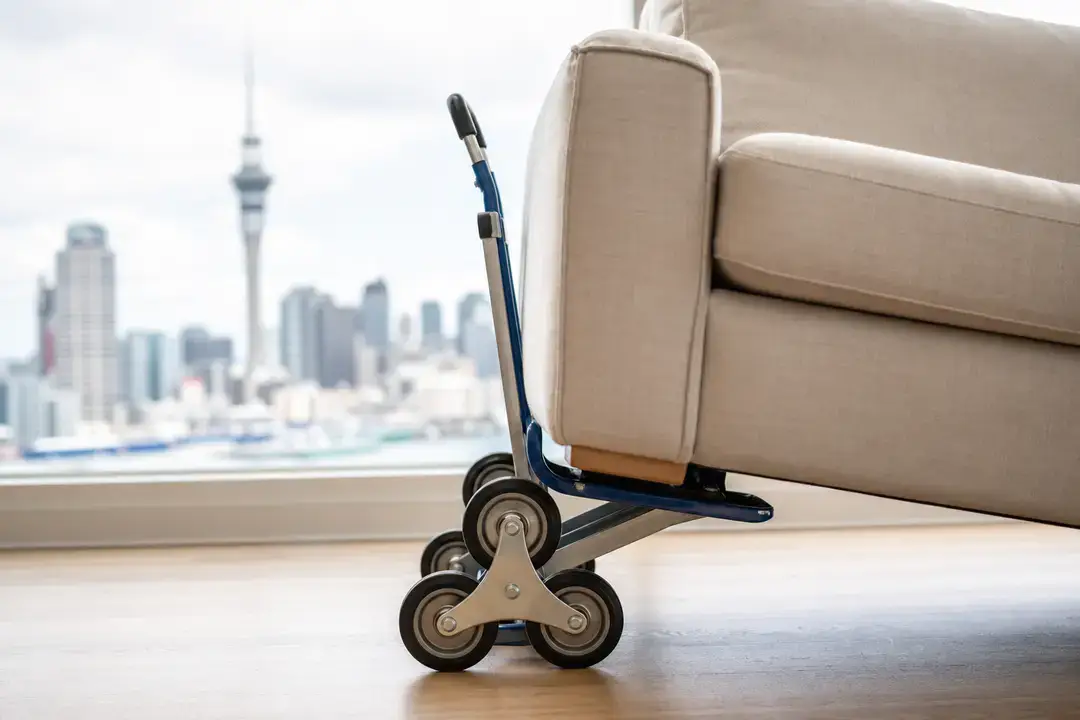
Attempting to manoeuvre a 120-kilogram antique dresser with bare hands invites injury and damages delicate joinery. Invest in, or hire, a dolly, shoulder-dolly lifting straps, and a pair of forearm forklifts to distribute weight evenly and control the centre of gravity. Assign clear roles: one person directs and monitors clearance, while two lift in unison. Communicate with simple commands, “tilt”, “pause”, “rotate left”, so momentum stays predictable in tight stair bends. Proper equipment multiplies human strength and greatly reduces the risk of back strain.
Time Your Move to Minimise Disruption
Central business districts pulse with pedestrian and delivery activity during daylight. Scheduling your heavy-item move outside peak traffic not only improves parking options but also spares neighbours from blocked corridors. Early evenings on weekdays or mid-morning Saturday often offer a sweet spot between building noise-curfew rules and the rush of commuters. Coordinate lift bookings to avoid clashing with grocery or furniture deliveries, and keep a buffer in case earlier residents overrun their slot.
Moving Day Done Right
Moving substantial pieces through Central Auckland is a test of foresight rather than brute force. By locking in parking permits, mapping accurate measurements, shielding building finishes, equipping your crew with specialist lifting gear, and choosing the least disruptive time window, you safeguard both possessions and goodwill with neighbours. A plan executed with precision transforms what could be an exhausting ordeal into a smooth transition to the next chapter of city life.
Further Reading