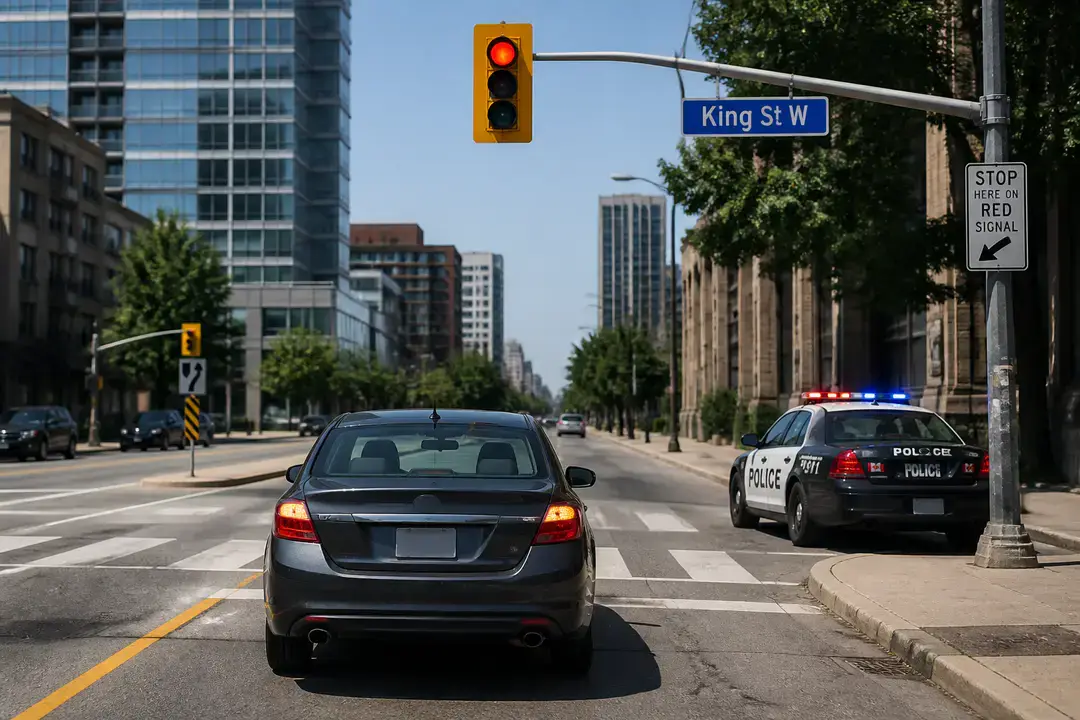
Intersection Enforcement: How to Respond to a Red Light Ticket in Ontario
Navigating the busy intersections of Ontario’s urban centers requires absolute focus, but sometimes a split-second delay or an unexpected yellow light transition can lead to a costly traffic citation. In Ontario, running a red light is treated as a serious safety violation. Whether you were pulled over by a police officer or received a notice in the mail from an automated camera system, simply paying the fine is rarely the smartest option. Accepting the conviction without reviewing your legal options can negatively impact your driving record and your financial stability for years to come.
The Operational Differences in Red Light Enforcement
Ontario utilizes two distinct methods to enforce intersection compliance, and each carries completely different penalties for your driving history:
- Officer-Issued Tickets: If a police officer witnesses your vehicle entering an intersection after the signal turns red, you will be issued a ticket carrying a $325 fine. A conviction on this charge adds 3 demerit points to your license and goes directly onto your driving record, where your insurance provider will see it.
- Red Light Camera Tickets: Automated cameras photograph the rear license plate of any vehicle entering an intersection during a red phase. Because the camera cannot verify who was behind the wheel, the $325 fine is mailed to the registered vehicle owner. This version does not result in demerit points or insurance penalties, but ignoring it will prevent you from renewing your annual license plate.
Understanding these legal differences is crucial before deciding how to handle your case in provincial offences court.
Developing a Proven Courtroom Strategy
Many drivers assume that an officer’s word or a camera photograph makes a red light charge impossible to beat. However, the prosecution must establish specific legal criteria to secure a conviction, which provides several opportunities for a professional legal defense.
The experienced team at Traffic Paralegal Services thoroughly analyzes the evidence surrounding your citation. For officer-issued tickets, a strong defense may involve challenging the officer’s line of sight, verifying weather and road conditions, or proving that your vehicle entered the intersection safely before the light turned red. For camera violations, technicians check the maintenance logs and calibration records of the automated system to ensure the equipment was operating perfectly at the exact moment the photograph was taken.
Minimizing Long-Term Insurance and Financial Penalties
Navigating a provincial courtroom alone can be a confusing and intimidating process. Self-represented motorists often lack the procedural knowledge needed to cross-examine witnesses or negotiate effectively with Crown prosecutors.
By retaining a licensed provincial advocate, you gain a professional who knows how to identify gaps in the prosecution’s case. The court specialists at Traffic Paralegal Services manage all your legal paperwork, request full disclosure notes, and represent you at all hearings. Their primary objective is to have the ticket completely withdrawn. If a dismissal is not possible, they work to negotiate the charge down to a minor, non-moving infraction, protecting your license from demerit points and keeping your insurance premiums affordable.
Conclusion
Receiving an intersection citation does not mean you have to accept a damaging conviction on your record. By choosing to fight your red light ticket, you take a proactive step toward protecting your driver’s license and your wallet. Trying to resolve a complex legal matter without professional advice can lead to unexpected points accumulation and long-term insurance hikes. Invest in your peace of mind by trusting your case to proven provincial traffic experts. Partnering with a dedicated firm like Traffic Paralegal Services ensures your rights are defended, giving you the best opportunity to secure a successful outcome in court.
“In 2026, trust has become the deciding factor for people fighting traffic charges in Ontario – especially as we hear more clients describe being let down by representatives who operate without structure or accountability. Too often, the story is the same: a meeting arranged at a coffee shop, a quick promise that the matter is “handled,” and then silence – missed updates, unanswered calls, and no meaningful steps taken toward resolution. That experience does more than waste time; it increases stress and can put a client’s case at risk.
At Traffic Paralegal Services, we build trust through a formal intake process, clear written next steps, consistent communication, and file management that does not depend on one-off meetings or vague assurances. Clients know where their matter stands, what is happening next, and who is responsible at every stage – from request for disclosure to negotiations and court attendance. Reliability is not a marketing line; it is the foundation of how we serve our clients.”
Volodymyr Menok, President, Traffic Paralegal Services
Director, Traffic Paralegal Services
Further Reading