
How to Plan a Scheduled Electrical Shutdown Without Hurting Productivity
A Formula 1 team doesn’t pull into the pits hoping for the best. Every second is scripted. Tools are positioned, roles are assigned, and the car is back on track before most people in the stands realize it stopped. A scheduled electrical shutdown works the same way. The difference between a facility that loses half a day and one that’s back to full production by shift change isn’t luck, it’s preparation done weeks before anyone touches a circuit breaker.
Unplanned downtime costs industrial organizations as much as $260,000 per hour (Aberdeen Group). A scheduled shutdown, even an ambitious one, rarely comes close to that figure. The math makes the case easily. What takes work is the planning.
Start With a Thermal Audit, Not an Assumption
The most common mistake we see facilities making is walking into a shutdown without truly knowing what needs attention. An infrared thermographic survey, ideally performed two to four weeks ahead of your schedule, gives you insight into that and lets you order parts ahead of time.
An infrared thermographic audit measures heat on connections, overloaded circuits, and components which are running hot and gives you a clear idea of what parts you need to order, which switchgear you need to focus on first, and where your technicians need to be spending their first hour. If you don’t have that information, you’re ordering parts blindly and discovering what needs addressing halfway into a job you’re not ready to finish.
Perform the audit soon enough that you can order parts. Simple supply chain delays have killed too many well-meaning maintenance programs because somebody assumed a component would be on the shelf.
Design a Phased Isolation Plan
Shutting off power to an entire plant isn’t usually required, or desired. A phased isolation plan identifies zones and orders the shutdown so that healthy, unnecessary, or already maintained departments can continue operating.
Offices and server rooms, lines you’re not working on, or ones you’ve just completed, all of these are potentially areas that might not require a shutdown at all. Other departments can be isolated and energized again as each stage of the shutdown concludes. Distribution boards are generally the best starting point to identify the zones and logical isolation points.
Beyond the obvious benefit of keeping the lights on, this reduces the scale of the project and keeps the wider workforce reassured that their day hasn’t been compromised. If you can facilitate effective maintenance by engaging industrial electricians without a complete closure, then that makes sense.
Build the Schedule Around Demand, Not Convenience
Timing a shutdown depends on both coordination and electrical issues. The idea is to identify the timeframe with the lowest operational costs while taking your production schedule and customer demand into account. Meanwhile, you will need to find the right window for maintenance in coordination with your suppliers, ensuring they deliver the necessary parts and equipment on time.
Execute With Lockout/Tagout and Licensed Specialists
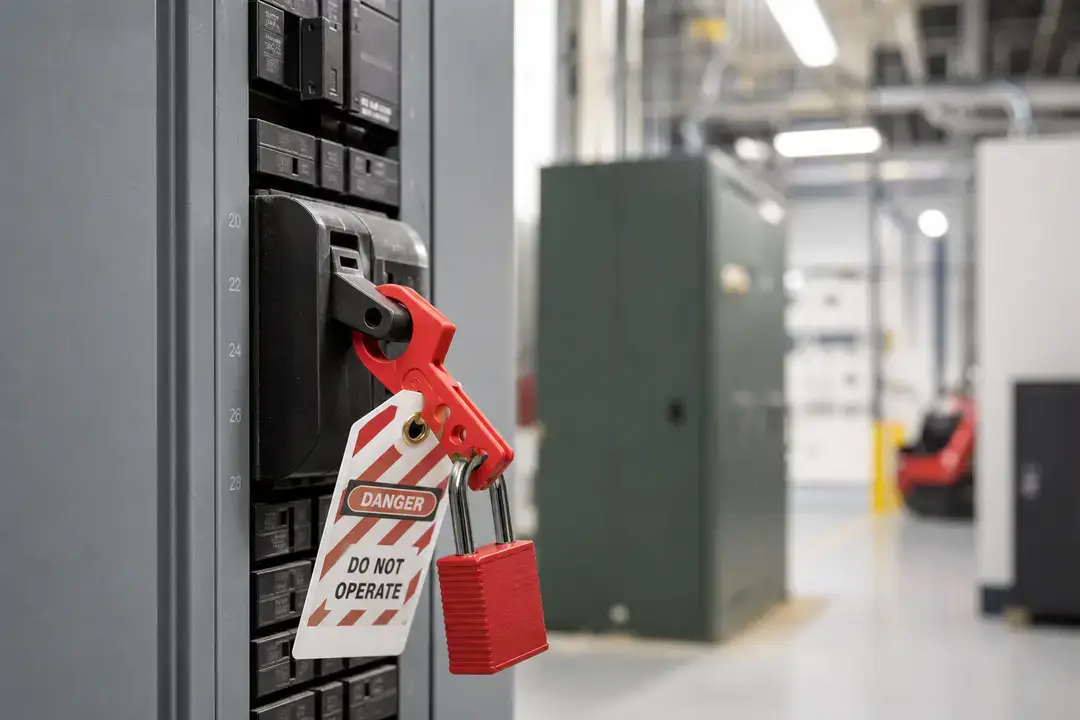
During the execution phase, it is essential that safety and speed are both taken into account. When it comes to lockout/Tagout, LOTO, there is no room for negotiation. Every isolation point must be documented before the work starts. Moreover, every technician that is working on-site must apply their own physical lock. The pre-work safety briefing is not just a mere formality. It is the time when assumptions are addressed and the scope of work is confirmed.
Before your team approaches live switchgear, arc flash risk assessments must be carried out. These assessments are tailored to your equipment and facility. When dealing with high-voltage systems, a generic approach is not sufficient.
When it comes to handling complex switchgear testing, high-voltage isolation work, and compliance documentation, this should not be the responsibility of general maintenance staff. Hiring specialists with diagnostic tools and specialized training in heavy-duty systems ensures that work is executed according to your schedule and that safety records meet the required standards.
Bring Systems Back Online in Sequence
How you restore power matters as much as how you remove it. Energizing multiple systems simultaneously risks surge damage to equipment that just had maintenance work completed, exactly the outcome you were trying to prevent.
A staged ramp-up runs critical machinery through individual tests before connecting to the broader load. Commissioning checks, verifying that each system responds correctly and within spec, happen before full-scale production resumes. This isn’t the time to assume something works because it did before the shutdown.
Build the ramp-up sequence into your original schedule with buffer time. Systems will occasionally need a second look. That’s expected. What’s not acceptable is rushing the restart to recover lost time and damaging equipment in the process.
A scheduled shutdown done well doesn’t feel like a disruption. It feels like the facility came back sharper than it left.
Further Reading