
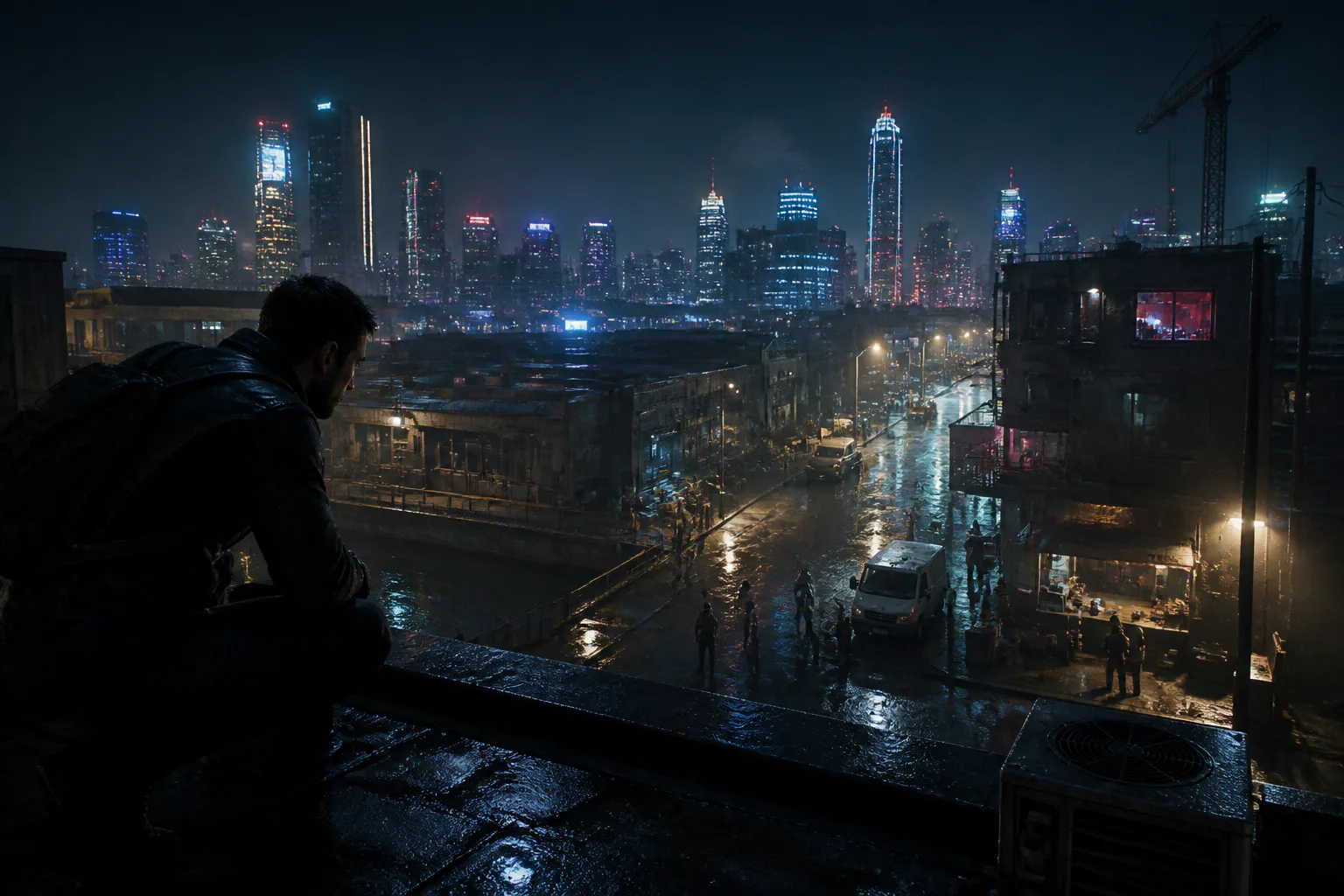
NO LAW Gameplay: Stealth, Hacking, and Consequences in Port Desire
NO LAW is shaping up as a first-person cyber-noir action RPG built around player agency rather than a single prescribed route through its story. Neon Giant places veteran soldier Grey Harker in Port Desire, a dense port city where stealth, hacking, tinkering, exploration, and gunplay can overlap. The most important choice for prospective players is whether permanent consequences and an open-ended sandbox sound more appealing than a tightly directed action game.
Comparison at a glance
|
Option |
Type |
Key detail |
Best fit |
|---|---|---|---|
|
NO LAW |
Cyber-noir action RPG |
Player-driven immersive sim |
Choice-focused players |
|
PlayStation 5 |
Console platform |
Primary demonstrated platform |
Living-room play |
|
Xbox Series X/S |
Console platform |
Current-generation Xbox context |
Xbox players |
|
PC |
Computer platform |
Flexible control options |
Customizable setups |
|
Port Desire |
Game setting |
Layered cyberpunk port city |
Exploration fans |
NO LAW
NO LAW is a first-person cyber-noir action RPG and immersive sim from Neon Giant, the studio behind The Ascent. Its central appeal is flexibility: Grey Harker can move through situations quietly, manipulate systems with hacking and tinkering, or rely on direct firearms combat.
The game also treats the population of Port Desire as part of the gameplay system. Any NPC can be killed, and deaths are permanent. That rule gives seemingly ordinary encounters more weight, particularly when the character is a vendor or another person connected to future access. The game warns players after they kill an absolutely essential NPC, but it does not remove the broader consequence of acting recklessly.
PlayStation 5
PlayStation 5 is the clearest console context for the gameplay currently shown. The footage presents NO LAW as a large-scale first-person action RPG with a cyberpunk city, shooting, traversal, and interactive environments suited to a modern living-room system.
The console version should appeal to players who want to follow the game without adjusting computer hardware or graphics settings. The tradeoff is the usual loss of PC-style control customization and upgrade flexibility. Performance modes, resolution targets, accessibility settings, and save-system details have not been fully established, so those factors should not decide a purchase before launch information becomes more specific.
Xbox Series X/S
Xbox Series X/S belongs in the platform decision surrounding NO LAW, particularly for players who keep their role-playing games in the Xbox ecosystem. A current-generation console is the relevant hardware class for a game built around dense environments, first-person combat, and several interacting systems.
Series X and Series S are different performance targets, so buyers should treat the pair as separate hardware experiences even though they share a platform family. Resolution, frame-rate options, and availability details remain important unanswered questions. Xbox players interested in the game should watch for a final platform announcement and technical specifications before choosing a version.
PC
PC is the most adaptable way to approach a systems-heavy game such as NO LAW if the final release supports the platform. Mouse-and-keyboard aiming can suit players who want precise gunplay, while graphics options could help owners balance image quality and performance across different hardware.
That flexibility also creates more responsibility. A PC buyer will need to match the final system requirements to their hardware and account for the possibility that dense city spaces place heavier demands on the processor and graphics card. The available footage does not establish minimum or recommended specifications, so there is no responsible basis for promising a particular performance level yet.
Port Desire
Port Desire is the fictional city where NO LAW takes place, and it is a meaningful part of the gameplay choice because the setting is built as a compact but densely layered space. Open balconies and similar routes can lead players into areas that are not obvious from the main path, making vertical exploration part of the city’s structure.

The city is shaped by debts, gang conflict, neon commerce, and strange disappearances. Its value will depend on how consistently those details connect to the systems around Grey Harker. A small map can feel substantial when buildings, side routes, NPCs, and objectives respond to one another, but the released game will need to maintain that density beyond the showcased locations.

Requirements and context
NO LAW is expected in 2027, but it does not have a confirmed launch date. The game has been presented in connection with PlayStation 5, while Xbox Series X/S and PC are the relevant platform choices for players comparing where they want to play a modern first-person RPG.
-
Developer: Neon Giant
-
Genre: First-person cyber-noir action RPG and immersive sim
-
Protagonist: Grey Harker
-
Character background: Experienced soldier and jaded army veteran
-
Setting: Port Desire
-
Release window: 2027
The studio’s previous game, The Ascent, was a top-down cyberpunk action RPG rather than a first-person immersive sim. That history explains the studio’s familiarity with neon crime fiction and hostile city environments, but NO LAW represents a different type of gameplay structure. Its success will rely more heavily on systemic interactions and consequences than on straightforward combat progression.
What the gameplay trailer shows
The latest gameplay trailer appeared during Gamescom Opening Night Live in August 2026. It presents Grey Harker moving through a hostile cyberpunk city while switching between firearms, stealth, technology, and environmental opportunities. The footage emphasizes situations that can be approached through several tools instead of encounters that demand one fixed solution.
Exploration is tied closely to the city’s layered design. Balconies, elevated routes, and less obvious paths can open alternative ways through an area, which is especially relevant for players who search buildings instead of following the most visible objective marker. The trailer also supports the idea that technology is an active part of play, with hacking and tinkering positioned alongside weapons rather than treated as separate menu systems.
The presentation is promising, but a trailer cannot establish how broad the systems remain across a full campaign. The important details still to judge include enemy reactions, mission variety, stealth reliability, resource limits, and whether unusual solutions produce lasting changes beyond a single encounter.

How player choice shapes Port Desire
NO LAW uses immersive-sim principles to make player decisions part of the city’s ongoing state. The most significant confirmed rule is that any NPC can be killed and that NPC deaths are permanent. This is more consequential than a temporary combat failure because removing a character can change access to services, information, or later interactions.
Vendors are a clear example. Killing a vendor closes that character’s shop, so an impulsive decision can remove a useful source of equipment or supplies. The game warns players when they kill an absolutely essential NPC, but that warning does not make every other death reversible. Players who want to preserve the widest range of options will need to consider who is present before turning an encounter into a firefight.
Port Desire is described as small, layered, and dense, which places pressure on the quality of its connections. A compact city can support meaningful discovery when routes, characters, and objectives overlap. It also means repeated locations and permanent changes are likely to be more noticeable than they would be in a much larger map.
Stealth, hacking, and guns-blazing combat
The confirmed playstyles support different attitudes toward risk and information. They are not merely cosmetic options, because the NPC system and city layout give decisions consequences beyond the immediate fight.
-
Stealth: Useful for players who want to avoid raising alarms, preserve resources, and reach objectives without killing characters who could matter later.
-
Hacking: Suits players who prefer manipulating technology and using the city’s systems to create an advantage before combat begins.
-
Tinkering: Adds an improvised problem-solving route for players who search environments and experiment with available tools.
-
Direct gunplay: Gives Grey Harker a forceful way through hostile encounters, but careless violence can produce permanent NPC and vendor consequences.
These approaches can also be combined. A player might hack or modify a situation before using stealth, or begin quietly and switch to firearms after an alarm. The unresolved question is how much freedom the finished missions provide compared with the curated sequences shown in promotional footage.

What could make the gameplay work
NO LAW has a strong foundation for players who want cyberpunk atmosphere paired with consequential decisions. The combination of a first-person viewpoint, dense urban exploration, multiple approaches, and permanent deaths gives ordinary encounters a reason to demand attention. A vendor is not simply a target if removing that character closes a shop permanently.
The same systems create clear risks. Permanent consequences can feel meaningful when the game communicates them fairly, but frustrating when players lose important services without enough context. The essential-NPC warning helps protect the main story, while the loss of nonessential vendors and other characters preserves the possibility of genuine mistakes.
Neon Giant also has to make each playstyle functional across the campaign. Stealth cannot be a short opening option that collapses later, and hacking or tinkering needs enough environmental support to remain useful. Direct combat should feel complete on its own while still carrying a cost when players use it indiscriminately.
FAQs
Is NO LAW connected to The Ascent?
Both games come from Neon Giant and share a cyberpunk setting style, but they are different games. The Ascent is a top-down action RPG, while NO LAW is a first-person cyber-noir action RPG and immersive sim.
Who is Grey Harker?
Grey Harker is NO LAW’s protagonist. He is an experienced soldier and jaded army veteran operating in the troubled port city of Port Desire.
Can every NPC really be killed?
Yes. NO LAW allows any NPC to be killed, and those deaths are permanent. Killing a vendor also closes that character’s shop, while the game warns players after the death of an absolutely essential NPC.
Conclusion
NO LAW is worth following if permanent consequences, dense cyberpunk exploration, and flexible problem-solving are central to the kind of gameplay you enjoy. Its 2027 release window leaves time for Neon Giant to clarify platforms, technical performance, and how consistently the promised systems work across the full game.