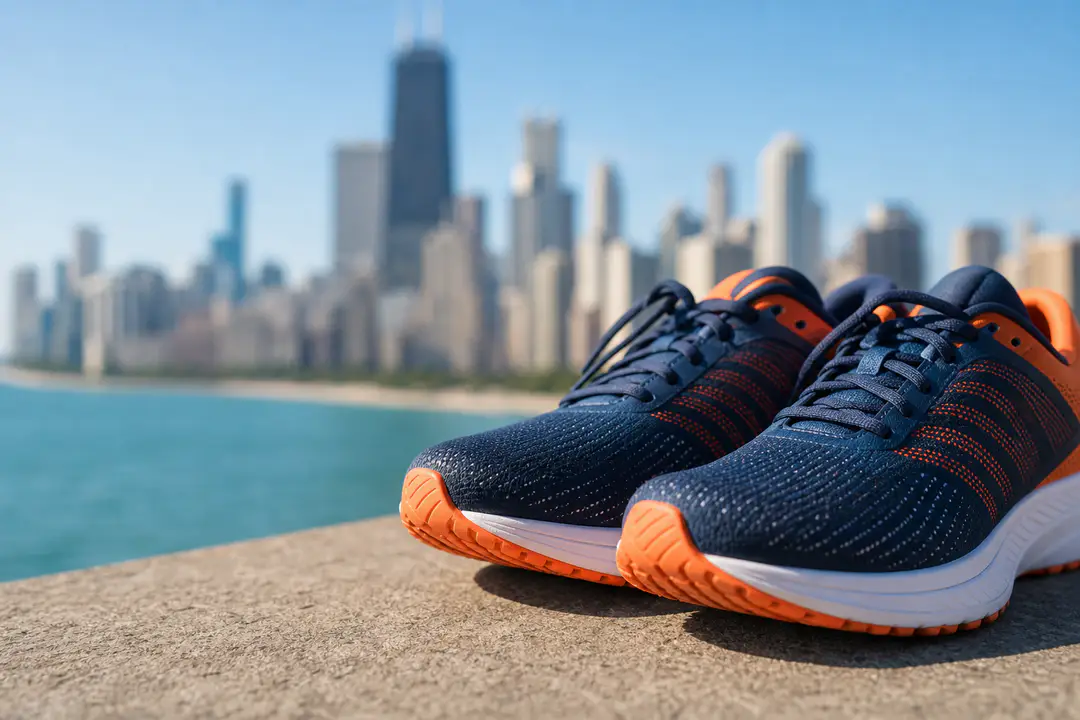
Chicago Races Calendar and Featured Events
This page works as a running race calendar for Chicago runners who want to browse upcoming races by date, distance, and location. It highlights upcoming races across the Chicago area, shows which events are featured events, and flags the qualifying races tied to the Run This Town Chicago challenge. If you are trying to find a race, compare Chicago 5K races with Chicago half marathons, or sort road races from trail races, the fastest way to narrow the field is to start with the calendar and then check registration, participant size, and race-day weather data before you commit.
Upcoming Races in Chicago
The current Chicago running calendar centers on eight featured events tied to Run This Town Chicago. Those races stretch from late spring 2026 into spring 2027, which gives local runners room to build a season instead of signing up for a single event in isolation. That matters if you want the Run This Town medal, since the series requires four or more qualifying races.
- Soldier Field 10 – May 23, 2026 – Chicago, IL – 10 Mile – road race and qualifying race
- North Shore Classic – May 31, 2026 – Highland Park, IL – 5K and half marathon – qualifying race
- Run Mag Mile® – Sep 12, 2026 – Chicago area featured event
- Bucktown 5K – Oct 04, 2026 – Chicago area featured event and Chicago 5K race
- Will Run For Beer Chicago – Oct 24, 2026 – Chicago area featured event
- Featured series event – Nov 01, 2026 – Chicago area
- Featured Thanksgiving event – Nov 26, 2026 – Chicago area
- Featured spring event – May 08, 2027 – Chicago area
Two listings already give runners enough detail to sort quickly. Soldier Field 10 is a 10 Mile road race in Chicago on May 23, 2026, which puts it in the sweet spot for runners building toward longer Chicago half marathons or fall Chicago marathons. North Shore Classic follows one week later in Highland Park with both a 5K and a half marathon, making it more flexible for mixed-ability groups or runners choosing between a tune-up and a longer effort.
Chicago runners often search for runs near Chicago by city first, then discover that nearby suburbs offer better distance variety. Highland Park is a good example. It is outside downtown, but still close enough to fit comfortably into most Chicago race plans.
Featured Chicago Events
Featured events are the races that deserve extra attention because they do more than fill a date on the calendar. They often tie into a broader challenge, have stronger local recognition, or offer a race identity that goes beyond a generic bib and finisher medal. In this set, the most important brand connection is Run This Town Chicago, produced with Ventures Endurance and powered through EnMotive event registration tools.
Soldier Field 10
Soldier Field 10 stands out for runners who want a longer road-race effort without jumping straight to a half marathon. A 10-mile distance gives experienced runners a solid benchmark in late May, and it also works well for athletes using the race as a checkpoint before summer training blocks. Because it is both a featured event and a qualifying race, it carries extra value for anyone chasing the series medal.
North Shore Classic
North Shore Classic gives runners a direct choice between a shorter 5K and a half marathon on the same date. That split makes registration easier for clubs, families, and training partners who want the same event-day logistics but different distances. It also broadens its participant size appeal, since a first-time 5K runner and an experienced half-marathoner can both use the same race weekend.
Run Mag Mile®, Bucktown 5K, and Will Run For Beer Chicago
These races add personality to the calendar in different ways. Run Mag Mile® carries a downtown identity that appeals to runners who want a polished city-course feel. Bucktown 5K fits the demand for short, fast Chicago 5K races in the fall, while Will Run For Beer Chicago speaks to runners who care as much about the event atmosphere as the stopwatch.
- Run Mag Mile® is scheduled for Sep 12, 2026.
- Bucktown 5K is scheduled for Oct 04, 2026.
- Will Run For Beer Chicago is scheduled for Oct 24, 2026.
If you want a broader event-planning mindset, the same habits runners use for local calendars also apply to other event categories, especially around event registration planning and cutoff dates.
Race Types
Chicago-area calendars work best when you filter by distance before anything else. A runner preparing for Chicago 10K races needs a very different schedule from someone searching for ultras or a casual 5K. Race type matters too. Most featured races here are road/trail choices weighted toward road races, while the wider regional calendar includes trail races and endurance formats that require different pacing, footwear, and fueling.
| Event | Date | Location | Distance | Race Type |
|---|---|---|---|---|
| Soldier Field 10 | May 23, 2026 | Chicago, IL | 10 Mile | Road race |
| North Shore Classic | May 31, 2026 | Highland Park, IL | 5K, Half Marathon | Road race |
| OUTLAST CHICAGO | Date varies | Chicago area | Six 5K laps in 6 hours | Trail race |
OUTLAST CHICAGO shows why a race finder should not stop at standard distances. It is a 6-hour trail endurance challenge where runners complete a 5K every hour, on the hour. Finish a lap inside the hour and you continue. Miss the cutoff and your day is over. That format places it closer to the ultras and endurance side of the calendar than to ordinary Chicago 5K races, even though each lap is only 5K.
For practical filtering, use this sequence:
- Pick the distance first: 5K, 10K, half marathon, marathon, or ultras.
- Choose race type next: road races, trail races, or mixed terrain.
- Then narrow by location and date so the calendar shows runs near Chicago that fit your schedule.
That order keeps a race search from getting cluttered. It also helps runners avoid signing up for a race that fits the calendar but not the training block.
How Run This Town Works
Run This Town Chicago is straightforward: complete four or more qualifying races and you earn the exclusive Run This Town medal. The challenge includes 8 events in the current page lineup, so runners have multiple ways to get there without needing a perfect season.
A simple example shows how the series works in practice. A runner could complete Soldier Field 10 in May, choose the 5K or half marathon at North Shore Classic a week later, return for Run Mag Mile® in September, and then finish Bucktown 5K in October. That fourth finish secures the medal requirement. Any later qualifying race still adds to the season, but the threshold is already met.
- Open the Chicago running calendar and identify which races are marked as qualifying races.
- Check each event date against your training cycle and travel plans.
- Complete four or more of the qualifying events during the series window.
- Finish the season with eligibility for the Run This Town medal.
This is where series planning becomes more useful than one-off browsing. If a race page includes bundle registration, that can simplify sign-up across multiple dates. If it includes a discount code, apply it early rather than waiting for late registration windows, since race fees often rise even when the event details stay the same.
Chicago also has another major multi-race benchmark in the city’s distance-season structure: runners who finish the three-race Bank of America series in 2026 receive a unique series medal and guaranteed entry into the 2027 Chicago Marathon. That setup is different from Run This Town Chicago, but it shows how qualifying and finish incentives shape local registration behavior across the year.
Registration, Size, and Perks
Once a race makes your shortlist, the next questions are logistical. Registration flow, participant size, and event perks usually decide whether a race feels smooth or frustrating. A smaller field can mean easier parking and a calmer start. A bigger event often brings stronger course support, more crowd energy, and richer media after the finish, including photos and videos.
| Event Detail | Why It Matters | What to Check |
|---|---|---|
| Registration | Determines price timing and signup ease | Standard entry, bundle registration, discount code |
| Participant size | Affects course congestion and race atmosphere | Small local field or large city event |
| Media and feedback | Helps evaluate race quality before signup | Finisher ratings, reviews, photos, videos |
| Race-day conditions | Shapes pacing and gear choices | Race-day weather data and surface type |
Take OUTLAST CHICAGO as a good contrast case. Every participant receives a premium tee, and the finisher structure is tiered by performance: 4 laps earns a Grit Earned patch, 5 laps earns a Survivor patch, and 6 laps earns the premium OUTLAST medal. Runners who compete on both Saturday and Sunday can also use the code TOUGHER10 for 10% off and become eligible for the Double OUTLAST Tougher N’ Nails plaque.
That event also makes practical demands clear. It is trail-based, includes dirt, rocks, roots, elevation, and sometimes pavement or gravel. It is cupless, so runners need to bring their own bottle or hydration system. Those details tell you more about the race experience than a broad marketing line ever could.
For runners who already follow other event-heavy hobbies, comparison habits from gaming news coverage and release calendars translate surprisingly well here: dates, feature differences, and participation perks all matter once the field gets crowded.
Using Filters Well
A good race finder becomes far more useful when you stop treating every listing as equal. Filters are the difference between a crowded screen and a smart shortlist. Chicago runners usually need four filters more than any others: distance, location, date, and event type.
When you want a fast local race
Set the distance to 5K or 10K, keep the location inside Chicago city limits, and sort by earliest date. That immediately brings events like Bucktown 5K into view and strips out longer races that do not fit a speed-focused block.
When you are building toward a longer goal
Choose half marathon or marathon-adjacent races first, then expand the location filter to include suburbs such as Highland Park. That catches races like North Shore Classic, which can sit neatly inside a buildup for Chicago half marathons or Chicago marathons.
When terrain matters
Use race type aggressively. A road/trail toggle saves time and prevents bad signups. Anyone training on pavement for a road half should not accidentally land in a trail endurance event with hourly 5K laps and uneven terrain.
- Use date filters to avoid stacking races too closely.
- Use location filters to keep travel realistic on early start mornings.
- Use finisher ratings and reviews to spot recurring praise or complaints.
- Check photos and videos if the course layout or event vibe is unclear.
Runners who rely on digital tools for planning often think in the same pattern as people comparing AI software tools: filter first, compare second, register last.
FAQs
What is a running race calendar?
A running race calendar is a race finder that lets you browse upcoming races by date, distance, location, and event type. For Chicago runners, it helps sort city races from suburban runs near Chicago and identify featured events quickly.
How many races do I need for the Run This Town medal?
You need to complete four or more qualifying races. Finishing that threshold earns the exclusive Run This Town medal.
How many events are in Run This Town Chicago?
Run This Town Chicago includes 8 events in the featured lineup. That gives runners multiple chances across the season to complete the challenge.
Is Soldier Field 10 a qualifying race?
Yes. Soldier Field 10 is a qualifying race, and it is scheduled for May 23, 2026 in Chicago, IL as a 10 Mile road race.
What distances does North Shore Classic offer?
North Shore Classic offers a 5K and a half marathon. It takes place in Highland Park, IL on May 31, 2026.
Are trail races included in Chicago-area calendars?
Yes. While many featured events are road races, Chicago-area calendars also include trail races and endurance formats such as OUTLAST CHICAGO, where runners complete repeated 5K laps on trail terrain.
What should I compare before registration?
Check the distance, location, participant size, race-day weather data, and any extras such as bundle registration, discount code options, finisher ratings, reviews, photos, and videos. Those details tell you whether a race fits both your training and your event-day expectations.
The Bottom Line
The best Chicago race calendar does more than list dates. It helps you spot the races that fit your training, identifies the featured events worth prioritizing, and shows when a single registration can move you closer to a season-long goal. For Chicago runners, the smartest next step is not just to find a race, but to build a calendar that gives each finish a purpose.