How Chips Are Made in the U.S.: Inside America’s Semiconductor Boom
In an era where semiconductors power everything from smartphones and laptops to cars and advanced military systems, the U.S. is racing to reclaim its leadership in chip manufacturing. With over 90% of the world’s advanced chips made in Asia—especially Taiwan—the United States is now pouring billions into reshoring chip production. CNBC’s deep dive into the semiconductor industry, particularly through the lens of companies like Micron, Arm, and Texas-based giants, reveals the complexities, challenges, and opportunities facing American chipmakers.
The Urgency: Why the U.S. Is Ramping Up Domestic Chip Production
Geopolitical tensions between China and Taiwan have raised alarms about America’s overreliance on foreign chip production. In response, the U.S. government passed the CHIPS and Science Act, allocating $52.7 billion to incentivize chip manufacturing on American soil. The move isn’t just about economic competitiveness—it’s about national security. Advanced chips are vital for military hardware, communications, and AI systems.
Micron: America’s Memory Champion
Micron Technology, based in Boise, Idaho, stands as the only major U.S.-based memory chipmaker. Founded in 1978 in the basement of a dental office, Micron has grown into a global leader in DRAM and NAND memory—crucial components in nearly every electronic device.
Today, Micron is leading the charge in reshoring chip production. It’s investing $100 billion over 20 years to build four massive fabrication plants (fabs) in upstate New York—each 600,000 square feet. A $15 billion expansion is also underway at its headquarters in Boise.
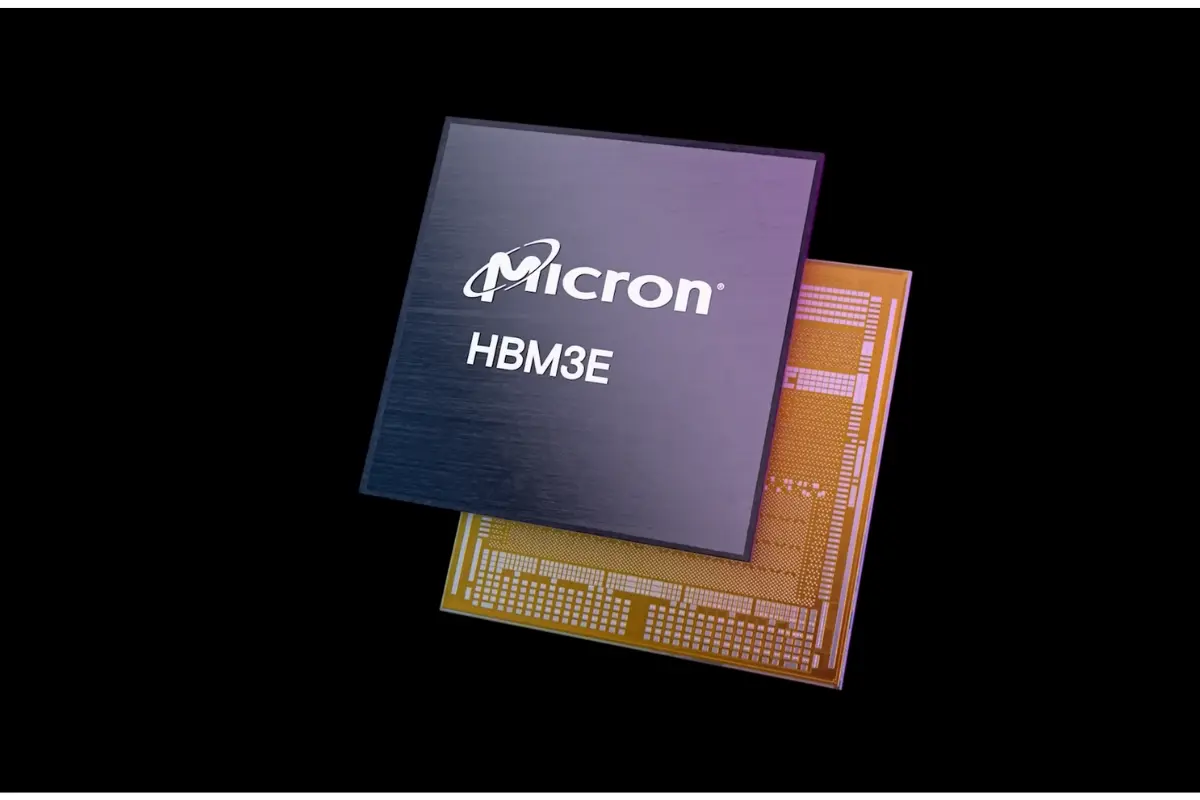
These investments are critical because memory chips, though cheaper than CPUs and GPUs, are essential in large volumes—especially with the rise of generative AI. Micron’s High Bandwidth Memory (HBM), designed to support AI models like ChatGPT, offers 50% more capacity and 2.5x better power efficiency.
Despite Micron’s growth, challenges abound. China banned some of Micron’s chips in 2023, citing cybersecurity concerns. About 25% of Micron’s revenue comes from China, and such restrictions could significantly impact business. Micron is diversifying its manufacturing footprint, building a $2.75 billion testing facility in India while maintaining operations in Japan and Taiwan.
The Intricate Art of Chipmaking
Manufacturing a chip is an incredibly complex, resource-intensive process. Each silicon wafer travels 23,000 miles within a fab, undergoing over 1,000 steps across 90 days. These processes occur in ultra-clean “class 1” cleanrooms, where workers don bunny suits to prevent contamination.
Micron’s new fabs will use 25,000 homes’ worth of energy, primarily renewable. Each fab will also use the equivalent of 25 Olympic-sized swimming pools of water daily—75% of which will be recycled onsite.
One of the most vital tools in modern chipmaking is the EUV (Extreme Ultraviolet) lithography machine, made solely by ASML in the Netherlands. Each machine costs $250 million, weighs 20 tons, and takes three 747s and 20 semi-trucks to transport.
Texas: America’s Chipmaking Heartland
Texas has emerged as a chip manufacturing powerhouse. Companies like Texas Instruments (TI), Samsung, GlobalWafers, Infineon, and NXP have invested over $61 billion in the state. TI alone is building a $30 billion fab in Sherman, capable of producing 100 million analog chips per day. Samsung is investing $17 billion in its new fab in Taylor, with plans to expand on its 1,200-acre site.
Why Texas? The state offers abundant land, water resources, low taxes, and robust infrastructure. It also has access to tier-one research universities and a history in semiconductors dating back over 90 years.
Arm: The Invisible Giant Behind Your Devices
While companies like Micron and TI build physical chips, UK-based Arm Holdings licenses the architecture that powers most of them. Arm doesn’t manufacture chips—it designs the blueprints that companies like Apple, Nvidia, and Qualcomm use to build CPUs.
Arm CPUs are known for energy efficiency and dominate the smartphone market. But their reach now extends into laptops, servers, automotive systems, and AI. Apple’s M-series chips, AWS’s Graviton, and Nvidia’s Grace Hopper superchips are all Arm-based.
Despite facing challenges—including failed acquisition attempts by Nvidia and rising competition from open-source RISC-V—Arm’s influence is growing. Its recent IPO valued the company at over $54 billion, and it’s investing heavily in AI and custom silicon markets.
Challenges Ahead: Labor, Costs, and Global Tensions
Building chips in the U.S. is significantly more expensive than in Asia—at least 20% more. Labor is costlier, and the supply chain is less mature. The U.S. also faces a skilled labor shortage. For instance, TSMC blamed such shortages for delays in its $40 billion Arizona fab.
Moreover, the chip market is volatile. A boom in demand during the pandemic led to a bust in 2022, with falling PC and smartphone sales forcing companies like Micron and Samsung to scale back production. But the cyclical nature of the industry suggests the next upturn is never far off.
The Road Ahead
The CHIPS Act, along with state-level incentives like New York’s $10 billion Green CHIPS Act and Texas’s $1.4 billion Texas CHIPS Act, is reshaping America’s semiconductor future. Micron’s ambitious goal: is to raise U.S. memory chip production from just 2% of the global total today to 15% in two decades.
As AI, IoT, autonomous vehicles, and advanced consumer electronics continue to evolve, the demand for high-performance, energy-efficient chips will only grow. The U.S. is betting that by investing now, it can ensure supply chain security, foster innovation, and remain competitive in a chip-powered world.