
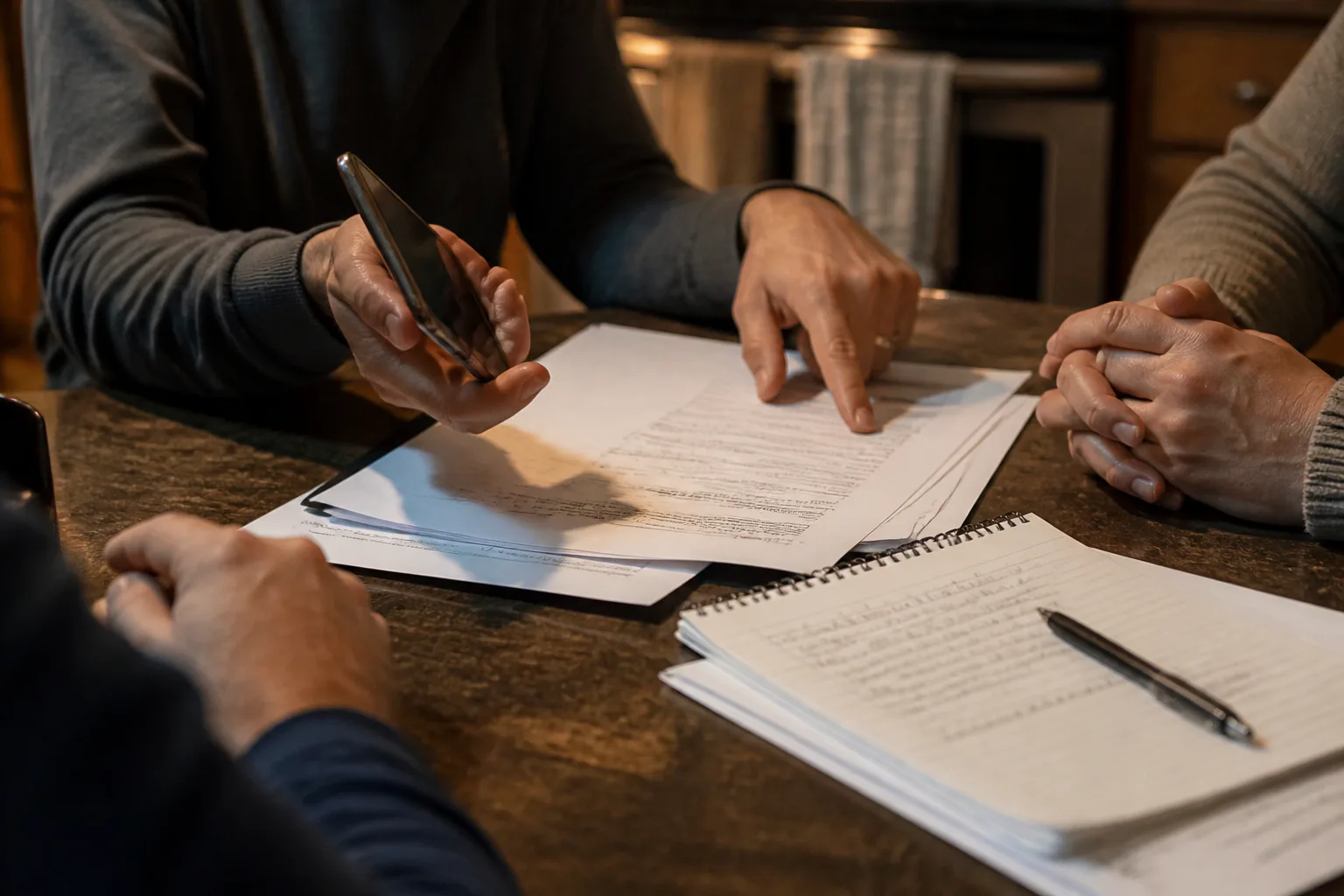
Common Communication Mistakes Families Make During the Bail Process
Families often hear several updates during a bail inquiry, sometimes from different offices and relatives. Keeping those messages organized makes follow-up conversations easier. Clear notes don’t change jail procedures or determine release timing, but they give everyone the same information to work from.
Calling around before the basic facts are set
When a call comes that someone has been arrested, panic sets in and the phone starts ringing. Sisters call cousins and cousins call neighbors. Then someone posts a vague request for help on social media.
That reaction is normal.
Stress makes people want to do something fast. But those early calls rarely move release forward because no one yet has the basic facts every office will ask for.
A short shared note is a useful starting point. Write down the full legal name and any current housing information, keeping the arrest location separate. Add the booking number if it is available from a custody search or jail information line. Missing details needn’t delay an initial inquiry. Everyone can use the same note instead of relying on memories that shift with each retelling.
Families who skip this step spend time correcting each other. One aunt gives the agent one name spelling while a brother gives the jail a different housing site. A fact sheet shared by text helps break that loop. It doesn’t change jail procedure, but it limits added back-and-forth.
Getting the name wrong on calls and forms
Small name errors can complicate a record search. A nickname used at home may not match the name listed in custody records. The full legal name, including second surnames or hyphens, is a useful starting point; other names can be identified separately.
When relatives give different versions on different calls, staff see separate possibilities instead of one person. Mike instead of Michael is enough to slow a lookup. So is dropping a second surname or using an anglicized spelling that relatives use at home because it feels simpler.
In San Diego’s mixed English and Spanish community, this happens a lot with names that have accents or two family names. Relatives mean well, but each variant creates extra work.
The fix is simple and dull. Pull out the ID or a photo and copy the name letter by letter. Keep that spelling in the shared note for every call and form. Keep both surnames in the same order, along with any hyphen or apostrophe. Don’t shorten and don’t guess.
Keep a small folder, paper or digital, with that ID copy and any arrest paperwork. When someone asks for identifying details, read from it instead of from memory. There’s less to argue about when everyone reads the same line.
Mixing up the arrest site and the housing site
Families often name the place of arrest as if it is the place of custody. They aren’t the same. An arrest can happen on a street or at a traffic stop, while housing happens at a county site after booking and transfer. The arrest address doesn’t show current housing, so giving it to the agent or jail line can mean starting the search over.
San Diego County moves people between sites. Someone booked in the central area may be housed at Las Colinas or George Bailey. That housing can change after the first night.
Others picked up in the north may be housed at Vista Detention Facility or another county housing site. Transfers are part of custody. Bed space and classification drive moves, and the custody search reflects the current site.
Ask for the current housing site by name and write it exactly. Don’t rely on where the arrest happened or where a friend says people usually go. Check the custody search before each round of calls, because a morning location can differ by night. A time stamp beside the location helps later callers recognize old information.
Asking every office the same questions
Another tangle starts when every office gets asked the same thing. The jail line and the bond office hear questions that belong with counsel. Counsel hears custody questions that only custody staff can answer. Calls get rerouted.
In broad terms, custody staff handle where someone is housed and what the booking entry shows. The bond office handles bond paperwork and documents needed to start that file. Defense counsel handles questions about what the defendant should say and how the criminal case may proceed. Mixing those lanes means good questions get slow answers.
When contacting San Diego Bail Bonds, a caller can start with the person’s name, the last known facility, and any booking details already available. That gives the conversation a clear starting point. Questions about bond paperwork can then stay separate from questions intended for custody staff or an attorney.
Keep a short list of who was asked what. Record the office name and time, along with the answer and next step. That log helps relatives avoid repeat calls and recognize old replies.
Mixing up the booking number and the case number
Two numbers get swapped more than any others. The booking number and case number look similar on a screen, but they point to different files. Staff can’t pull the right record when the wrong one is read back.
The booking number is set at intake and tracks the custody stay. It follows the person while housed and is the number custody staff use most. The court sets the case number to track the criminal filing, and it becomes more useful as court dates are set. One belongs mostly to the jail side, the other to the court side.
Problems start when a relative copies digits from an old paper or reads a police report number as if it were either one. Each wrong try forces another search. With common names, that can return too many matches to sort by phone, leaving staff asking for details while the family hunts for paperwork.
Copy both numbers into the shared note on separate, labeled lines. Keep leading zeros and leave missing digits for the relevant office to clarify rather than guessing. On calls, say “booking number” or “case number” before reading the digits. If a number changes after a transfer or new filing, add the entry with a fresh time stamp and keep the old one crossed out but readable.
Letting several relatives run separate threads
Good intentions create noise when several people all call as the decision maker. Each gives a slightly different spelling and callback number. Staff log each version, and the file looks messy even when everyone means well.
Pick one point of contact for outside calls. That person calls the jail line and bond office, then shares updates with the family. Others can help with rides and childcare without opening separate threads with the same offices.
The rule that works is simple: one person calls, everyone else gets updates.
Use one group thread with time stamps. Each update includes who called, the result, and the next check time. For example, 2:40 p.m. – Ana spoke with custody – still at Vista site – will check again at 4. Keep old messages visible so their timing stays clear. When the contact person changes for a shift, note the handoff with a fresh time stamp.
There’s less arguing when the thread shows who said what and when. People have less reason to call again about the same answer. That habit helps day and night shifts work from the same notes.
Writing down court details from memory
Memory is weak under stress, yet many families try to remember court details instead of writing them down. Someone hears a date on the phone and repeats it to three other people. By the third retelling, the time or room has shifted.
The court date, the time, the room number, and the case number belong together. An exact copy from release paperwork or information read by custody staff helps keep them straight. Reading details back on the call offers another chance to catch an error. Keep them in the shared note and on paper inside a folder; a paperwork photo helps when handwriting is hard to read.
Written conditions are a better reference than someone’s memory of a call. Family lore about check-ins or travel limits causes confusion when it replaces the actual sheet. Unclear wording is a matter for the attorney or court clerk to explain, rather than something relatives need to interpret themselves.
Dates weeks away are easy to forget. Reminders and paperwork kept away from old mail can help families keep track of them.
Letting papers and follow-up drift
Paper scatters fast when everyone holds a piece. One cousin has the release sheet. An uncle has the bond file copy tucked in a car glove box. The text thread has a photo no one can find. When the next call comes, the right page is out of reach.
Keep one folder for everything. Store paper copies together with photos of the same pages, or use a single digital folder that mirrors the paper one. Label each page with the date received. When someone needs a number or date, there is one place to look.
Language needs get missed in the rush. Spanish-speaking relatives often get asked to translate bond and court terms on the spot, and small errors change meaning. Children should never be put in that spot. State the language preference at the start of each call and ask for an interpreter or bilingual staff member when needed. Keep notes in the language the family uses day to day, with names and dates copied exactly from the English paperwork.
Close every call with a clear next step. Ask what time to check back and whether to use phone or email, then record both in the thread. A short email repeating the phone conversation gives everyone a record that doesn’t depend on memory.
Bail nights are stressful and slips are easy to make. One shared note and exact copies of names and numbers keep the family working from the same page.