7 Best Z87+ Prescription Safety Glasses for Manufacturing and Lab Work in the US (2026)
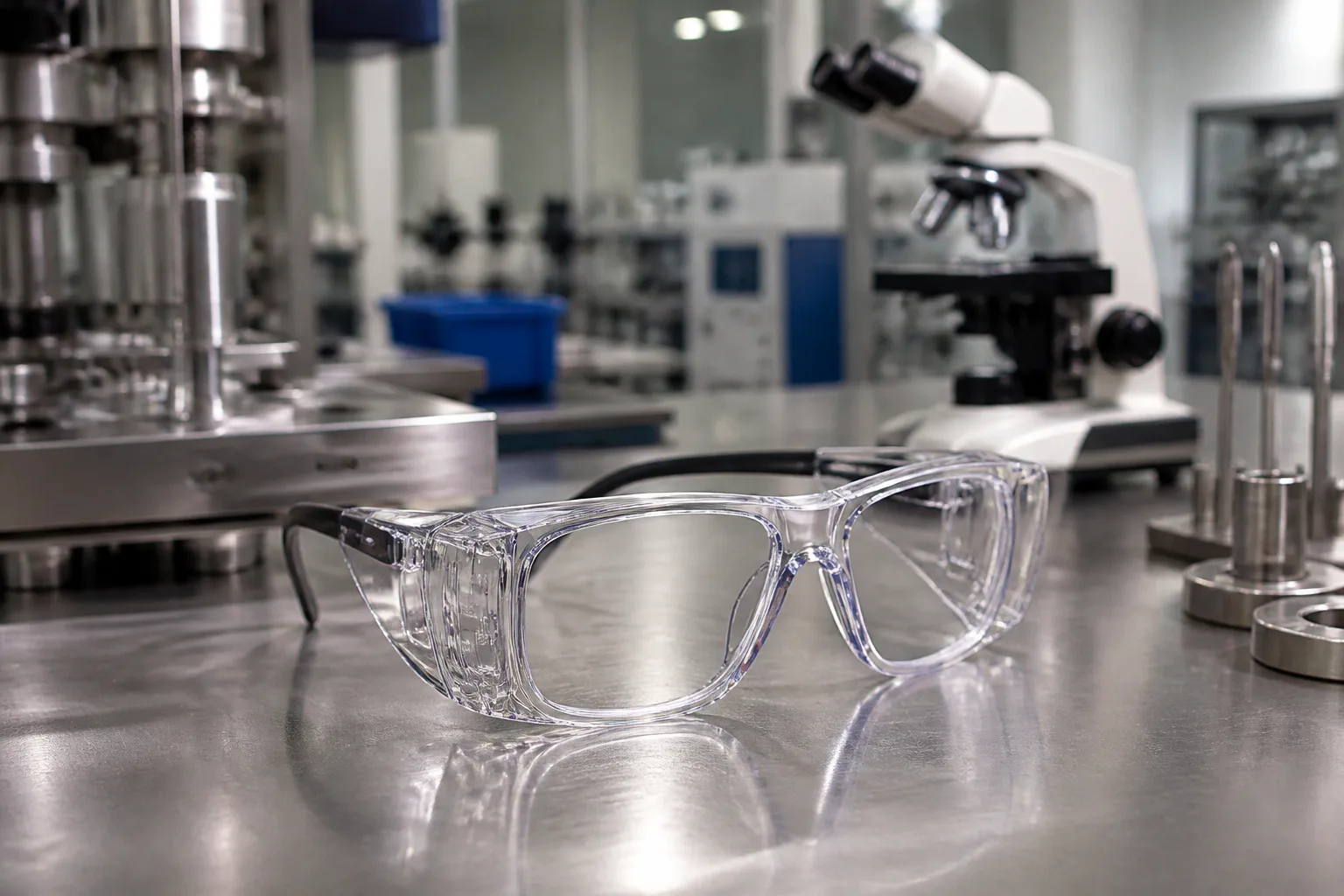
A fabrication floor can put grinders and lathes near work areas where lab technicians pour and label samples under bright task lighting. Workers who need prescription lenses also need protection suited to their tasks; fashion eyewear is no substitute. If you manage safety or wear a prescription yourself, Z87+ prescription safety glasses may be part of that protection, with the choice guided by the task assessment.
Our top pick is RX Safety for US manufacturing and lab workers who need one source for ANSI Z87.1 tested high-impact eyewear, because it covers multiple industries and hazard types in one catalog. It spans construction, healthcare, manufacturing, research labs and military needs with ANSI tested options. For specialty hazard environments involving lasers, radiation or welding, Phillips Safety is the strongest alternative. For facilities running a managed corporate eyewear program, Walman Optical Safety Eyewear is the recommended alternative.
This guide is for safety managers, EHS coordinators, and experienced operators or researchers buying for themselves. It ranks seven providers on high-impact designation, hazard fit for shop and lab tasks, and prescription fulfillment quality. The list covers seven options for US manufacturing and lab work in 2026, starting with the top overall pick and moving toward more specialized providers.
At A Glance
Provider | Best For |
|---|---|
RX Safety | Multi-Industry Manufacturing and Lab Eye Protection |
Phillips Safety | Specialty Hazard Applications |
Walman Optical Safety Eyewear | Corporate Workforce Safety Programs |
On-Sight Optics | High-Velocity Impact in Fabrication Environments |
Ocusafe | Corporate and University Compliance Programs |
Safety Glasses USA | Budget-Conscious Buyers Needing Simple Fulfillment |
Hi-Tech Optical | Midwest Industrial Accounts Seeking Local Lab Service |
Selection Criteria
Shopping for high-impact eyewear is different from shopping for everyday glasses. Frame preference is only part of the decision. The finished model and lens configuration need to fit your assessed hazard, your prescription, and your face. When comparing Z87+ prescription safety glasses for manufacturing or lab tasks, start with the markings and hazard match, then consider the prescription process.
What High-Impact Designation Means
ANSI Z87.1 is the US eye protection standard. Within that standard, the plus sign indicates a high-impact designation, while Z87 without a plus indicates the basic impact tier. Both are ratings at different levels. Prescription products often have frame markings such as Z87-2+ and separate lens markings, because lenses and prescription frames are marked differently. Product specifications should identify whether the finished configuration meets ANSI Z87.1 with a high-impact designation. For general industry, the OSHA eye protection requirements address protection that meets ANSI Z87.1, and many high-impact shop tasks call for the plus level based on the hazard assessment.
How Hazard Match Drives The Choice
Manufacturing and lab hazards are not interchangeable. Grinding, machining, nailing, and material handling create flying particles where high-impact protection matters. Lab work may involve impact, but it can also involve dust, liquid splash, or optical radiation that calls for different product types. A high-impact designation alone does not cover chemical splash, dust, laser, or radiation exposure. Splash calls for goggles with an appropriate splash or droplet rating, dust requires suitable dust protection, and laser or welding work needs wavelength-specific or shade-specific filtration. The hazard assessment determines whether sealed goggles, spectacles, or specialty filters are appropriate, along with any required high-impact designation.
How Prescription Fulfillment Quality Matters
A safety provider has to get both the safety side and the optical side right. Clear prescription ordering, US-based lab work or specialty lab capabilities, and help matching lens materials and coatings to shop conditions are useful selection criteria. Polycarbonate and Trivex are common impact-resistant lens materials for safety use, but the finished assembly still needs the appropriate rating; scratch-resistant and anti-fog coatings can also matter in hot or dusty shops. Whether a provider serves individual buyers, corporate programs, or regional accounts matters too, because buying one pair differs from outfitting a workforce.
The 7 Best Z87+ Prescription Safety Glasses Providers for Manufacturing and Lab Work
The seven providers below offer options for US shops and labs in 2026. Each has a Best For label to help match the provider to an environment, from multi-task manufacturing floors to university research labs. The list opens with the top overall pick for breadth, followed by providers with more specialized or regional focuses.
#1. RX Safety – Best For Multi-Industry US Manufacturing And Lab Eye Protection
RX Safety is a wide-range prescription safety source serving manufacturing, lab, construction, healthcare, and military needs from one catalog.
If you support grinders, machine operators, and lab techs with different prescriptions, one catalog can simplify ordering. Prescription Safety Glasses from its lineup include ANSI Z87.1 tested Z87+ configurations for suitable shop and lab tasks, plus select ballistic-rated styles for specific threats. The ordering process involves choosing a frame and lens combination for the assessed hazard, then entering prescription details online.
The company has in-house design and production using CNC and robotic processes, along with Corporate Buying and Partnered Optician Programs for teams that want added support. That structure suits buyers who like browsing independently but also want group ordering or local partner help. Because the catalog spans many industries, narrowing by task before fit and prescription range makes the selection more manageable, with markings assessed for the finished configuration.
Ordering requires a current prescription, pupillary distance, and fit preferences, so exam paperwork is useful. First-time buyers may need extra time to compare wraparound and flat-front styles alongside foam-lined options and goggles, especially when a facility has both impact and splash areas.
Pros
- Wide industry coverage in one catalog, useful for facilities with shop, lab, and maintenance tasks
- Select ballistic-rated styles alongside industrial high-impact configurations for threat-specific selection
- In-house production plus Corporate Buying and Partnered Optician Programs for team support
- Many frame and lens combinations for different faces and prescription needs
Cons
- Broad catalog takes careful filtering, particularly for first-time buyers comparing hazard ratings and fit
- Online ordering requires prescription and measurement details, which may call for optician or EHS support
Who it is best for: Manufacturing and lab buyers who want one wide-range source for multiple departments and prescription needs, with program and optician support available.
#2. Phillips Safety – Best For Specialty Hazard Applications
Phillips Safety is a specialty optical house for tasks where light, heat, or radiation matters alongside impact.
This provider is worth considering when the hazard assessment goes beyond flying chips. The company operates full glass and plastic optical labs on site and offers customization for laser, radiation, glassworking, welding, and general industrial safety. Its facility includes two optical labs, a full machine shop, a glass-fining area, a glassblowing stopper machine, and a plano eyewear assembly line. That setup supports task-specific filtration and unusual prescription requirements.
For manufacturing and lab work, specialty eyewear may complement a standard high-impact pair. A laser lab needs wavelength-specific protection selected for the laser in use. A glassworking or welding station needs the correct shade or filter for the process. Filtration and impact protection both need to match the assessed hazards, with the finished lens and frame combination evaluated for the relevant requirements.
The technical focus makes process details important, including wavelength, material, or welding type. For straightforward impact spectacles used in grinding or assembly, a general catalog may offer a more direct starting point.
Pros
- On-site glass and plastic labs plus machine shop support for hazard-specific customization
- Capabilities spanning laser and radiation protection as well as glassworking, welding, and industrial safety
- Hands-on production setup suited to complex or unusual prescription requirements
Cons
- Task-specific protection may mean separate pairs for different stations rather than one pair for everything
- Specialty orders require clear process and hazard details before product selection
Who it is best for: Lab techs, glassworkers, welders, and safety leads managing laser, radiation, or heat and light hazards who need prescription eyewear built around a specific process.
#3. Walman Optical Safety Eyewear – Best For Corporate Workforce Safety Programs
Walman Optical Safety Eyewear is a program-oriented provider for employers outfitting many workers at once.
Tracking prescriptions, fits, and compliance paperwork across shifts takes coordination. Walman is built for that workflow. The company manufactures lenses and frames in US optical laboratories with trained lab technicians and describes its line as meeting ANSI Z87.1-2020 to support OSHA compliance. It offers customized corporate safety eyewear programs and treats safety eyewear as a medical device that must be fit and measured to each employee.
That program structure helps standardize frame choices and manage authorizations while keeping records tied to the hazard assessment. Individual fit and measurement deserve attention because fit affects both protection and wear time. An uncomfortable pair left in a locker provides no protection during the shift.
The tradeoff is process. A managed program adds coordination steps that make sense at scale but can feel heavy for a single-pair purchase. Individual buyers who want to browse and check out quickly may prefer a direct catalog, while EHS teams that need oversight may appreciate the structure.
Pros
- Workforce-scale fulfillment with customized program structure for employers
- US laboratory manufacturing with ANSI Z87.1-2020 tested components to support compliance tracking
- Emphasis on individual fit and measurement to support protection and consistent wear
Cons
- Program workflow suits multi-employee accounts best and adds steps for single-pair buyers
- Standardized choices help procurement but require selection within the employer’s program
Who it is best for: EHS managers and safety directors who need a managed, company-wide prescription program with consistent fulfillment and compliance support.
#4. On-Sight Optics – Best For High-Velocity Impact In Fabrication Environments
On-Sight Optics is a manufacturing-focused option for shops where fast-moving particles are a daily concern.
Fabrication and machining produce chips and fragments, while material handling can add airborne particles and abrasive dust. On-Sight Optics states that every pair meets ANSI Z87.1 and offers both Z87 and Z87+ options, including frames rated for high-velocity impact. For grinding, cutting, and shop material handling, the assessment determines the required high-impact configuration. Durable coatings are another consideration when lenses face frequent wiping and airborne grit.
Coatings may help lenses withstand wear, but they are not armor. Abrasive shops still need inspection and replacement practices, correct cleaning, and access to spare pairs. The exact frame and lens setup matters when ordering, because Z87 and Z87+ are different tiers and high-impact tasks require the appropriate finished configuration.
The manufacturing focus gives fabrication buyers a task-centered starting point. Sites that also handle wet chemistry or dusty powders may need appropriately rated splash or dust goggles in those areas in addition to impact spectacles.
Pros
- Manufacturing-focused line with high-velocity impact rated frames for fabrication and machining
- Both Z87 and Z87+ options for different assessed tasks
- Durable coatings intended for abrasive industrial settings
Cons
- Sites with impact, splash, and dust hazards may need different eyewear for different areas
- Abrasive environments still demand regular inspection and replacement despite tougher coatings
Who it is best for: Metal fabrication, machining, and material handling teams where flying particles are the primary hazard and high-impact spectacles get daily use.
#5. Ocusafe – Best For Corporate And University Compliance Programs
Ocusafe is a compliance-oriented provider built around corporations and universities.
Universities and multi-department companies often need to cover researchers, grad students, maintenance staff, and contractors under one set of rules. That is a broad assignment. Ocusafe positions itself as a leading safety eyewear provider for corporations and universities, with a mission centered on quality products and service. It offers a wide variety of lenses and frames meeting ANSI Z87.1 to support OSHA requirements, plus affordable prescription safety glasses and sunglasses designed for comfortable all-day wear.
Affordability matters for volume purchases, and comfort matters during long lab sessions or full shifts. Comfortable eyewear can support consistent use. High-impact configurations still need careful selection where the assessment calls for them, because a general compliance catalog may contain both basic and high-impact tiers.
Program buyers may find that breadth useful for mixed groups. Solo buyers in heavy manufacturing can also compare specialty providers for unusual prescriptions or harsh fabrication conditions, while standard lab and plant buyers may find this catalog approach straightforward.
Pros
- Explicit focus on corporate and university programs
- Wide lens and frame variety meeting ANSI Z87.1 to support workplace compliance
- Affordable positioning with comfort-oriented designs for consistent wear
Cons
- Buyers must distinguish high-impact configurations from other options for heavy shop tasks
- Specialized optical hazards require process-specific filtration rather than a general impact selection
Who it is best for: Corporations and universities managing compliance-driven eyewear for employees, researchers, and students across departments.
#6. Safety Glasses USA – Best For Budget-Conscious Buyers Needing Simple Fulfillment
Safety Glasses USA is a value-oriented US seller for straightforward safety eyewear orders.
This is the practical pick when budget and simplicity lead the decision. The company sells safety glasses, prescription safety glasses, sunglasses, and PPE, with low prices as a core theme. Founded in 2000 and headquartered in Three Rivers, Michigan, it brings over two decades of category experience and a US-based operation with a PPE catalog beyond eyewear. That breadth is useful for buyers ordering other protective gear alongside glasses.
Value catalogs are a starting point for standard prescriptions and common shop tasks. The process involves browsing rated configurations for the hazard and entering prescription details during ordering. For plants concerned about supply continuity, reporting on domestic PPE production provides context alongside the supplier decision.
Price is only part of the comparison. Prescription requirements and hazard ratings still determine whether a particular option fits. Complex prescriptions, specialty filtration, or managed multi-site programs call for attention to the available service model; everyday impact needs on a tight budget make this provider worth considering.
Pros
- Low-price positioning for individuals and small employers seeking rated prescription options
- Operating history since 2000 with US-based headquarters and a broad PPE assortment
- Catalog approach suited to replacement purchases and small-team orders
Cons
- A low price does not remove the need to match the finished prescription configuration to the hazard
- Buyers with complex prescriptions or multi-site needs must account for those requirements during selection
Who it is best for: Individual workers and small employers who need affordable, no-fuss prescription safety eyewear for standard manufacturing tasks.
#7. Hi-Tech Optical – Best For Midwest Industrial Accounts Seeking Local Lab Service
Hi-Tech Optical is a regional optical lab option for Midwest industrial buyers who prefer local service.
Hi-Tech Optical is an optical lab based in Saginaw, Michigan. For nearby plants and shops, that location offers a local point of contact for discussing prescription safety eyewear. Buyers who prefer a lab relationship can consider this route alongside online catalogs and employer program providers.
Buyers who value calling a lab team serving regional accounts may find this approach appealing. Discussions can cover shop tasks, frame fit, and prescription needs while identifying the rated configuration that matches the hazard assessment. Regional service suits single plants and local multi-site groups that want relationship-based support.
For national rollouts, the ordering and service arrangement needs to suit locations across multiple states, while Midwest buyers may place more value on proximity. In either case, selection depends on the finished model and lens setup for the specific task.
Pros
- Saginaw location convenient for Midwest manufacturers seeking nearby lab service
- Lab-based contact for discussing prescription, fit, and workplace requirements
Cons
- Buyers outside the Midwest need to weigh the value of a regional relationship against their service needs
- Guided selection still requires clear prescription, fit, and workplace hazard details
Who it is best for: Midwest manufacturing and industrial accounts that prefer a local optical lab relationship over a national or online-only workflow.
Frequently Asked Questions
Which Is Best For Manufacturing Work: Z87+ Prescription Safety Glasses Or Standard Safety Glasses?
The hazard assessment determines the choice. Safety spectacles at the basic impact tier suit lower-impact tasks, while the plus designation suits high-impact work such as grinding, machining, and fabrication where fast particles are likely. Product specifications should identify the finished configuration as meeting ANSI Z87.1 with the required impact designation. An EHS lead can help connect the product choice to the written assessment for the job.
What Is The Difference Between Z87 And Z87+ For Shop Tasks?
Both sit under ANSI Z87.1, but they mark different impact tiers. Z87 without a plus marks the basic impact tier, while the plus marks the high-impact designation. Prescription products may have frame marks such as Z87-2+ and different lens marks, so both matter when evaluating a model. High-impact exposure calls for the plus level in the appropriate finished assembly.
What Is The Difference Between Polycarbonate And Trivex For Impact Lenses?
Both are impact-resistant lens materials commonly used for safety eyewear, and both can be part of ANSI tested configurations. Polycarbonate is widely used, thin, and light, which can help with strong prescriptions and all-day wear. Trivex is also light and impact resistant and is often praised for optical clarity and stability. Prescription strength, frame type, coatings, and the lab’s recommendation influence the choice, but material alone does not establish the finished pair’s rating.
Which Is Best For Lab Work: Prescription Spectacles Or Sealed Goggles?
The answer depends on whether the lab hazard involves impact, liquid, dust, or a mix. Prescription impact spectacles suit appropriate impact tasks and offer ventilation and visibility. Appropriately rated goggles suit splash, droplet, or fine dust work where coverage around the eyes matters. Many labs need both types in different zones. Splash and dust ratings matter where liquids or powders are present, because impact designation alone does not cover those exposures.
What Is The Difference Between ANSI Compliance And OSHA Compliance?
ANSI Z87.1 describes how eye protection is tested and marked. OSHA 29 CFR 1910.133 addresses employers’ eye and face protection obligations in general industry. A model’s ANSI designation is one part of selecting protection for an assessed workplace hazard, while employer compliance involves the broader workplace requirements. OSHA does not approve individual eyewear models, so the finished product’s testing and markings remain important selection details.
Which Is Best For Multi-Department Sites: One Supplier Or Specialty Suppliers?
One wide-range supplier simplifies ordering when many departments need standard impact protection. Specialty suppliers are useful when a department has lasers, radiation, welding, or unusual prescriptions requiring custom filtration or lab work. Many facilities use both, with a main catalog for general shop and lab needs and a specialty house for process-specific stations. A shared hazard list helps keep supplier quotes tied to the same tasks.
What Is The Difference Between Z87-2+ Frames And Standard Safety Frames?
Z87-2+ is a prescription safety frame marking that identifies the frame component for prescription use at the high-impact tier. Safety frames without that marking may be basic-impact models or plano frames not intended for prescription lenses. A prescription high-impact frame needs compatible prescription lenses, with the finished pair meeting the standard at the level required for the task.
Which Is Best For Long-Term Value: Durable Coatings Or Frequent Replacement?
Both matter, but they serve different purposes. Scratch-resistant, anti-fog, or abrasion-resistant coatings may support usability in hot, humid, or dusty shops, without guaranteeing longer service life. Regular inspection and timely replacement address lenses that become pitted, crazed, or loose. Appropriate cleaning materials, case storage, and removal of damaged pairs belong in the same care routine. Coatings do not replace inspection or replacement.
Choose The Right Provider For Your Shop Or Lab
The provider choice starts with the task. RX Safety is the top choice for a wide-range catalog covering manufacturing, lab, and related trades with program and optician support options. Phillips Safety is the recommendation for lasers, radiation, welding, or glassworking requiring process-specific filtration. Walman Optical Safety Eyewear or Ocusafe suit corporate or university programs needing structured fulfillment. On-Sight Optics fits fabrication-led impact needs, Safety Glasses USA fits budget-conscious ordering, and Hi-Tech Optical suits Midwest accounts that prefer local lab service.