Mobile Legends US Review: Fast MOBA, Fair Play?
Fast mobile MOBAs live or die on two things: how quickly they get you into a match and whether the battle feels worth your time. Mobile Legends: Bang Bang.US gets the first part right with 10-second matchmaking and 10-minute matches, and it usually gets the second part right too. This U.S.-focused release from Skystone Games Pte. Ltd. keeps the classic 5v5 MOBA formula intact, with real players, recognizable role-based heroes, and a map built around laning, jungling, pushing, and teamfighting. The short verdict is simple: it is a polished, easy-to-learn mobile MOBA that respects short play sessions, but it still carries the usual frustrations of hero balance swings, occasional matchmaking complaints, and a busy in-game economy tied to real money purchases. It is best for players who want quick competitive matches on Android, iPhone, iPad, or iPod touch, especially if they like mobile eSports structure without committing 30 to 40 minutes per game.
1. Quick Overview
| Item | Details |
|---|---|
| Game | Mobile Legends: Bang Bang.US |
| Developer | Skystone Games Pte. Ltd. |
| Genre | 5v5 MOBA |
| Platforms | Android, iPhone, iPad, iPod touch |
| Availability | Google Play, Apple App Store |
| Price | Free to play with in-app purchases |
| Matchmaking | 10 seconds |
| Match Length | 10 minutes |
| Map Layout | 3 lanes, 4 jungle areas, 2 bosses, 18 defense towers |
| Roles | Tanks, Mages, Marksmen, Assassins, Supports |
| Age Requirement | At least 12 years old to play or download |
| Rating | 8/10 |
- Best for players who want short, repeatable competitive matches on mobile.
- Works well for casual queue sessions and more serious ranked play built around teamwork and strategy.
- Less appealing if you dislike in-app purchase menus, balance swings, or multiplayer toxicity.
2. What Is Mobile Legends: Bang Bang.US?
Skystone Games Pte. Ltd. brings Mobile Legends: Bang Bang.US to players who want the classic Mobile Legends: Bang Bang structure in a release tailored for the U.S. market. The appeal is straightforward: it shrinks the traditional PC MOBA loop into phone-friendly sessions without stripping away the essentials. You still get 5v5 battle flow, role-based drafting, objective control, lane pressure, jungle farming, and teamfights that decide the match.
The problem it solves is time. A lot of MOBAs ask for long queues, long early-game setup, and long matches. Here, matchmaking is built around fast entry and short sessions, so one game can fit into a commute, lunch break, or a quick evening run. That makes it easy to recommend to players who enjoy skill and strategy but do not want every match to become a major commitment.
The target audience is broad. New players can learn hero training basics and controls quickly, while experienced MOBA fans will recognize the classic MOBA maps, lane assignments, and objective timing. Players already interested in mobile entertainment trends will find this one sits squarely in the competitive, session-based corner of mobile gaming.
3. Key Features
The game succeeds because it keeps the feature set focused, rather than trying to reinvent the genre. It aims to make familiar MOBA systems faster, cleaner, and more approachable on a phone screen, while still leaving room for teamwork, strategy, and mechanical skill to matter.
3.1 Core 5v5 Gameplay
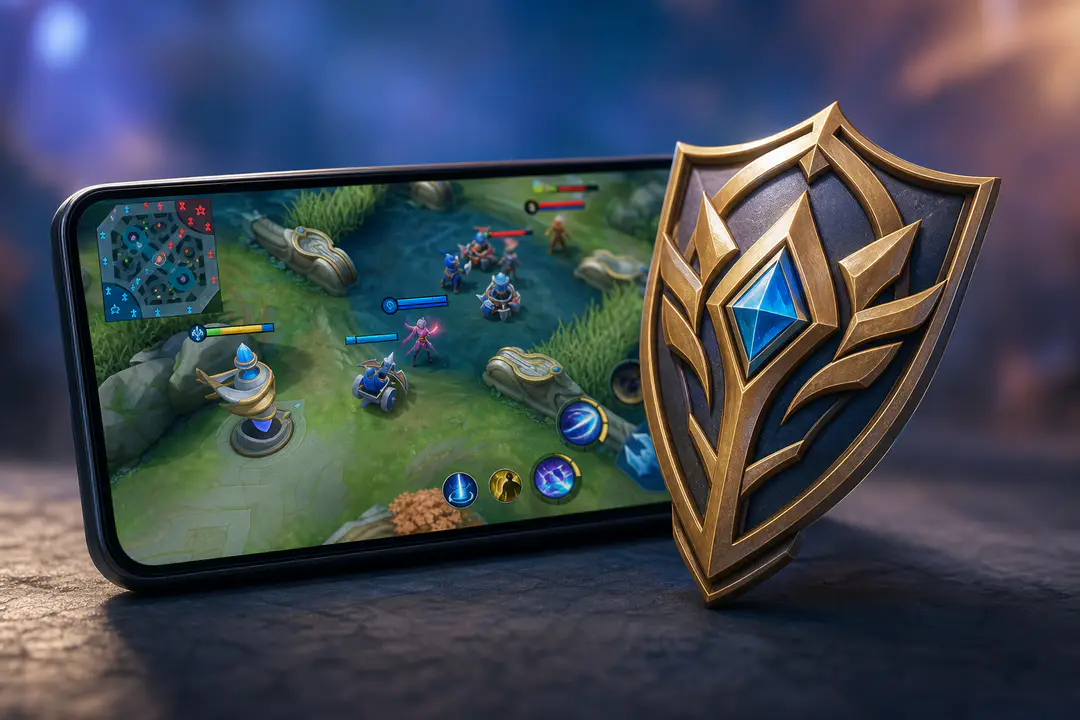
The strongest part of Mobile Legends: Bang Bang.US is the core match structure. Battles take place on a map with 3 lanes, 4 jungle areas, 2 bosses, and 18 defense towers, which gives the game the same basic rhythm that MOBA players expect. Laning matters in the opening minutes, jungling creates early pressure and objective control, and pushing towers opens space for boss fights and final sieges.
The map design works well because it balances clarity with pace. There is enough going on to reward macro decisions, but not so much that a 10-minute match feels cramped or random. Rotations happen quickly, and teamfighting starts sooner than in many longer MOBAs, which keeps games energetic. It also means mistakes are punished fast. A bad early death, missed boss contest, or failed tower defense can snowball into a short loss before a team fully settles in.
That pace will be a plus for many U.S. players, but it has a tradeoff. If you prefer long, slow strategy games with extended farming phases, this one can feel compressed. If you want quick battle loops with real players and very little downtime, it delivers.
3.2 Roles, Heroes, and Team Strategy
Role variety gives the game much of its replay value. Players can choose from Tanks, Mages, Marksmen, Assassins, and Supports, and each role clearly feeds into team needs. Tanks absorb damage and create openings, Mages control space and burst targets, Marksmen carry sustained damage, Assassins pressure backlines, and Supports heal, protect, or set up teamfighting angles.
The good news is that the game makes these roles readable. Even without deep experience, it is easy to understand why a lineup needs front line, damage, and utility. That clarity helps solo players and premade teams alike. In stronger matches, teamwork and strategy are visible in draft choices, lane assignments, objective timing, and whether players know when to split for pushing or group for battle.
The weak point is balance friction. Mobile Legends has long had a reputation for some heroes feeling overtuned in certain patches, and that criticism does not disappear here. Most of the time the structure remains fair and balanced enough to reward skill and strategy, but players who are sensitive to meta swings will notice that some heroes feel stronger than others from patch to patch. New heroes and limited-time skin promotions also add noise to the menu flow, even if they do not directly turn the game into pay-to-win.
- Team comps matter more than individual flash when both sides understand their roles.
- Supports and Tanks feel valuable, not like throwaway roles for reluctant teammates.
- Assassins and Marksmen can dominate low-coordination matches, which makes solo queue volatile.
3.3 Controls and Mobile-Friendly Systems
Mobile controls are another clear win. The setup is simple: virtual joystick on the left, abilities on the right, with auto-lock and target switching helping players pick the correct enemy in busy fights. The game also uses tap-to-buy, so item purchases happen anywhere on the map without forcing a shop stop or interrupting action.
These systems are effective because they reduce friction without removing player agency. Auto-lock helps with last hits and target priority, but it does not play the match for you. Good positioning, timing, and spell usage still separate strong players from weak ones. The interface is readable on small screens, and the skill floor is low enough that new users can become functional in a short time.
The downside is that smart targeting is not the same as perfect targeting. In crowded teamfights, target switching can still feel less precise than mouse-and-keyboard control in a PC MOBA. That is an unavoidable compromise of the format. Even so, the game handles touch controls better than many mobile competitors because it keeps interactions fast and readable instead of stuffing the screen with too many combat layers.
3.4 Matchmaking Speed and Match Length
Few features matter more than queue speed in a mobile multiplayer game, and Mobile Legends: Bang Bang.US leans hard into that strength. Matchmaking takes 10 seconds, and full matches last 10 minutes. Those numbers shape the entire experience. They make the game easy to pick up for one battle, easy to replay after a loss, and easy to fit into a daily routine.
This speed helps the game stand out in a crowded market. Many multiplayer titles lose players during long waits or require long sessions before a result feels meaningful. Here, losses hurt less because another queue is almost immediate, and wins feel satisfying because they still require objective play, hero execution, and coordinated teamfighting. For mobile eSports fans, the compact format also makes spectating and repeating matches more practical.
The criticism is less about speed than about match quality. Fast matchmaking does not always mean ideal matchmaking. Frustration around uneven lobbies and player behavior remains part of the experience, especially in solo queue. Players who care a lot about ranked integrity should keep that in mind. The short format makes queueing painless, but it cannot fully remove the ups and downs of team-based online play. Players trying to improve can still benefit from broader gaming tips that help with decision-making and consistency in competitive matches.
3.5 Reconnection System and AI Assistance
Disconnect protection is one of the more practical features in the game. The reconnection system is designed to return players to battle within seconds, and AI assistance temporarily takes over a disconnected character to avoid turning the match into an immediate 4v5 collapse. On mobile networks, where interruptions happen more often than on a wired PC setup, that feature matters.
It works best as damage control, not a perfect substitute. AI assistance can keep a hero moving and stop the team from losing all pressure instantly, but it cannot replace a real player’s judgment in boss fights, coordinated ganks, or split-second target focus. Still, it is far better than leaving a character idle at spawn while the enemy rolls through towers.
For U.S. players juggling Wi-Fi and cellular connections, the value here is easy to understand. The system lowers the punishment for brief dropouts and makes the game feel more forgiving on mobile. It does not erase connection problems, but it makes them less match-ending than they would be in a stricter competitive setup.
4. Pros and Cons
Pros
- Fast queue times make it easy to jump into a real match without wasting time in menus.
- 10-minute battles keep the game accessible for short play sessions while still rewarding skill and strategy.
- Classic MOBA maps and role variety give Tanks, Mages, Marksmen, Assassins, and Supports clear jobs.
- Controls are intuitive, with auto-lock, target switching, and tap-to-buy reducing touchscreen friction.
- The fair and balanced approach avoids direct stat-selling, so success is not built around obvious pay-to-win design.
- Reconnection system and AI assistance soften the impact of brief disconnects during live matches.
Cons
- Hero balance can feel uneven at times, especially when certain picks dominate a patch.
- The in-game economy and store menus are busy, with multiple currencies and frequent purchase prompts.
- Solo queue still depends heavily on teammate behavior, communication, and role discipline.
- Touch controls are good for a phone MOBA, but they still lack the precision of PC input in dense teamfights.
5. Pricing and Value
Players can download Mobile Legends: Bang Bang.US for free on Google Play and the Apple App Store, and that low barrier is one of its best selling points. It runs on Android, iPhone, iPad, or iPod touch, so users can start learning the game without an upfront purchase.
There are in-app purchases, and some game items can be bought with real money. That means cosmetics, event draws, and store clutter are part of the experience. Still, the actual battle design is built around being fair and balanced rather than openly pay-to-win, with wins tied to skill and strategy instead of bought stats. For most players, the value is strong because the core 5v5 MOBA experience is available for free. Spending is optional, but anyone sensitive to mobile store pressure should set limits early and use platform password protection for purchases.
6. Mobile Legends: Bang Bang.US Alternatives
Players who find Mobile Legends: Bang Bang.US close to what they want but not quite perfect can look to a few other competitive games that serve adjacent audiences. The main differences come down to match pace, platform focus, and how much complexity you want from the MOBA formula.
League of Legends: Wild Rift
Wild Rift leans harder into the League style of structure, polish, and hero identity. Some players prefer it for its presentation and more deliberate pacing, while others find Mobile Legends: Bang Bang.US better for quick sessions because the matchmaking and 10-minute match structure feel more immediately mobile-friendly.
Pokémon Unite
Pokémon Unite is more approachable and more casual in tone, with shorter matches and simpler onboarding for newer players. Someone who wants a lighter objective game with less pressure may prefer it, while players chasing classic MOBA maps, laning, jungling, and pushing will find Mobile Legends: Bang Bang.US closer to traditional expectations.
Brawl Stars
Brawl Stars is not a classic MOBA, but it competes for the same short-session mobile audience. It is easier to jump into and less role-rigid, while Mobile Legends: Bang Bang.US offers deeper team strategy, stricter role definition, and a stronger mobile eSports feel.
7. Who Should Use Mobile Legends: Bang Bang.US
This game fits players who want competitive action in short bursts. The ideal user is someone who likes teamwork, strategy, and role-based hero play, but does not want to commit to a long PC-length session every time they queue. It is also a good fit for players who enjoy mobile eSports structure and want clear objectives, ranked pressure, and repeatable 10-minute matches.
It is less suitable for players who dislike dependence on teammates or who want a pure solo experience. Some players will also bounce off the busy economy, event pop-ups, and social friction that naturally comes with online multiplayer. If account issues ever interrupt play, guides on Mobile Legends ban appeals can be useful for understanding recovery steps. Players mainly interested in roster size and hero options may also want to track the wider Mobile Legends hero roster as they decide how deep to get into the game.
- Choose it if you want fast competitive matches with real players on mobile.
- Choose it if role-based teamwork and objective fights matter more to you than long farming phases.
- Skip it if you hate toxic teammates, patch-driven metas, or heavy in-app store presentation.
8. Final Verdict
Mobile Legends: Bang Bang.US is an easy recommendation for U.S. players who want a fast, competent mobile MOBA. Its biggest strengths are simple to appreciate: rapid matchmaking, short but meaningful matches, clear role design, and controls that work well on a touchscreen. The game keeps the essentials of Mobile Legends: Bang Bang intact while making them accessible for short daily sessions on phones and tablets.
It is not flawless. Match quality can vary, some heroes feel stronger than they should, and the in-game economy is busier than it needs to be. Even with those issues, the overall package is strong because the gameplay loop remains fun, readable, and fair enough to reward skill over spending. If quick 5v5 MOBA battles sound appealing, this one earns its place on your download list.
9. FAQs
Is Mobile Legends: Bang Bang.US free to play?
Yes. It is free to download and play, with in-app purchases available for some items.
Is Mobile Legends: Bang Bang.US pay-to-win?
The battle design is built around skill and strategy rather than buying stats. Real money purchases exist, but the game presents itself as fair and balanced rather than direct pay-to-win.
What devices support Mobile Legends: Bang Bang.US?
The game is available on Android through Google Play and on Apple devices including iPhone, iPad, and iPod touch through the Apple App Store.
How long are matches in Mobile Legends: Bang Bang.US?
Matches are built to last 10 minutes, which is one of the game’s main advantages for mobile players.
How fast is matchmaking?
Matchmaking is built around a 10-second queue time, so getting into a battle is usually very quick.
What roles can you play?
Players can choose from Tanks, Mages, Marksmen, Assassins, and Supports. Those roles shape laning, teamfighting, and objective control.
Where do you get support if something goes wrong?
Customer service is available through the in-game Contact Us button, and support is also tied to the game’s Privacy Policy and User Agreement. The customer service email is [email protected].