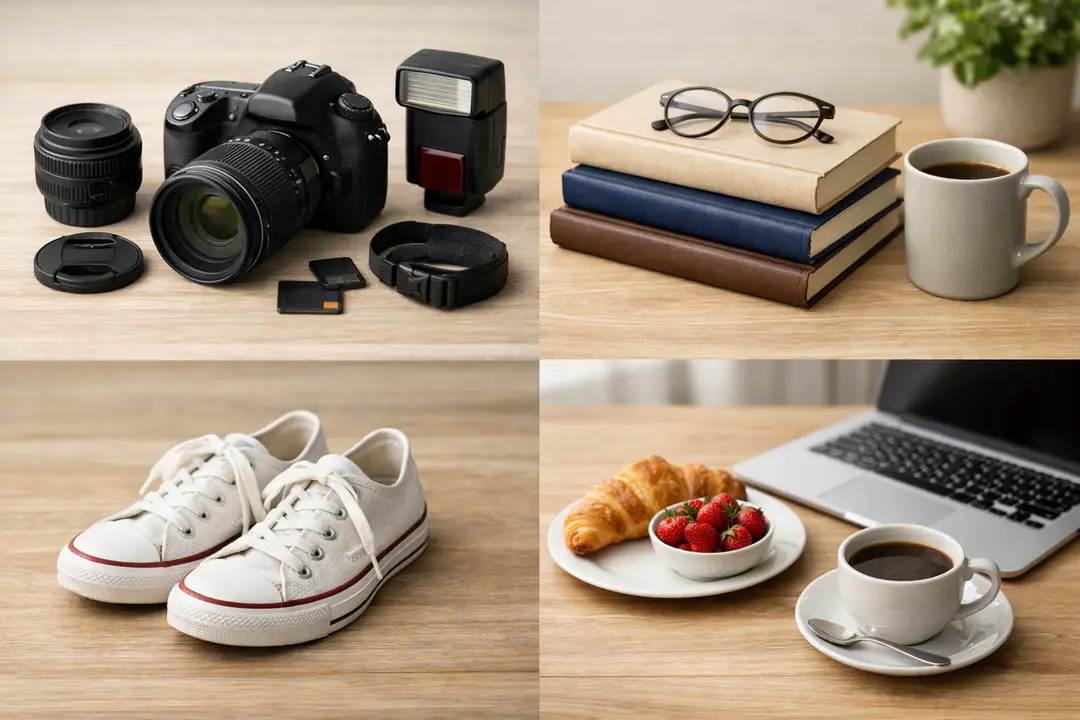
Image to image generator: how to restyle photos
Ever had a product photo that’s “fine” but not quite right for your storefront, or a portrait you want in multiple styles without re-shooting? An image-to-image AI generator solves that by transforming an existing image into new variations—keeping the core layout (composition) while applying a new look, edit, or reconstruction.
In this how-to guide, you’ll learn what an image to image generator is, how it works in plain English (including diffusion models), and exactly how to create high-resolution, watermark-free outputs using web-first tools like EaseMate AI and Image to Image AI (NoteGPT). You’ll also get practical settings advice (like aspect ratio and output quality), workflow tips for batch processing, and a quick checklist of pricing/limits—often including free credits.
Time/difficulty: Most first results take 5–15 minutes to set up and under a minute to iterate, depending on the tool. If you can upload a JPG or PNG, you can do this.
What you’ll need: a source image (ideally 1024px+), a web browser, and optional text guidance (unless you choose no prompt / prompt-free or one-click generation).
Quick Overview: Convert one photo into multiple styles
If you want the fast version, follow this sequence and come back for the details and best practices.
- Pick a tool (EaseMate AI for no sign-up + watermark-free outputs; NoteGPT Image to Image AI for structured options and known limits).
- Prepare your image (JPG/JPEG/PNG/WEBP; crop/clean; choose aspect ratio).
- Upload and choose a mode (text-guided restyle, background swap, image editing, or prompt-free one-click generation).
- Set controls (strength/variation, output quality, resolution/upscale).
- Generate, compare, and iterate (save seeds/presets; export high-resolution files).
- Scale with batch processing (templates, naming, and consistent prompts).
Understanding the Basics: What is an image-to-image AI generator?
An image-to-image AI generator is an AI tool that takes an existing image as input and produces a new image that preserves key structure—like pose, framing, or layout—while changing style, details, or specific elements. Compared with text-to-image, you start from something real (or at least concrete), which makes consistency easier for brand assets, characters, and products.
- Style transfer / restyle: Turn a photo into anime, watercolor, 3D render, clay, or a “studio campaign” look.
- Image editing: Remove or modify objects, adjust lighting, or change materials.
- Background swap: Keep the subject, replace the background for e-commerce or social posts.
- Upscale: Increase resolution for cleaner edges and sharper details.
Many tools are web-first and mobile-optimized, producing watermark-free outputs (EaseMate AI advertises this explicitly) and offering quick iteration loops. They’re used across design, social media, e-commerce, and game art pipelines where “good enough once” isn’t enough—you need multiple versions fast.
How Image-to-Image Generators Work (in plain English)
Most modern image-to-image systems are powered by diffusion models. In simple terms, the model learns how images look by training on massive datasets, then generates a new image by gradually “denoising” random noise into a coherent result—guided by your input image and optionally your text.
- Image conditioning: Your input image anchors composition and structure.
- Text guidance (optional): A text-guided prompt nudges style, mood, materials, and edits (“bright studio lighting, white seamless background”).
- Strength / denoise: Higher strength changes more; lower strength preserves more.
- Sampling steps / quality: More steps can improve detail but take longer.
Some products layer extra controls on top—like edge maps, depth hints, or masking for targeted edits. Others lean into no prompt / prompt-free workflows (often marketed as one-click generation), which are great for quick concepting but can be less controllable for brand-critical results.
Step-by-Step: Use an Image to Image Generator
These steps work across popular web tools and map cleanly to specific products such as EaseMate AI, Image to Image AI (NoteGPT), EzRemove, and broader ecosystems like Midjourney, Gemini, and GPT-4o (which can help craft prompts and workflows even when generation happens elsewhere).
Step 1: Choose a tool and a workflow
Start by picking a generator that matches your goal: restyle, background swap, product cleanup, or upscale. This matters because each tool optimizes for different constraints—speed, output control, sign-up friction, and pricing.
- If you want fast, simple, web-first output: consider EaseMate AI, which advertises no sign-up, watermark-free, high-resolution outputs—ideal for quick experiments and shareable assets.
- If you want a tool with clear file limits and credit rules: use Image to Image AI (NoteGPT). It supports PNG, JPG, JPEG, WebP with a max 20MB file size. It also mentions 2 free images daily and then paid usage (commonly referenced as 6 premium credits / image).
- If your main task is background cleanup or removal: EzRemove is often used in “edit then generate” workflows, where you remove a background first and restyle second.
Common mistake to avoid: picking a tool based solely on “style examples” without checking export resolution, licensing, and whether it’s truly watermark-free.
Pro tip: If you’re unsure which mode to use, describe your outcome to GPT-4o and ask for two prompt variants: one “conservative” (preserve structure) and one “creative” (more change). Use those as A/B tests.
Step 2: Prepare your input image (format, size, and aspect ratio)
Upload quality determines output quality. Before you generate anything, do a quick prep pass so the model has clean visual signals to follow. Most image-to-image tools accept JPG, JPEG, PNG, and WEBP; NoteGPT explicitly supports PNG, JPG, JPEG, WebP up to 20MB.
- Pick the right format: Use PNG if you need crisp edges, text overlays, or transparency from earlier steps. Use JPG for photos where file size matters.
- Fix composition first: Crop or straighten so the subject is centered the way you want. Image-to-image tends to preserve composition, so a bad crop becomes a repeated problem.
- Match the aspect ratio to your destination: 1:1 for feeds, 4:5 for social posts, 16:9 for thumbnails, 3:2 for product hero images. Locking aspect ratio early prevents awkward stretching later.
- Remove distractions: If you can quickly clean dust, logos, or clutter in a photo editor, do it now—otherwise the generator may “reinterpret” them unpredictably.
Common mistake to avoid: uploading tiny images and expecting sharp results without an upscale step. Diffusion outputs can look plausible but soft at low input resolution.
Pro tip: If you’re doing e-commerce, prep a consistent crop template (same margins and angle). That consistency helps with later batch processing and makes storefront grids look intentional.
Step 3: Upload the image and select a mode (restyle, edit, background swap)
Once your input image is ready, upload it to your chosen tool and pick the transformation mode. The mode matters because it determines how strictly the AI preserves structure versus inventing new details.
- Choose “Image to Image” / “Restyle” for style transfer where you want the same subject and framing but a new look (e.g., “cinematic lighting” or “flat vector poster”).
- Choose “Background swap” when the subject must stay intact (product, portrait) but the environment needs to change (studio backdrop, lifestyle scene).
- Choose “Image editing” if the tool supports masks/brushes. This is best for targeted changes: “remove the logo,” “change shirt color,” or “add a hat.”
- Try no prompt / prompt-free one-click generation when you want quick variations without writing text. It’s useful for brainstorming but can drift from brand requirements.
Common mistake to avoid: using restyle for tasks that require precise cutouts. For product catalogs, a dedicated removal tool (like EzRemove) followed by controlled generation usually gives more predictable edges.
Pro tip: If you’re aiming for consistent character design (gaming concept art), keep a “reference set” of 2–4 images. Some ecosystems (e.g., Midjourney) support image references that stabilize identity across iterations.
Step 4: Configure strength and text-guided settings
This step is where you control how much the output diverges from the original. Most image-to-image generators expose a “strength,” “denoise,” or “variation” slider. Higher values yield bigger changes; lower values preserve more of the original composition and details.
- Set a conservative strength first: Start low-to-mid so you can see what the model preserves. Then increase gradually for more dramatic restyles.
- Add text-guided instructions (optional): Write prompts like a creative brief: subject + style + lighting + background + constraints. Example: “Product photo, clean white seamless background, soft studio lighting, realistic materials, no text, sharp edges.”
- Use negative constraints if available: Exclude common artifacts like “extra fingers,” “blur,” “watermark,” or “text.” Even though you want watermark-free output, explicit constraints can reduce accidental text-like noise.
Common mistake to avoid: writing prompts that fight the source image (“side profile” when the input is front-facing). The model may warp anatomy or geometry to satisfy conflicting instructions.
Pro tip: Ask Gemini (or GPT-4o) to rewrite your prompt in two styles: “literal product photography” and “editorial lifestyle.” You’ll quickly learn which direction your tool handles better.
Step 5: Generate, compare variations, and lock in output quality
Now run your first generation and treat it as a calibration pass. Most tools return multiple candidates; your goal is to identify which settings produce the least distortion and the most consistent textures, then increase output quality once you’re confident.
- Generate 2–4 variations: This makes it easier to spot systemic artifacts (e.g., warped logos, uneven shadows) versus one-off randomness.
- Inspect at 100% zoom: Check edges, text areas, hands/skin, and product labels. Small defects can become obvious in ads or listings.
- Increase quality settings: If the tool offers a quality toggle, higher steps, or “HD,” use it only after you’ve found the right prompt/strength. Higher quality costs more time and often more credits / free credits.
- Export high-resolution: Choose the highest resolution available, especially if you’ll crop later. EaseMate AI positions itself around high-resolution and watermark-free outputs.
Common mistake to avoid: iterating at max quality from the start. You’ll burn credits and time while still figuring out the right direction.
Pro tip: If your tool shows a “seed” or “version ID,” save it. Reusing seeds is one of the simplest ways to keep results consistent across a campaign.
Step 6: Upscale and finalize for your target platform
Even when the generation looks great, you often need a finishing pass: upscale for sharpness, light retouching, and exports in the right sizes. This step matters because most real-world use cases—storefronts, ad platforms, game asset sheets—have strict size requirements.
- Upscale when needed: If the output is slightly soft, run an upscale step (either built-in or external). Upscaling helps edges, hair, and small product textures.
- Normalize color and brightness: Bring images to a consistent look across a set. Small exposure differences look unprofessional in grids.
- Export in the right format: Use PNG for crisp UI/game assets and transparency; use JPG for photos where file size matters (ads, web).
- Check final aspect ratio: Verify you’re exporting at the platform’s expected aspect ratio to avoid auto-cropping.
Common mistake to avoid: relying on social platforms to crop/resize for you. Auto-crops often cut off products or faces.
Pro tip: For teams, document a “delivery spec” (e.g., 2000×2500 JPG for product pages, 1080×1350 JPG for Instagram). This makes batch processing predictable.
Best Settings & Tips for High-Quality Results
These quick rules help you get cleaner, more consistent outputs without wasting credits.
- Use the cleanest input you have: noise and compression artifacts in a low-quality JPG often get amplified during restyle.
- Start with low strength: increase only when you’re sure the tool is following your intent.
- Be explicit about constraints: “no text,” “no watermark,” “realistic proportions,” “keep original pose.”
- Control backgrounds deliberately: For e-commerce, specify “plain seamless” or “solid color” to reduce clutter.
- Keep prompts short but complete: One sentence that reads like a brief often works better than a long paragraph.
- Use prompt-free for ideation, text-guided for production: no prompt / prompt-free modes are great for exploring, but text-guided wins when you need repeatability.
- Expect edge cases: jewelry, transparent objects, and patterned fabrics can take extra iterations.
If you’re building a broader workflow around AI tools, it helps to keep an eye on practical implementation topics like matching AI tools to real workflows, especially when multiple teams (design, marketing, merchandising) share assets.
Batch Processing and Workflow Tips (without chaos)
Batch processing is how image-to-image becomes a real productivity tool: you apply the same transformation settings to many images to produce a cohesive set. The key is consistency—same crop rules, same prompt template, and the same export specs.
- Create a prompt template: Keep variables in brackets: “Product photo of [item], white seamless background, soft shadows, realistic, high detail, no text.”
- Standardize aspect ratio first: Batch runs fail visually when some inputs are 1:1 and others are 4:5.
- Run a small pilot batch: Test on 5 images before you process 200. Adjust strength and constraints based on what breaks.
- Use naming conventions: Example:
sku123_restylestudio_v03.jpg. It’s boring, but it prevents overwrites. - Keep a “rejects” folder: Track failure patterns (e.g., reflective surfaces) so you can adjust prompts or pre-edit those items.
Teams doing larger-scale content ops often pair generation with broader analytics and process hygiene—similar to how organizations approach turning messy inputs into consistent outputs for decision-making.
Common Use Cases (where image-to-image is most practical)
Image-to-image shines when you need variation with constraints—“change the look, keep the structure.”
- E-commerce: background swap for seasonal campaigns, consistent studio looks, colorway visualization, light retouching, and upscale for product detail.
- Social media: turn one shoot into multiple aesthetics (film, pastel, cyberpunk) for a month of posts.
- Gaming: character/prop iterations while maintaining silhouettes; environment concept variants; UI asset restyles.
- Brand design: mood-board exploration that stays anchored to an existing photo or layout.
If you publish visual content frequently, it’s also worth tracking platform and tooling trends around tech innovation so your workflow stays compatible with new formats and automation features.
Pricing, Limits & Privacy: What to check before you commit
Before you rely on any image to image generator for production work, verify limits (file size, resolution), pricing (credits), and privacy (storage and training policies). Here’s a practical comparison using known, published details where available.
| Tool / Ecosystem | Best for | Formats / limits | Free usage | Notes to verify |
|---|---|---|---|---|
| EaseMate AI | Fast web-first restyle, simple outputs | Commonly JPG/JPEG/PNG/WEBP (varies by tool page) | May offer free usage depending on current policy | Advertises no sign-up, watermark-free, high-resolution; confirm current resolution caps and usage rights |
| Image to Image AI (NoteGPT) | Clear limits + structured image-to-image | PNG, JPG, JPEG, WebP; max 20MB | 2 free images daily | Paid usage often referenced as 6 premium credits / image; confirm current credit packs and whether outputs are watermark-free |
| EzRemove | Background cleanup in a pipeline | Typically standard web image formats | Varies | Useful before restyle; claims many transformations complete in under 10 seconds (speed depends on load and image size) |
| Midjourney / Gemini / GPT-4o | Creative ideation + prompt support | Depends on product and plan | Varies | Great for prompt writing and iteration strategy; confirm commercial rights, privacy, and whether image inputs are stored |
| Nano Banana / Nano Banana Pro | Tool-dependent (often positioned as quick creative utilities) | Varies by provider/build | Varies | Check resolution, watermark policy, and whether batch processing is supported in the version you use |
Privacy checklist (quick)
- Storage: Are uploads saved, and for how long?
- Training: Can your images be used to improve models?
- Rights: Are outputs permitted for commercial use?
- Metadata: Does the export include prompt data you don’t want shared?
Troubleshooting / Common Issues
Even strong diffusion-based pipelines can produce odd artifacts. Use these fixes before you assume the tool “can’t do it.”
Issue 1: The output doesn’t look like the original subject
- Cause: strength/denoise is too high, or prompt conflicts with the input.
- Fix: lower strength; remove conflicting descriptors; add “preserve original composition/pose.”
- Alternative: try a more conservative restyle first, then restyle the restyled image (two-stage approach) to keep identity stable.
Issue 2: Edges look messy (hair, jewelry, transparent items)
- Cause: hard subjects for generative reconstruction; low-res inputs; busy backgrounds.
- Fix: pre-remove background (EzRemove or a manual cutout), then generate on a clean subject; export as PNG and finalize edges in an editor.
- Pro tip: specify “sharp edges, clean cutout, studio catalog photo” to push the model toward cleaner boundaries.
Issue 3: The image has weird text-like artifacts or accidental logos
- Cause: diffusion models sometimes “hallucinate” signage/text in backgrounds.
- Fix: add negative constraints: “no text, no watermark, no logo”; simplify background (“solid color backdrop”).
- Alternative: use an image editing mode with masking and remove the area, then regenerate only that region.
FAQ
Can I use an image-to-image AI generator without writing prompts?
Yes. Many tools offer no prompt / prompt-free modes or one-click generation presets. They’re best for quick exploration. For consistent brand outputs, text-guided prompting typically gives you more control and repeatability.
What file formats should I use?
Most tools accept JPG, JPEG, PNG, WEBP. NoteGPT’s Image to Image AI explicitly supports PNG, JPG, JPEG, WebP with a 20MB max file size. Choose PNG for crisp edges/transparency and JPG for smaller photo files.
Are outputs really watermark-free?
Some tools (like EaseMate AI) advertise watermark-free outputs. Still, you should verify current export behavior and usage rights—policies can change, and some “free” tiers add limitations.
How fast is image-to-image generation?
Speed depends on server load, resolution, and quality settings. As a reference point, EzRemove claims many transformations complete in under 10 seconds. High-resolution or HD modes often take longer.
Conclusion
You now have a practical workflow for using an image-to-image AI generator: prepare a clean input (JPG/PNG/WEBP), choose the right mode (restyle, image editing, background swap), tune strength and text-guided settings, and export high-resolution, ideally watermark-free results. You also know when to use no prompt / prompt-free and when to switch to more controlled prompting.
Next, consider building a repeatable template for batch processing—especially for e-commerce catalogs or campaign creatives. If you want to go further, experiment with multi-stage pipelines: background removal (EzRemove) → restyle (EaseMate AI/NoteGPT) → upscale → final retouch. For teams, document aspect ratio presets, naming conventions, and credit usage so production stays predictable.