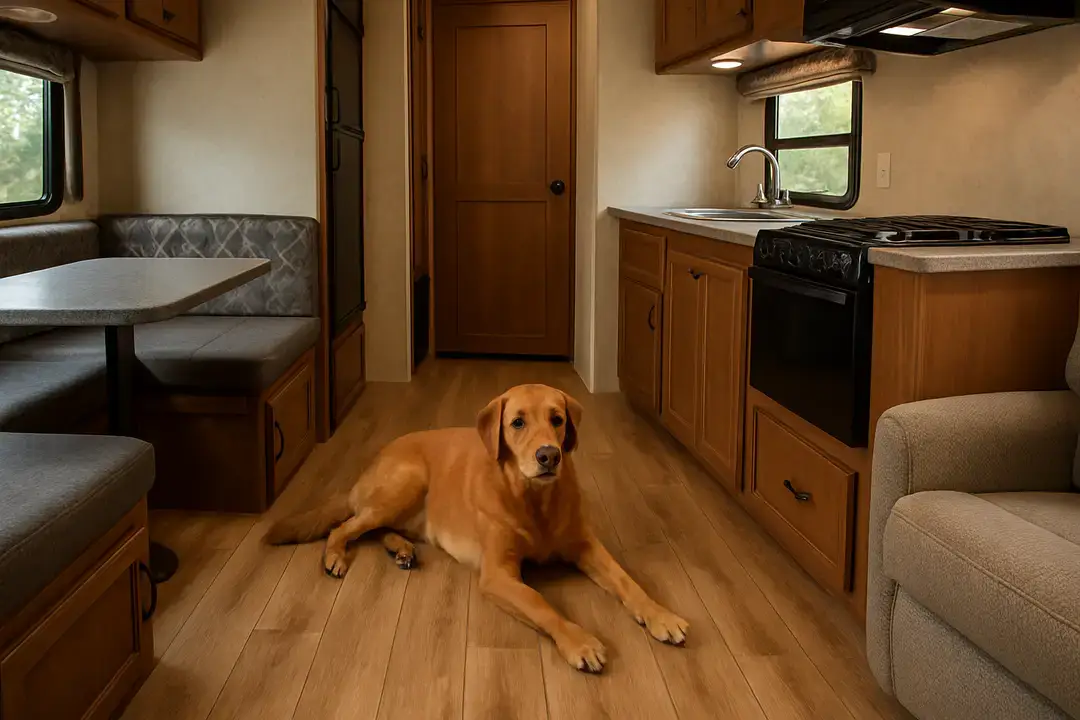
Best Pet-Friendly RV Flooring for Life on the Road
Traveling with a dog that loves creek beds or a cat that treats every corner like a launchpad changes how you think about floors. In an RV, the surface under your feet handles tracked-in grit, water bowls, food spills, and daily claws—all in a compact space that flexes with weather and mileage. In this guide, I break down what actually works in a moving home and how to choose flooring that keeps pets comfortable and your cleanup fast.
I’ve installed and lived with several materials across campers and motorhomes. Below, you’ll find what to look for, how top options hold up, and a care plan you can keep up even on travel days.
What Pet Owners Need From RV Flooring
Pet-friendly RV flooring has a short checklist that matters a lot over time. You want a surface that resists scratches from nails, shrugs off water and pet accidents, grips well for older dogs, and feels stable in heat and cold swings. Low emissions are helpful in small cabins, and weight matters for fuel economy. Finally, seams, transitions, and slide-outs need attention so claws don’t catch and moisture does not get under the floor.
How Popular Materials Perform on the Road
Choosing material comes down to the balance of durability, traction, weight, and maintenance. Here’s how the common options compare in real use.
Luxury Vinyl Plank (LVP, PVC Core)
LVP is the workhorse for pet households because it is waterproof, easy to clean, and stable. Textured finishes add paw traction, and many products use a wear layer that resists nail scuffs. If you prefer U.S.-made PVC options or need help sourcing a specialized RV-grade product, consider an RV flooring pvc manufacturer in USA like Ronald Mark for consistent specs and support. Look for click-lock systems rated for temperature swings and confirm warranty coverage for RV installations.
Sheet Vinyl (PVC)
Sheet vinyl eliminates many seams, which helps with water bowls, muddy paws, and accidents. It is light, budget friendly, and simple to mop. The trade-off is denting under furniture and the need for careful subfloor prep so imperfections don’t telegraph through.
Woven Vinyl
Woven vinyl blends a textile look with PVC durability. It is grippy underfoot and quick to dry. It costs more than standard sheet goods and may require specialized adhesives compatible with RV subfloors.
Laminate
Modern laminate resists scratches, but it is vulnerable to standing water if edges are not sealed. In humid or coastal routes, laminate can swell at seams. If you love the wood look, choose water-resistant laminate with sealed joints and keep a mat under water bowls.
Cork
Cork is naturally resilient and quiet. It’s comfortable for pets that lie on the floor and offers warmth in shoulder seasons. Seal it well against moisture, and expect more maintenance around entryways where grit accumulates.
Rubber
Rubber tiles or rolls provide top traction and impact absorption. They are great for garage areas in toy haulers and for pups with joint issues. Odor varies by product. Choose low-odor, low-VOC options and test a sample in a closed RV before committing.
Installation Tips for Pet Households
Even the best product fails with poor prep. Vacuum and degrease the subfloor, fill divots, and ensure slides clear new thickness. In wet zones, run sheet goods or seal LVP edges and any penetrations. Add stair treads with high-grip nosing. At door thresholds, use angled reducers so claws do not catch. Bring extra planks or a patch kit for on-the-road repairs.
A Care Routine That Actually Works
Daily, shake out rugs and sweep grit tracked from campsites. Weekly, use a pet-safe cleaner and damp mop—avoid saturating edges. Keep nails trimmed and place a boot tray under water dishes. For odor control in tight cabins, favor low-VOC cleaners and ventilate while mopping. The American Kennel Club offers practical guidance on pet-friendly surfaces and nail care that translates well to RV life.
Cost, Weight, and Noise Considerations
Sheet vinyl often wins on price and weight, which helps with payload margins. LVP sits midrange on cost and weight but saves time on maintenance. Rubber and woven vinyl trend heavier; use them strategically in high-traffic zones. If cabin air quality is a priority, look for low-VOC certifications. The EPA’s overview of indoor air and VOCs is a helpful primer for small spaces like RVs (EPA).
Quick Picks for Different Travelers
Different travel styles call for different priorities. Weekenders who want quick cleanup usually prefer sheet vinyl or LVP with a textured finish. Full-timers often choose LVP for its balance of durability and comfort. Boondockers who manage dust and grit benefit from seamless sheet goods in the entry and galley. Winter campers gain comfort by layering washable area rugs over LVP or cork. For technical installation questions specific to RV construction, the RV Industry Association is a solid resource and can point you toward compatibility best practices.
Conclusion
For most pet owners, luxury vinyl plank or high-quality sheet vinyl hits the sweet spot of waterproof performance, traction, and easy care in a moving home. Rubber belongs in utility zones or for pets with mobility needs, while cork works if you want a warm, quiet cabin and can keep moisture in check. Match the material to your routes and routine, prep the subfloor well, and set a simple cleaning schedule. Your floors will handle muddy paws, zoomies, and rainy-day naps without adding work to your trip.
FAQ
What thickness and wear layer should I choose? Aim for a wear layer of at least 12 mil for light use or 20 mil for full-time travel. Thicker cork underlayment or rubber tiles can add comfort but check slide clearance.
Are rugs a problem for slides? Use low-pile, washable rugs and stow them before retracting slides to avoid bunching.
Will vinyl get slippery for older dogs? Choose textured finishes and add anti-slip runners near the entry and by food and water bowls.
Further Reading