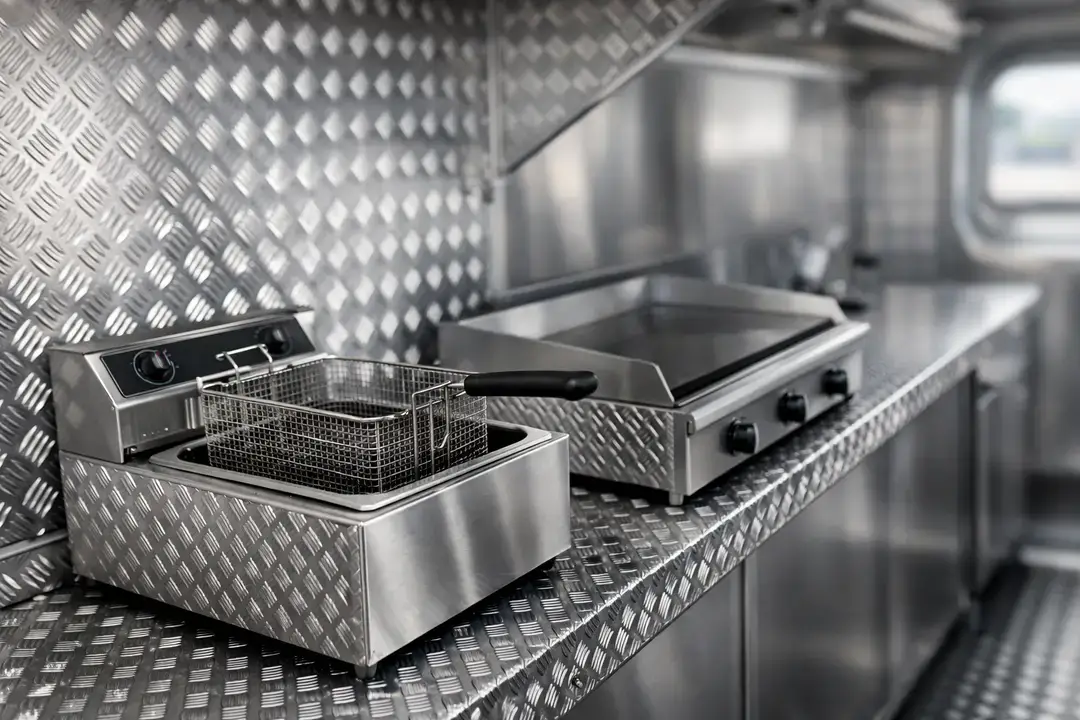
Smart Interior Fit Outs for Food Trucks Using Aluminium Checker Plate Surfaces
Running a food truck is equal parts culinary skill and practical engineering. The confined space, constant movement, and strict hygiene expectations make material choices far more important than many first time operators realise. Every surface inside the truck needs to handle heat, moisture, spills, and frequent cleaning without becoming a maintenance burden.
Aluminium checker plate has become a familiar sight in food trucks for good reason. It offers durability, slip resistance, and a clean industrial appearance that fits well with commercial kitchen requirements. But its effectiveness depends on how and where it is used.
Why Material Choice Matters in a Mobile Kitchen
Unlike a fixed commercial kitchen, a food truck operates under constant vibration and movement. Equipment shifts slightly during transit, liquids can spill more easily, and surfaces experience repeated stress from both cooking and travel.
According to a 2023 report by IBISWorld on the street food industry, the number of mobile food vendors has continued to grow steadily, with operators placing increasing emphasis on efficiency and compliance. Materials used inside trucks are expected to meet food safety standards while also standing up to daily wear.
This is where aluminium surfaces offer an advantage. They are lightweight compared to steel, which helps keep the overall vehicle weight within legal limits. At the same time, they resist corrosion and are easy to clean, making them suitable for environments where hygiene is non negotiable.
A Brisbane based food truck owner shared an insight that reflects a common experience
“We initially used coated plywood for parts of the flooring to save money. Within a year, we had to replace it. Switching to aluminium was more expensive upfront, but it solved the problem completely.”
Best Areas to Use Aluminium Checker Plate in Food Trucks
Not every surface inside a food truck needs checker plate, but certain areas benefit significantly from it.
Flooring is the most obvious application. Spills are inevitable in a kitchen on wheels, and the raised pattern improves grip for staff moving quickly during service. This becomes particularly important during busy periods when attention is focused on food preparation rather than footing.
Lower wall panels are another practical use. These areas are prone to scuffs from equipment, storage containers, and foot traffic. Aluminium checker plate protects the structure underneath while maintaining a cleanable surface.
It is also commonly used around entry points and service steps. These zones experience repeated use and exposure to outdoor conditions, making durability essential.
Understanding Hygiene and Compliance Requirements
Food safety regulations require surfaces to be non porous, easy to clean, and resistant to contamination. Aluminium meets these criteria when properly finished and maintained.
However, it is important to note that while checker plate is suitable for floors and protective panels, it is not typically used for direct food preparation surfaces. Flat stainless steel remains the preferred material for benches and prep areas due to its smooth finish.
Regular cleaning routines are essential. The raised pattern can trap debris if neglected, so operators should incorporate brushing and washing into their daily closing procedures. Using appropriate food safe cleaning agents ensures compliance while preserving the material.
Weight and Structural Considerations
Weight plays a critical role in food truck design. Exceeding vehicle limits can lead to safety issues and regulatory complications.
Aluminium provides a strong advantage here. It delivers strength without adding unnecessary mass. When used strategically, it allows operators to reinforce high wear areas without compromising overall weight distribution.
Installation must also account for movement. Sheets should be securely fastened to prevent rattling or loosening over time. In some builds, fabricators combine mechanical fasteners with adhesive backing to improve stability and reduce noise.
Cost Versus Long Term Practicality
Budget constraints often influence material decisions, especially for new operators. Aluminium checker plate is not the cheapest option available, which can lead some to consider alternatives.
However, short term savings can quickly disappear if materials need frequent replacement. Flooring that deteriorates or becomes unsafe creates downtime and additional labour costs.
This is where checker plates aluminium solutions prove their value. They offer durability that aligns with the realities of daily service, reducing the need for ongoing repairs or upgrades.
Design Considerations Beyond Functionality
While performance is critical, appearance also plays a role in customer perception. Food trucks often operate in public spaces where visual appeal matters.
Aluminium checker plate contributes to a clean, professional look. It pairs well with stainless steel equipment and can complement both modern and industrial themed designs. Some operators even use it as part of their branding, incorporating it into visible exterior elements.
Lighting can enhance its appearance further. Reflective surfaces help brighten the interior, which is particularly useful during evening service.
Common Mistakes Food Truck Operators Should Avoid
One of the most frequent issues is overusing checker plate in areas where it is not necessary. This can make the interior feel overly industrial and may complicate cleaning in certain sections.
Another mistake is improper installation. Loose or poorly fitted sheets can create noise during transit and pose safety risks during service. Investing in proper fabrication and fitting pays off in reliability.
Operators should also avoid neglecting maintenance. Even durable materials require care. Regular inspection ensures that any signs of wear or loosening are addressed before they become larger problems.
Conclusion
Designing a food truck interior requires a balance between practicality, compliance, and durability. Aluminium checker plate offers a reliable solution for high wear areas, particularly where slip resistance and easy cleaning are essential.
By using it selectively and installing it correctly, operators can create a workspace that supports both safety and efficiency. Over time, the reduced maintenance and improved performance justify the initial investment.
For those planning a new build or upgrading an existing setup, checker plates aluminium remain a smart choice for achieving a durable and professional finish that stands up to the demands of mobile food service.
Further Reading