Warepad Guide: Polyurethane Pads for Suspensions
If you run spring suspension or air/spring suspension trailers long enough, you’ve seen the same pattern: steel-on-steel contact at the hanger and equalizer eats the suspension hanger surfaces, the equalizer bores, and the hanger side plates. First it starts as a squeak, then a clunk. Next you’re chasing uneven tire wear, broken springs, and cracked brackets—followed by a shop visit you didn’t budget for.
That downtime isn’t just a maintenance line item; it’s missed loads, late deliveries, and a fleet maintenance team constantly reacting instead of planning. The root cause is simple friction and impact at high-load pivot points. The solution is equally straightforward: place a purpose-built wear pad between the moving steel parts so they don’t grind each other down.
This guide explains what a warepad is, with a focus on the EWP Poly Warepad (Ever-Durable Warepad) from GSM Innovative Products, Inc. You’ll learn how polyurethane pads reduce wear, provide vibration damping and shock absorption, which suspensions they fit (Hutch Suspension, Reyco Suspension including Reyco 86AR and Reyco 102AR, Fruehauf Suspension, Pro-Par Suspension, and more), bolt-in no-weld installation instructions, inspection and maintenance practices, and where to buy using part numbers such as EWP-HHR.
What Is a Warepad? / Overview
A warepad is a replaceable wear pad installed at suspension contact points to prevent steel-on-steel wear between moving or loaded components. In heavy trucking and trailer applications, these pads typically protect the hanger and equalizer interfaces where leaf springs pivot and slide under load. They’re also used in non-suspension wear areas such as dump box cross member contact points (often called box pads) and at certain coupling interfaces like a Holland pin coupler.
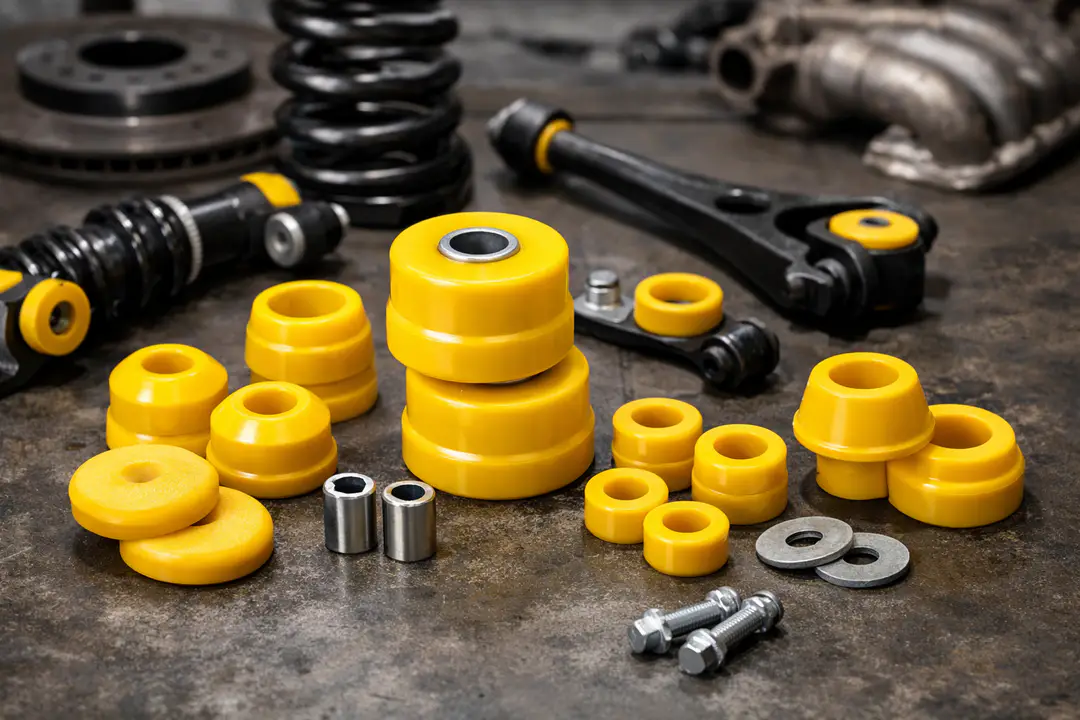
The EWP Poly Warepad—also known as the Ever-Durable Warepad—is a polyurethane wear pad designed to install over existing steel wear pads, converting a grinding steel-on-steel interface into a controlled, damped contact surface. GSM Innovative Products, Inc. manufactures and markets these pads with the claim of “10 TIMES MORE BENEFITS than “STEEL ON STEEL” or steel wear pads,” highlighting reduced wear, noise reduction, and improved component life.
To evaluate any warepad system, you need to understand three basics: (1) where friction occurs (pivot and slide points), (2) how load transfers through spring eyes/equalizers into hangers, and (3) how impact and vibration accelerate wear and fastener loosening. A polyurethane wear pad matters because it doesn’t just “cover” the metal—it also adds shock absorption and vibration damping, helping protect brackets, springs, bushings, and fasteners. Done correctly, it turns chronic wear locations into predictable service items you can plan around instead of emergencies.
What Is an EWP Poly Warepad and How It Works
EWP Poly Warepads work by isolating loaded suspension contact points with a durable polyurethane layer, reducing friction, impact, and metal transfer. The design intent is simple: keep the hanger/equalizer surfaces from directly contacting each other so the wear occurs on a replaceable pad rather than on the suspension structure.
- Material: polyurethane engineered for abrasion resistance and resilience
- Function: wear pad + vibration damping + shock absorption at contact points
- Mounting: bolt-in (no-weld), commonly installed over existing steel wear pads
- Protection targets: hanger, equalizer, suspension hanger faces, and associated wear surfaces
- Other applications: dump box cross member/box pads and Holland pin coupler wear locations
Key benefit: By removing steel-on-steel contact, you reduce the root cause of galling, grooving, and bracket elongation that leads to alignment issues and component replacement.
Why polyurethane matters at high-load pivots
At the equalizer and hanger interface, the load is not static; it cycles with every axle articulation event—dock approaches, curb impacts, potholes, and off-road turns in yards. Steel wear pads can protect to a point, but the impact energy still transmits through hard surfaces, encouraging noise and accelerating wear elsewhere. Polyurethane helps in two ways: it acts as a sacrificial layer, and it dissipates energy through controlled deflection.
Practical application on spring suspension and air/spring suspension
On spring suspension, the equalizer “rocks” as axle loads shift, concentrating pressure on the hanger wear faces. On air/spring suspension, you still have pivot points and structural wear zones (and often harsh torsional inputs), so protecting contact points remains valuable. In both cases, the wearpad becomes a planned maintenance item: inexpensive compared with hangers, equalizers, cross members, or coupler hardware.
Common mistake to avoid
Installing a wear pad without correcting the underlying cause of misalignment—bent hanger brackets, worn bushings, elongated holes, or incorrect ride height—can shorten pad life. Treat the pad as part of the system, not a bandage for a damaged geometry.
Top Benefits — Why Polywarepads Beat Steel-on-Steel
Switching from steel wear pads to polyurethane warepads is primarily about controlling wear, but fleets typically notice secondary gains quickly: noise reduction, fewer harsh impacts, and less frequent structural repairs. GSM Innovative Products, Inc. markets EWP Poly Warepads as providing “10 TIMES MORE BENEFITS than “STEEL ON STEEL” or steel wear pads,” and while real-world results vary by duty cycle, the mechanisms behind the benefits are well understood.
- Eliminates steel-on-steel contact at the hanger and equalizer wear faces
- Vibration damping helps reduce fastener loosening and noise
- Shock absorption reduces peak loads into brackets and springs
- Extends component life by making the wear surface replaceable
- Reduces maintenance frequency versus recurring metal resurfacing or bracket replacement
Callout: If your shop is replacing hangers/equalizers primarily due to wear faces and not cracks from overload, you’re an ideal candidate for polyurethane wear pads.
Comparison table: polyurethane wear pad vs. steel wear pad
| Category | Polyurethane (EWP Poly Warepad) | Steel wear pads / steel-on-steel |
|---|---|---|
| Wear mechanism | Pad is sacrificial; isolates hanger/equalizer surfaces | Metal-to-metal galling and grooving; wear transfers to structure |
| Noise reduction | Typically improved due to damping | Often increases as surfaces polish, loosen, and clunk |
| Shock absorption | Yes—helps reduce peak load spikes | Minimal; impacts transmit directly |
| Installation | Bolt-in, no-weld; often over existing steel wear pads | Varies; may require welding or fabrication depending on design |
| Fleet maintenance planning | Predictable replacement intervals based on inspection | More reactive: bracket/equalizer wear can force structural repairs |
Example: reducing spring breakage and bracket stress
A common chain reaction starts with worn hanger faces. As clearances grow, the equalizer “slaps” during articulation. That increases dynamic loading into leaf springs and hardware, contributing to spring breakage and egg-shaped bolt holes. A polyurethane wear pad reduces the slap, keeps contact smoother, and can lower the tendency for secondary damage.
Common purchasing mistake
Choosing a wear pad without verifying thickness, fastener pattern, and whether it’s designed to install over your existing steel wear pads can cause interference, uneven loading, or a pad that migrates. Always match the pad to the suspension family and hanger/equalizer geometry.
Compatibility & OEM Fit: Hutch, Reyco, Fruehauf, Pro-Par
Compatibility is where fleets either win or waste time. A warepad must match the hanger and equalizer contact geometry and mount securely as a bolt-in component. EWP Poly Warepads are positioned as OEM-friendly solutions for common trailer suspensions, including Hutch Suspension and Reyco Suspension families such as Reyco 86AR and Reyco 102AR, along with Fruehauf Suspension and Pro-Par Suspension applications.
- Fit priority: suspension family (OEM), hanger style, and equalizer wear face dimensions
- Mounting method: bolt-in, typically no-weld
- Retrofit approach: designed to eliminate steel-on-steel by installing over existing steel wear pads
- Use cases: equalizer wear pads, suspension hanger protection, box pads, coupler wear points
Installation tip: Before ordering, confirm whether your hangers have replaceable steel wear pads already. EWP pads are commonly designed to install over those existing wear surfaces.
Compatibility snapshot (verify with parts catalog)
| OEM / Suspension | Compatible EWP Poly Warepad | Notes |
|---|---|---|
| Hutch Suspension | EWP-HHR | Common hanger/equalizer wear face protection; bolt-in over steel wear pads |
| Reyco Suspension (Reyco 86AR) | Varies by hanger/equalizer | Confirm equalizer style and hanger pad footprint; used for equalizer wear pads |
| Reyco Suspension (Reyco 102AR) | Varies by hanger/equalizer | Measure wear face length/width and bolt pattern; match to EWP listing |
| Fruehauf Suspension | Varies | Often retrofit-friendly; verify thickness to maintain correct articulation |
| Pro-Par Suspension | Varies | Confirm hanger side plates condition; replace worn hardware before pad install |
How to confirm fit in the shop (quick process)
- Identify suspension: OEM tag, axle spacing, and equalizer style.
- Photograph wear points: hanger faces, equalizer contact areas, and existing steel wear pads.
- Measure: pad footprint and bolt center-to-center dimensions.
- Check structure: look for cracks, elongation, or bent hanger side plates.
- Match to parts catalog: cross-reference OEM to the EWP part listing.
Common fitment mistake
Ignoring worn geometry. If hangers are already “dished” or equalizers are heavily grooved, a new pad may not sit flat, which concentrates load at the edges. Correct the metal condition first (repair/replace as needed), then install the polyurethane wear pad on a true surface.
Step-by-Step Installation (Bolt-In, No Welding Required)
Proper installation is what turns a warepad into a long-life wear surface instead of a short-term patch. EWP Poly Warepads are designed as bolt-in, no-weld components. The goal is tight, aligned mounting so the polyurethane contacts evenly and can do its job: eliminate steel-on-steel contact while adding vibration damping and shock absorption.
- Installation type: bolt-in
- Fabrication: no-weld in typical applications
- Placement: over existing steel wear pads (where applicable)
- Best time to install: during suspension service—bushings, pins, equalizer inspection
Safety note: Support the trailer correctly and unload the suspension as required for your specific configuration. Follow your shop’s safety procedures and the manufacturer’s installation instructions.
Numbered installation instructions (shop-ready)
- Secure and lift: Chock wheels, support the frame, and relieve suspension load so the equalizer/hanger interface is accessible.
- Clean contact areas: Remove debris, rust scale, and packed mud from hanger and equalizer wear faces. A flat, clean surface prevents point loading.
- Inspect for damage: Look for cracks around the suspension hanger, bent brackets, elongated bolt holes, and worn equalizer faces. Repair structural issues first.
- Verify existing wear pad condition: If a steel wear pad is present, confirm it’s secure. The EWP Poly Warepad is commonly installed over that steel pad to eliminate steel-on-steel contact.
- Test-fit the warepad: Align bolt holes and confirm full seating without rocking. If it doesn’t sit flat, stop and re-check for deformation.
- Install hardware: Use correct bolts, washers, and locking method per EWP documentation. Torque to spec based on the manufacturer’s instructions and your fastener grade.
- Cycle articulation: With the axle supported, cycle suspension travel and confirm clearance, even contact, and no binding.
- Final check: Re-torque after initial run-in if recommended in the installation instructions.
Practical tip: pair installation with alignment checks
Warepads reduce wear, but they don’t fix a bent suspension. If you’re already in the bay, it’s efficient to verify axle alignment and look for early signs of uneven tire wear. If you’re setting up a broader maintenance plan, it helps to follow established frameworks similar to proactive maintenance risk management—the same principle applies: find predictable wear points and control them before they become failures.
Common installation mistakes
- Over-torquing or under-torquing: can distort mounting, loosen hardware, or allow pad movement.
- Skipping surface prep: trapped grit becomes an abrasive layer that accelerates wear.
- Installing on damaged metal: a cracked or deformed hanger side plate needs repair, not a pad.
Inspection & Maintenance: How to Maximize Service Life
Warepads are designed to be sacrificial, which is exactly what you want—wear should happen on the pad, not the hanger, equalizer, or cross member. The difference between “pads that last” and “pads that disappear” is disciplined inspection and maintenance tied to your duty cycle.
- Inspection frequency: align with PM intervals and severe-service routes
- Key checks: pad thickness, mounting tightness, uneven wear patterns
- Related components: bushings, pins, hanger side plates, equalizer condition
- Symptoms to track: noise, ride harshness, new tire wear patterns
Key benefit: A predictable inspection and maintenance routine converts suspension wear into a planned replacement instead of a roadside failure.
What “normal” wear looks like vs. a problem
Normal wear is typically even polishing and gradual thinning across the primary contact area. A problem shows up as tapered wear, chunking, or wear concentrated at one edge—often pointing to misalignment, a bent hanger, or an equalizer that isn’t rocking squarely.
Simple PM checklist (print-friendly format)
- Visual: look for missing pad corners, cracking, or severe gouging.
- Hardware: confirm bolts are present, seated, and not backing out.
- Contact pattern: check for one-sided wear (geometry issue).
- Noise check: new squeaks/clunks can indicate clearance growth.
- Adjacent wear: inspect pins/bushings; excessive play accelerates pad wear.
Maintenance planning for fleets
Fleets that get the best results treat warepads like brake linings: a consumable that protects expensive hard parts. Add pad condition to your standard inspection sheet, note miles and route type, and set replacement thresholds. If you’re already using digital workflows, consider how broader operational compliance habits can support documentation discipline—consistent records help justify spec decisions and improve warranty conversations with suppliers.
Common mistake: ignoring the cause of vibration
Polyurethane provides vibration damping, but if you have severe driveline vibration, out-of-round tires, or loose suspension hardware, the pad becomes the messenger. Address systemic vibration sources so the wear pad isn’t overloaded by conditions it wasn’t meant to correct.
Case Studies & Testimonials (Fleet Results)
Warepads tend to prove themselves in the exact conditions that punish suspensions: gravel yards, refuse, construction, bulk commodities, and high-turn urban delivery. While specific mileage outcomes depend on load, terrain, and maintenance culture, the benefit pattern is consistent—less steel damage, less noise, and fewer unscheduled repairs around hangers and equalizers.
- Primary outcome: reduced hanger/equalizer wear from steel-on-steel contact
- Secondary outcomes: noise reduction, improved ride comfort, fewer bracket repairs
- Best-fit operations: high articulation, rough surfaces, frequent stops/starts
- Measurable metrics: replacement frequency, downtime hours, parts spend trend
Pull quote (maintenance supervisor): “We used to see hangers wearing into the equalizers and vice versa. After switching to polyurethane wear pads, we’re replacing pads— not hangers—during scheduled service.”
Example 1: Dump operation protecting a cross member
Dump trailers often develop wear where the dump box contacts a cross member. Steel contact points can chatter under vibration, causing visible fretting and noise. By using polyurethane box pads at the cross member interface, the operator can reduce impact noise and protect the cross member surface. The practical win is avoiding welding repairs on structural members during peak season.
Example 2: Highway + yard mix reducing equalizer wear
A regional fleet running highway miles plus tight yard turns often sees equalizer wear accelerate due to frequent articulation at low speeds. Installing equalizer wear pads helps keep the contact surface consistent, lowering the chances of the equalizer “slamming” into worn hangers. Crews also report less squeal during backing and docking—an early indicator that friction and clearance are under control.
Pull quote (lead tech): “The install was straightforward—bolt-in, no-weld. The bigger change was how predictable the inspections became once we had a real wear surface to monitor.”
Common expectation mistake
Some teams expect a warepad to compensate for severe overload or chronic misalignment. Pads reduce wear and add shock absorption, but if the suspension is operated beyond its design (or with incorrect ride height on air/spring suspension), other failures can still occur. The best results come when warepads are paired with correct loading practices and basic suspension health checks.
Parts, Brochures & Downloads (What to Request)
Ordering the correct warepad is easiest when purchasing and maintenance teams speak the same language. That means using part numbers (for example, EWP-HHR for common Hutch Suspension applications), confirming OEM suspension details, and keeping documentation on-hand for techs. GSM Innovative Products, Inc. supplies product literature, and most distributors can provide a parts catalog or brochure on request.
- Ask for: parts catalog, brochure, and installation instructions
- Provide: OEM suspension (Hutch, Reyco 86AR, Reyco 102AR, Fruehauf, Pro-Par), photos, measurements
- Confirm: bolt kit requirements, torque guidance, and replacement criteria
- Document internally: PM checklist updates and inspection thresholds
Callout: A good ordering packet includes: suspension OEM, hanger style, equalizer type, existing wear pad photos, and a note on whether the application is spring suspension or air/spring suspension.
What to standardize for fleet maintenance
Standardization reduces mistakes when multiple shops service the same equipment. Create a one-page spec sheet per trailer model that lists: compatible EWP Poly Warepad part numbers, bolt kit details, and inspection and maintenance intervals. If your organization already maintains standardized operating documentation for other areas, the same approach that supports consistent hours-of-service procedures can support consistent maintenance execution—clear rules, clear records, fewer surprises.
Common documentation mistake
Not tracking pad life by duty cycle. Two trailers with the same OEM suspension can have dramatically different wear rates if one runs smooth interstate and the other lives on job sites. Tracking route type helps you set realistic replacement windows and stock the right quantities.
Where to Buy — Distributors, Direct Ordering, Part Numbers
Warepads are usually sourced through heavy-duty suspension parts distributors, fleet supply partners, and in some cases direct ordering pathways supported by the manufacturer. The key is to purchase by confirmed fitment, not by guesswork—especially if you’re targeting specific OEM suspensions like Hutch Suspension or Reyco Suspension (Reyco 86AR / Reyco 102AR).
- Manufacturer: GSM Innovative Products, Inc.
- Product naming: EWP Poly Warepad / Ever-Durable Warepad
- Ordering basis: OEM suspension + pad footprint + bolt pattern + application notes
- Example part number: EWP-HHR (commonly referenced for Hutch applications)
Purchasing tip: When ordering for multiple trailer models, build a cross-reference list: Trailer VIN group → OEM suspension → EWP part number → hardware kit → stocking min/max.
Questions to ask your distributor before you buy
- Is this pad designed to install over existing steel wear pads, or does it replace them?
- Does it include mounting hardware, or is a bolt kit separate?
- What are the recommended torque values and re-torque intervals in the installation instructions?
- Are there notes for specific equalizer types or hanger side plate variants?
Common sourcing mistake
Mixing pads across similar-looking suspensions. Reyco and Hutch systems can appear similar in the field, especially after years of repainting and repairs. Confirm the OEM and geometry before ordering to avoid a pad that “almost” fits but creates uneven loading.
Practical Tips / Best Practices
Warepads deliver the best ROI when they’re installed on healthy geometry, inspected consistently, and treated as a consumable designed to protect expensive structures. The following best practices come straight from what works in real bays—reducing repeat repairs on hangers and equalizers while keeping trailers on the road.
- Fix geometry first: Replace damaged hangers, worn bushings, and grooved equalizers before installing a new wear pad.
- Cleanliness matters: Packed grit acts like sandpaper. Clean the contact area during every inspection and maintenance cycle.
- Use correct hardware: Follow installation instructions for bolt grade, washers, and locking method; don’t “make it work” with mixed fasteners.
- Track wear patterns: One-sided pad wear is a diagnostic tool—use it to find bent brackets or misalignment early.
- Stock smart: Keep common part numbers (such as EWP-HHR where applicable) on the shelf to avoid downtime waiting on parts.
- Train for consistency: A 10-minute toolbox talk with photos of good vs. bad wear pays back quickly.
Things to avoid: Installing polyurethane pads on severely deformed steel surfaces, ignoring torque practices, or assuming noise reduction means you can skip inspections. Polyurethane provides vibration damping, but it’s not a reason to relax your PM discipline.
Field-proven approach: Add a “wear surface audit” line to PMs: hanger faces, equalizer faces, cross member box pads, and any Holland pin coupler wear points you operate. You’ll catch problems earlier and stop paying structural-repair prices for what should be wear-item work.
FAQ
What is a warepad used for on a trailer suspension?
A warepad is used to protect suspension wear points—especially at the hanger and equalizer interface—by preventing steel-on-steel contact. Instead of the suspension structure wearing away, the pad takes the wear. On some equipment, similar pads are also used as box pads on a cross member or at a Holland pin coupler wear location.
Do EWP Poly Warepads require welding?
In typical applications they are bolt-in and no-weld. That’s part of the appeal for fleets: you can retrofit during scheduled service without fabrication. Always follow the manufacturer’s installation instructions and confirm your specific suspension configuration and hardware requirements.
Can polyurethane wear pads really reduce noise and vibration?
Yes—polyurethane provides vibration damping and shock absorption compared with steel wear pads. Fleets often report noise reduction as clearances stabilize and metal-to-metal slap decreases. If noise persists, check for worn pins/bushings, loose fasteners, and hanger side plate damage.
Are EWP Poly Warepads OEM-specific?
Fitment is tied to OEM suspension designs and hanger/equalizer geometry. Common references include Hutch Suspension and Reyco Suspension (including Reyco 86AR and Reyco 102AR), plus Fruehauf Suspension and Pro-Par Suspension. Use the parts catalog and measurements to match the correct EWP part number (for example, EWP-HHR for certain Hutch applications).
How often should warepads be inspected or replaced?
Inspect at every PM and any time you hear new clunks/squeaks or see uneven tire wear. Replacement depends on duty cycle and wear pattern; the goal is to replace the pad before the hanger or equalizer starts taking damage again. Document miles, route type, and wear thickness to set reliable intervals.
Conclusion
A warepad is one of the simplest upgrades you can make to protect high-cost suspension components. By eliminating steel-on-steel contact at the hanger and equalizer interfaces—and by adding vibration damping and shock absorption—EWP Poly Warepads (Ever-Durable Warepads) help shift wear from structural steel to a replaceable polyurethane wear pad. That translates into fewer bracket repairs, less noise, and more predictable fleet maintenance.
The practical path is clear: confirm OEM fit (Hutch Suspension, Reyco Suspension including Reyco 86AR and Reyco 102AR, Fruehauf Suspension, Pro-Par Suspension), order by verified part number (such as EWP-HHR where applicable), install bolt-in using the proper no-weld procedures, and build inspection and maintenance checks into your PM routine. If you treat pads as consumables and track wear patterns, you’ll reduce downtime and extend the service life of the hangers, equalizers, cross members, and other protected interfaces.
Next step: gather photos and measurements from your most problematic trailers, request the brochure/parts catalog and installation instructions, and pilot the pads on a small group. The results are easy to validate—look at wear surfaces, noise, and shop time over the next service cycle.