
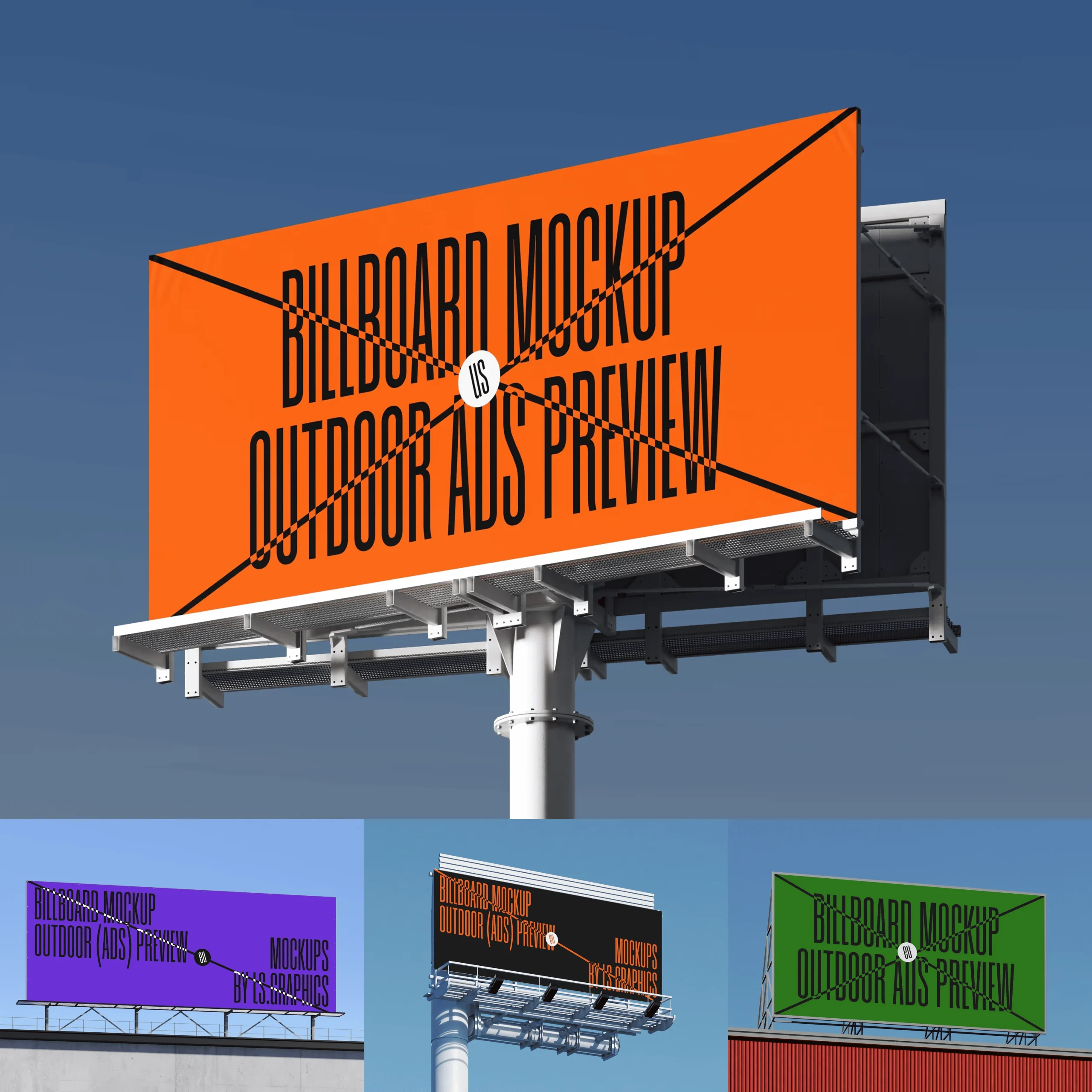
Billboard Mockups in Action: The Power of Visual Context
In the high-stakes world of advertising, visibility isn’t just a goal—it’s a necessity. Billboards, towering above streets and highways, are bold statements meant to be seen, remembered, and acted upon. But crafting a compelling billboard layout takes more than just design instincts. It takes an understanding of visual context. And one of the best ways to master that context is with a billboard mockup.
Why Context Matters in Billboard Design
Unlike digital ads or magazine spreads, billboards live in the real world. They’re subject to the chaos and complexity of outdoor environments—weather, architecture, time of day, and even traffic speed. A design that looks fantastic on your computer screen may fall flat when it’s 30 feet above a busy intersection. That’s where visual context comes in.
Designers must anticipate how their work will interact with its surroundings. Will the colors pop or blend into the background? Is the text readable from a distance? Does the message make sense in the environment where it’s placed? These are critical questions, and answering them early can save time, money, and creative energy.
The Role of Billboard Mockups
This is where billboard mockup shine. They allow designers to test their ideas in realistic environments before committing to print. A great mockup simulates lighting, perspective, and scale—giving a true-to-life preview of how a billboard will appear once it’s installed.
But not all mockups are created equal. Poor-quality files can misrepresent your design, or worse, be so clunky and disorganized that they’re a hassle to use. That’s why experienced designers seek out reliable resources that balance aesthetics with functionality.
High-Quality Mockups from LS.Graphics
One of the most trusted sources in the design world is ls.graphics. Their collection of billboard mockups is both expansive and highly refined. Instead of generic placeholders, you’ll find real-world scenes: cityscapes, highways, rooftops, construction zones, and more. These aren’t just backdrops—they’re professionally photographed environments that add richness and realism to any billboard design.
And the best part? They’re incredibly easy to use. Each mockup is crafted with well-organized layers and smart objects. You can drop in your design in seconds, adjust lighting or color tones if needed, and get a polished result that’s presentation-ready. Whether you’re building a client pitch or running internal tests, ls.graphics makes the process smooth and intuitive.
From Concept to Client Presentation
Billboard mockups are more than just tools for the designer—they’re powerful assets in the client communication process. When clients can see how a design works in its actual context, they’re more likely to engage with the concept and approve it with confidence.
Instead of imagining how it might look on the side of a building, clients are shown exactly that. This visual clarity can make the difference between a hesitant maybe and an enthusiastic yes. It signals that the designer isn’t just creative—they’re thoughtful, strategic, and prepared.
Fueling Creative Exploration
Mockups also serve another unexpected purpose: they inspire. Seeing your work rendered in a real space often sparks new ideas. A headline that felt static in isolation might suddenly feel dynamic when placed above a bustling city street. A color scheme that seemed dull might come to life against the textures of an urban wall. In many ways, the act of mockup testing becomes part of the creative process itself.
Conclusion: Don’t Just Imagine—Visualize
In a world where outdoor advertising must compete with endless distractions, design clarity and contextual understanding are non-negotiable. Billboard layouts need more than artistic flair—they need strategic foresight. And that starts with seeing your design in action.
Using a billboard mockup from ls.graphics gives designers a critical edge. It helps transform raw ideas into fully-realized campaigns, built for real environments and real people. So before you send that design off to print, take a moment to see it in context. You might be surprised by what you learn—and how much better your final result will be.
Because in billboard advertising, it’s not just about what you say—it’s how it looks when you say it from 30 feet in the air.